TL;DR
Fit&Well published a five-minute evening Tai Chi routine recommended by teacher Brian Thompson, combining breathing, gentle arm movements, weight shifts and self-massage. Thompson says it may help people unwind before bed, but the report does not provide evidence that the routine improves sleep or works for everyone.
Fit&Well has published a five-minute evening Tai Chi routine recommended by instructor Brian Thompson, who says its slow breathing and gentle movements may help people relax before bed. The sequence uses a seated breathing exercise, standing arm and weight-shifting movements, and light self-massage; the report does not establish that it treats insomnia or improves sleep outcomes.
The routine begins with one to two minutes of seated breathing. Sit upright on a sturdy chair with both feet flat on the floor, breathe naturally through the nose and let the shoulders, chest and stomach soften. The instructions describe allowing the breath to rise and fall steadily, rather than forcing a particular pace.
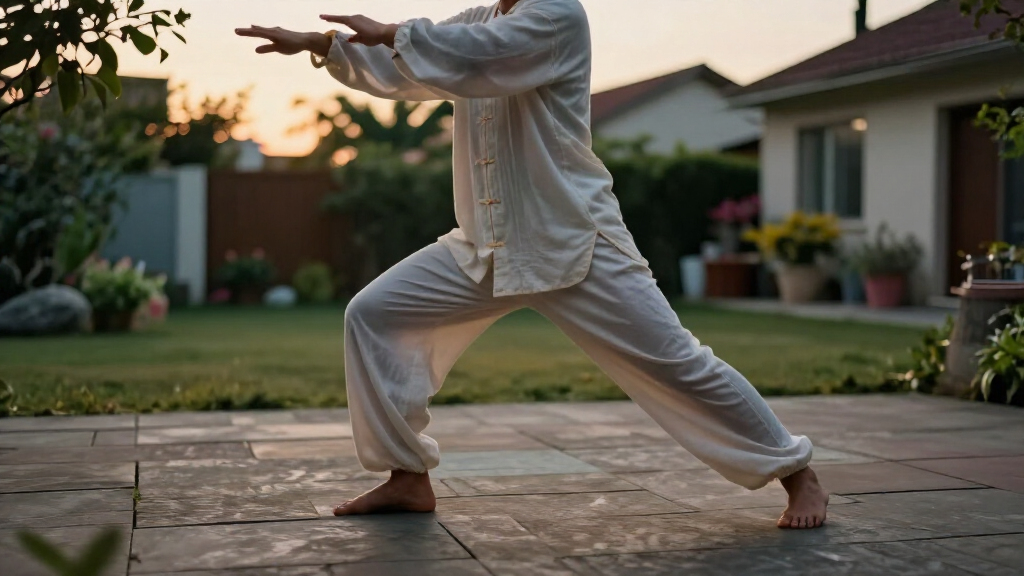
Next, the practitioner stands with feet about shoulder-width apart, knees slightly bent and shoulders relaxed. During the “lift water” movement, raise the arms to shoulder height while breathing in, then lower them gently. The longer “silk reeling” sequence adds slow turns of the waist, arm circles and shifts of body weight from one leg to the other. Fit&Well advises moving slowly and coordinating movement with breathing.
The final part involves sitting or standing beside the bed to massage the neck, arms, midsection and legs, followed by gentle patting with cupped hands. The full routine is presented as a brief way to close the day, not as a required prescription or a substitute for medical care. The source gives no study results, participant data or measured sleep outcomes for this specific practice.
A Low-Intensity Bedtime Option
The routine offers a short, equipment-free sequence that can be done at home and adjusted between sitting and standing. Its gentle movements may appeal to people who want a quieter alternative to more vigorous exercise late in the day. The practical value described in the report is the opportunity to pause, breathe and ease physical tension before going to bed.
That potential should be kept distinct from evidence of a sleep benefit. Thompson’s explanation is an instructor’s recommendation, and the Fit&Well article does not cite research testing this five-minute sequence. Readers who try it can judge whether it feels comfortable and calming, but it should not be described as a proven treatment for persistent sleep problems.
As an affiliate, we earn on qualifying purchases.
How the Routine Is Structured
Tai Chi is described in the source as an ancient Chinese practice built around gentle movement and a mind-body connection. The routine here adapts that approach into several short stages: breathing while seated, simple arm raises, more coordinated waist and weight shifts, then touch-based massage and patting. Its focus is on slowing down rather than exertion.
Brian Thompson, identified by Fit&Well as a Tai Chi teacher and founder of BNEW4LIFE, recommends practicing in the evening. He says the movements can address tension people feel in the back, neck and shoulders after the day. The source attributes claims about calming the nervous system and supporting sleep to Thompson; it does not independently verify those physiological effects.
“The benefit of an evening Tai Chi practice is that it helps to unwind accumulated physical tension in the back, neck and shoulders from the day.”
— Brian Thompson, Tai Chi teacher and founder of BNEW4LIFE, as quoted by Fit&Well
As an affiliate, we earn on qualifying purchases.
Sleep Effects Are Not Measured
The report does not say whether the practice has been tested in a clinical study, how many people have tried it, or whether it changes sleep duration or quality. It also does not specify how often to repeat the sequence or whether particular movements are suitable for every person. Thompson’s statements about relaxation and sleep are attributed claims, not confirmed outcomes for readers.
People who feel pain, dizziness or strain should stop or modify the movements. The routine is not presented as medical advice, and the article does not address the causes of ongoing sleep difficulty. Readers with persistent sleep problems or health conditions that affect movement should seek guidance from a qualified health professional.
As an affiliate, we earn on qualifying purchases.
Try the Movements at Your Pace
Fit&Well’s instructions leave the choice with the reader: the sequence can be tried as described, with gentle movement and natural breathing, or adapted to a comfortable seated position where possible. No follow-up study, clinical test or further milestone is identified in the source. The immediate next step is simply to see whether the short routine feels relaxing without treating it as a guaranteed sleep aid.
As an affiliate, we earn on qualifying purchases.
Key Questions
What is included in the five-minute Tai Chi practice?
It includes seated natural breathing, standing arm raises, slow silk-reeling movements with weight shifts, and gentle self-massage or patting. The opening breathing exercise is listed as one to two minutes; the article presents the full sequence as a five-minute practice.
Does the routine cure insomnia or guarantee better sleep?
No. Fit&Well reports Thompson’s view that the movements may help people unwind, but it provides no evidence that this specific routine treats insomnia or guarantees improved sleep.
Can the movements be done while seated?
The first exercise is seated, and the final massage can be done sitting or standing. The arm and silk-reeling sections are described as standing movements; the source does not give a full seated adaptation, so use a comfortable range and stop if movement causes discomfort.
When should someone seek help for sleep problems?
The source does not set a threshold for seeking care. If sleep difficulties persist or affect daily life, consider discussing them with a qualified health professional rather than relying on this routine alone.
Source: rss