
TL;DR

Get workout gear delivered free with Prime
- Fast, free delivery on millions of items
- Prime Video, Amazon Music and more included
- Member-only deals all year
Researchers reported that a sphingolipid measured in exhaled breath condensate distinguished idiopathic pulmonary fibrosis from fibrotic hypersensitivity pneumonitis in a study presented at the CHEST meeting. The test’s predictive performance was promising, but the breath-sample group was small and the finding needs external validation before clinical use.
Researchers reported that a sphingolipid in exhaled breath condensate could help distinguish idiopathic pulmonary fibrosis (IPF) from fibrotic hypersensitivity pneumonitis, two conditions that can be difficult to tell apart in advanced disease. In the study presented at the CHEST meeting in Phoenix, the marker correctly classified 80% of fibrotic hypersensitivity pneumonitis cases and 85.7% of IPF cases, but the results have not yet been confirmed in an external validation study.
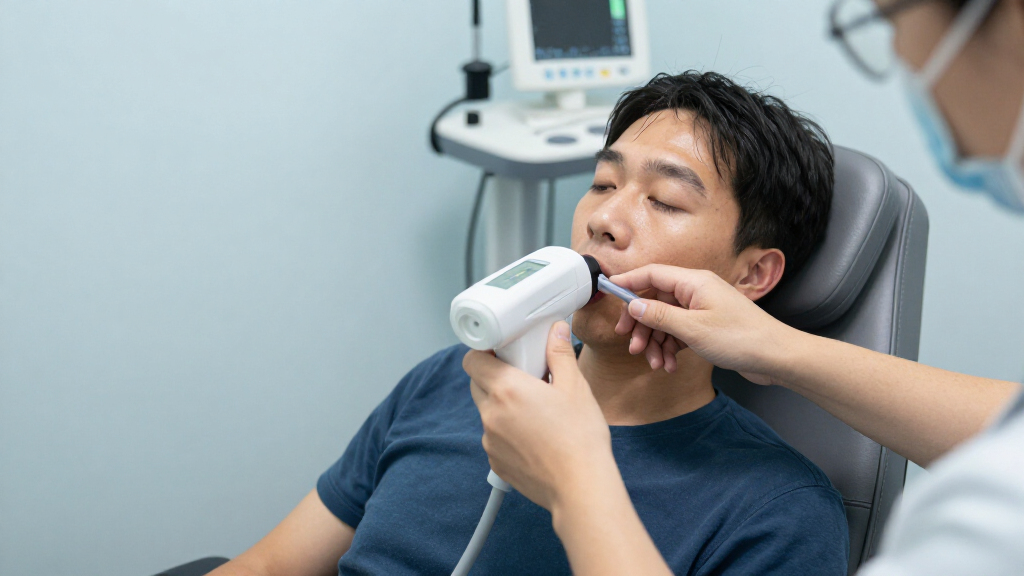
The marker was sphingomyelin C24:0, measured in exhaled breath condensate, a sample collected by cooling and condensing a person’s breath. Its performance was summarized by an area under the receiver operating characteristic curve (AUC) of 0.897, a measure of how well a test separates groups. The reported classification rates refer to the patients in this study, not a guarantee of accuracy for individual patients in routine care.
The study included 101 people who provided blood samples: 28 healthy controls, 33 people with IPF and 40 with fibrotic hypersensitivity pneumonitis. Breath-condensate samples were available from a smaller subset: 10 controls, 21 people with IPF and 18 with fibrotic hypersensitivity pneumonitis. A blood marker, plasma dihydrosphingosine, had an AUC of 0.737 on its own. Adding it to the breath marker produced a combined AUC of 0.906, a modest difference from the breath test alone.
Jon Mullholand, MD, of Virginia Commonwealth University, presented the findings. He said the distinction matters because the diseases have different management and prognoses. The report also described practical limits: breath collection can take 15 to 20 minutes, may be difficult for people with severe lung disease, and is not widely accepted for analysis by laboratories across the United States. The researchers described the test as a possible route to noninvasive assessment, not an established diagnostic service.
A Potential Aid to Treatment Decisions
IPF and fibrotic hypersensitivity pneumonitis can share clinical, imaging and tissue features, particularly in advanced disease. A test that helps clinicians distinguish them could support decisions about management and prognosis. Mullholand said choosing the wrong treatment in either direction can affect outcomes and potentially mortality; that is his clinical assessment, not an outcome measured by this biomarker study.
The breath sample may offer information about the lungs’ local environment, while a blood sample reflects changes across the body. The study’s contrast between the two sample types may help researchers investigate disease biology as well as diagnosis. Still, the results show predictive performance in a limited study group; they do not establish that using the test improves care or patient outcomes.
exhaled breath condensate sphingomyelin test
As an affiliate, we earn on qualifying purchases.
As an affiliate, we earn on qualifying purchases.
Why Breath Condensate Was Studied
Sphingolipids are involved in processes related to inflammation and fibrosis, and earlier studies have reported changes in these lipids in IPF. The researchers examined both blood and breath samples to see whether lipid patterns differed between IPF and fibrotic hypersensitivity pneumonitis. Mullholand said breath condensate could reflect the lung’s local environment, whereas blood may show a more systemic pattern.
Breath-condensate research has faced practical barriers, according to Mullholand, including collection time and the difficulty of obtaining a sample from people with impaired breathing. He also said the assay is technically challenging and not routinely available. In this study, the blood dataset was larger than the breath dataset, so the breath-test findings rest on fewer sampled patients.
“There’s a diagnostic challenge when we’re trying to differentiate these [two conditions] at end-stage disease, as they can have overlapping clinical presentations as well as imaging features, even pathologic slides.”
— Jon Mullholand, MD, of Virginia Commonwealth University, speaking at the CHEST meeting
noninvasive lung disease diagnostic tools
As an affiliate, we earn on qualifying purchases.
As an affiliate, we earn on qualifying purchases.
Validation and Lab Access Remain Open
The findings are from a study presented at a meeting, and the report does not describe an independent external validation. The breath-sample groups were small, and it is not clear from the report how the test would perform across different patient populations or alongside the full range of diagnostic information clinicians use. The reported AUC and classification percentages should not be treated as proof that the test can replace current assessment.
It also remains unclear how consistently laboratories could collect, process and analyze the samples. The report says the method is not accepted for analysis by many U.S. laboratories and that breath collection can be difficult for people with severe lung disease. The study did not establish whether testing changes treatment decisions or improves outcomes.
As an affiliate, we earn on qualifying purchases.
External Testing Is the Next Milestone
Mullholand said the results need to be checked in an external validation study before the test could be considered for wider clinical use. Further research may also examine whether sphingolipids are part of the disease process or a consequence of it, and whether the signal holds up in larger and more varied groups of patients.
For now, the breath assay remains a research finding rather than a routine clinical test. Any move toward practice would also require workable sample collection and laboratory methods, along with evidence that the result adds useful information to existing diagnostic evaluation.
IPF and hypersensitivity pneumonitis diagnostic kit
As an affiliate, we earn on qualifying purchases.
As an affiliate, we earn on qualifying purchases.
Key Questions
What did the breath test measure?
It measured sphingomyelin C24:0 in exhaled breath condensate, a liquid sample produced by cooling and condensing exhaled breath.
How well did the marker distinguish the conditions?
In the study, it correctly predicted 80% of fibrotic hypersensitivity pneumonitis cases and 85.7% of IPF cases. Those figures describe performance in the study sample and do not establish accuracy in general clinical use.
Can patients get this test now?
The report says the breath-condensate assay is not accepted for analysis by many U.S. laboratories. It remains a research finding pending external validation and wider practical testing.
Why would distinguishing IPF from fibrotic hypersensitivity pneumonitis matter?
The conditions can look similar in advanced disease but differ in management and prognosis, according to study presenter Jon Mullholand. The study did not test whether using the breath marker improves outcomes.
What research is needed next?
The key next step is an external validation study to check whether the result holds in other patient groups. Researchers also need to assess sample collection, laboratory methods and how the marker fits with existing diagnostic evaluation.
Source: rss
Evergreen bestsellers Picks
bestsellers
As an affiliate, we earn on qualifying purchases.