TL;DR

Get workout gear delivered free with Prime
- Fast, free delivery on millions of items
- Prime Video, Amazon Music and more included
- Member-only deals all year
Physical therapist Raj Suppiah recommends a half-kneeling hip flexor stretch, a figure-four glute stretch and an all-fours adductor stretch for stiffness associated with prolonged sitting. He says to stay within a comfortable range and not rely on stretching alone; the source does not present these movements as a cure for hip pain.
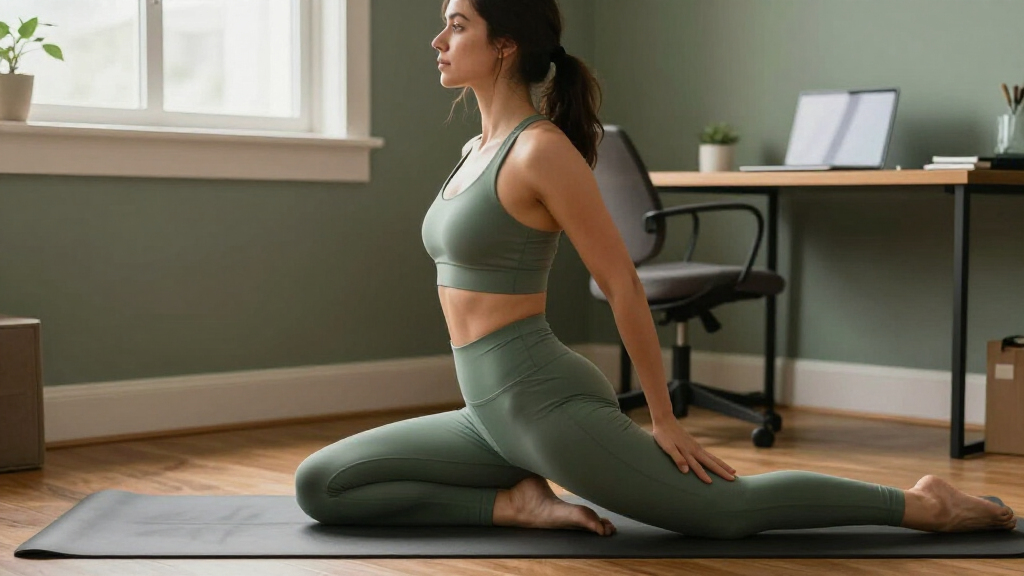
Physical therapist Raj Suppiah recommends a half-kneeling hip flexor stretch, a figure-four glute stretch and an all-fours adductor stretch for people who feel stiff after sitting for a long time, Fit&Well reports. The movements target the front, back and inner thigh of the hip. Suppiah says stretching is only one part of maintaining hip mobility and strength, and a beginner Pilates flow for back and hip stiffness can offer another movement option.
For the half-kneeling hip flexor stretch, kneel with one knee on the floor and the other foot forward, with that knee bent. Gently tuck the pelvis and lean forward until a stretch is felt at the front of the kneeling-side hip. Suppiah advises against arching the lower back. The suggested dose is five to six repetitions per side, holding each for 10 seconds.
The figure-four glute stretch begins lying on the back with knees bent. Place one ankle over the opposite thigh, hold behind the supporting thigh and draw it gently toward the body until a comfortable stretch is felt in the glute and hip. The report suggests five to six repetitions per side, held for 10 seconds. Suppiah says this movement works mobility at the back and outside of the hip.
For the all-fours adductor stretch, start on hands and knees, extend one leg out to the side with the foot on the floor, and slowly rock the hips back while keeping the back neutral. The stretch should be felt along the inner thigh. The suggested dose is eight to 10 repetitions per side, holding each for six seconds. Suppiah says all three movements should stay within a comfortable range and advises seeking professional guidance if they cause pain.
Stretching Is Only One Part
The advice matters because hip stiffness after sitting can have more than one explanation, and a set of stretches may not address every cause. Suppiah says hip pain can also be related to arthritis, irritated tendons or pain originating in the lower back. Readers with persistent, worsening or painful symptoms should not assume that stretching alone will resolve them.
Suppiah also cautions against treating inactivity as the sole source of discomfort. He describes a potential mismatch between a person’s usual activity and a sudden increase in demand—such as a long sports session, a jump in running mileage or a new gym routine—as another factor. His broader advice is to maintain mobility while building strength and capacity gradually.
hip flexor stretch resistance band
As an affiliate, we earn on qualifying purchases.
As an affiliate, we earn on qualifying purchases.
Why These Three Areas
The three movements address different parts of the hip region: the front of the hip, the back and outside, and the inner thigh. Suppiah says people often focus on the front and back while overlooking the adductors, the muscles of the inner thigh that contribute to hip movement and load control.
His explanation is that hips spend much of the day flexed while sitting, so moving them in other directions may help maintain mobility. The report also notes that the glutes and deeper muscles around the hip are used in everyday tasks, including walking, climbing stairs and getting out of a chair. These points are the therapist’s rationale for the exercises, not evidence in the source that they prevent or treat a specific condition.
“I commonly recommend these three stretches because together they target the front, back and inside of the hip.”
— Raj Suppiah, physical therapist and co-founder of Foundation Physiotherapy & Wellness, speaking to Fit&Well
As an affiliate, we earn on qualifying purchases.
What the Advice Cannot Establish
The report does not provide clinical trial results or comparative evidence showing how effective these stretches are, or how quickly they may ease stiffness. It also does not establish that sitting is the cause of an individual’s hip symptoms. Suppiah notes that arthritis, tendon irritation and lower-back problems can also be involved, but the article does not assess any reader’s condition or explain how to distinguish among possible causes.
The suggested repetitions and holds are general exercise instructions, not an individualized plan. The source does not specify who should avoid each movement, how often to do the routine, or how long it may take to notice a change. Anyone whose symptoms are painful or persist should seek advice from a qualified health professional rather than pushing through discomfort.
As an affiliate, we earn on qualifying purchases.
Pair Mobility With Gradual Strength Work
Suppiah’s next step is not to rely on these stretches alone. He recommends combining regular movement and strength exercises, with squats given as one example, and building activity in a way that matches the body’s current capacity. The Fit&Well report also points readers toward a separate set of hip-strengthening exercises, but does not include their instructions in the material provided here.
For readers trying the stretches, the immediate guidance is to move gently, remain within a comfortable range and stop if an exercise causes pain. The source does not give a follow-up schedule or a promised result, so progress and the need for further assessment will vary by person.
As an affiliate, we earn on qualifying purchases.
Key Questions
Which three stretches does the physical therapist recommend?
Raj Suppiah recommends the half-kneeling hip flexor stretch, figure-four glute stretch and all-fours adductor stretch. They target the front, back and inner-thigh areas around the hip.
How many repetitions should I do?
The report suggests five to six repetitions per side for the first two stretches, holding each for 10 seconds. For the all-fours adductor stretch, it suggests eight to 10 repetitions per side, holding each for six seconds. These are general instructions, not an individualized prescription.
Should I keep stretching if a movement hurts?
No. Suppiah advises staying within a comfortable range and seeking advice if an exercise causes pain. The report does not recommend pushing through symptoms.
Can stretching alone keep hips healthy?
Suppiah says stretching can help maintain mobility, but he also emphasizes strength and capacity. He recommends regular movement and strength exercises, such as squats, rather than relying on stretching alone.
Is sitting the only possible reason for hip stiffness?
No. Suppiah says hip discomfort may have other causes, including arthritis, irritated tendons or pain that comes from the lower back. The report does not determine the cause of any individual’s symptoms.
Source: rss
Halloween Picks
halloween
As an affiliate, we earn on qualifying purchases.