TL;DR

Get workout gear delivered free with Prime
- Fast, free delivery on millions of items
- Prime Video, Amazon Music and more included
- Member-only deals all year
A Fit&Well report recommends four exercises—sit-to-stand with seated knee lifts, a dumbbell leg raise, farmer carries and shoulder presses—to train movements used in everyday tasks. The routine calls for two rounds, with eight repetitions per exercise or side and 30-second carries; its benefits are described through an instructor’s experience, not a reported clinical trial.
Fit&Well has published a four-move strength and balance routine designed around daily tasks such as standing from a chair, carrying groceries and reaching overhead. The report’s instructor recommends two rounds of the exercises, using a sturdy chair and dumbbells, while presenting the routine as practical fitness guidance rather than evidence from a clinical study.
The routine pairs a seated knee lift with a sit-to-stand, then adds a dumbbell-supported side leg raise, a farmer carry and a shoulder press. The prescribed amount is eight repetitions per move or per side, except for the farmer carry, which lasts 30 seconds. The instructor recommends completing two rounds overall.
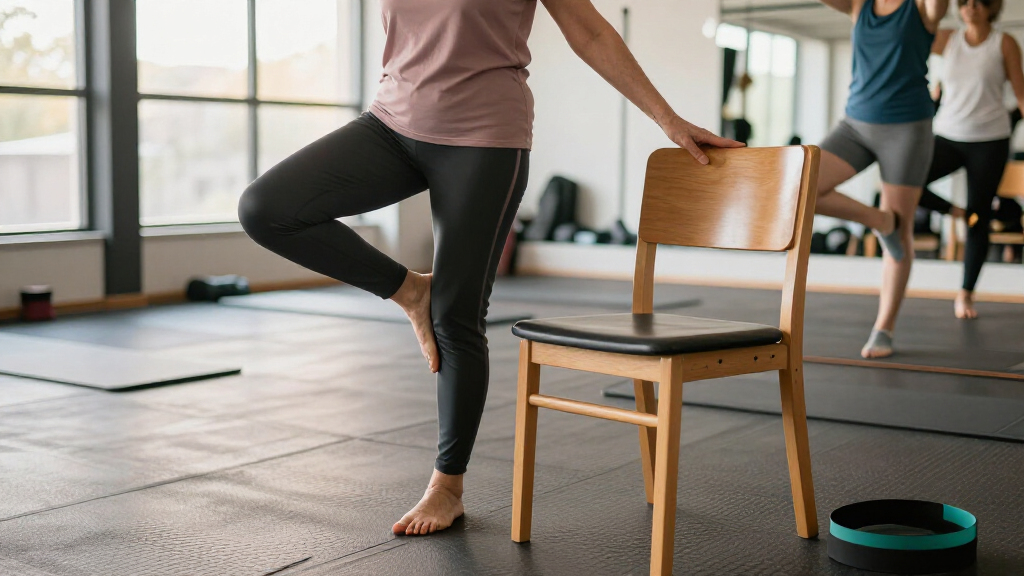
For the first move, sit near the front of a sturdy chair and lift each knee in turn. With both feet on the floor, lean forward slightly, stand by pushing through the feet, then lower back into the chair with control. Hands can rest on the chair for balance during the knee lifts. The paired actions reflect getting the legs out of a car and rising from a low seat.
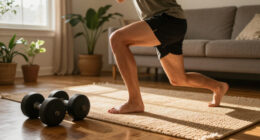
For the side leg raise, hold one dumbbell and lift the opposite leg out to the side without leaning; complete eight repetitions, then switch sides. For the carry, walk around the room with a dumbbell in each hand for 30 seconds, keeping the torso upright, then set the weights down carefully. Finish with shoulder presses, seated or standing: press dumbbells from shoulder height overhead while keeping the torso steady, then lower them slowly.
Training for Everyday Independence
The report connects strength and balance work with ordinary activities that can become harder with age: rising from a seat, walking while carrying bags and putting items on a high shelf. That makes the exercise choices easy to understand and gives readers specific movements to practice, rather than a general instruction to “get stronger.”
The instructor says her older-adult chair classes include people from their late 60s to their early 90s who want to maintain independence. She recounts clients finding tasks such as getting into a car, walking farther and swimming easier. These are personal examples reported by the instructor, not measured results establishing what the routine will do for other people.
The article also argues for building strength before later life, including during the 40s and 50s. The practical relevance is that the exercises are tied to functional movements; the source does not provide a trial, outcome data or a guarantee of preventing loss of independence.
As an affiliate, we earn on qualifying purchases.
How the Four Moves Fit Together
The routine uses a chair, a pair of dumbbells and room to walk. Its movements cover several kinds of effort: standing from a seat, controlling one leg at a time, carrying weight while walking and pressing overhead. The instructions allow the shoulder press to be done seated or standing and permit use of the chair for support during the knee lifts.
The author is an instructor who teaches chair workout classes for older adults. In the supplied report, she says she hears directly from participants about changes they associate with strength training. One example concerns a client whose upper-body strength was remarked on by a nurse after hip replacement surgery; the report does not provide independent verification or medical details about that case.
As an affiliate, we earn on qualifying purchases.
What the Report Does Not Establish
The supplied report does not describe a clinical study or measured test of this four-exercise plan. Its examples come from the instructor’s experience with clients, and the source gives no comparison group, outcome measurements or evidence that everyone will see similar changes. It also does not specify a publication date in the supplied material.
The instructions do not set a particular dumbbell weight or explain how to progress the load over time. They advise choosing weights that can be controlled throughout each movement, but do not give individualized guidance for people with injuries, balance limitations or other health conditions. Readers should adapt exercises to their abilities and seek advice from a qualified health professional if they have relevant concerns.
balance and strength training equipment
As an affiliate, we earn on qualifying purchases.
As an affiliate, we earn on qualifying purchases.
Adapting the Routine Safely
The report offers a fixed starting structure: two rounds, eight repetitions for each move or side, and two 30-second carries. It does not provide a follow-up plan, progression schedule or details of any further reporting. Readers considering the routine can begin with controllable weights, use a stable chair and keep the walking area clear; they should stop if an exercise causes pain or unusual symptoms.
How the routine performs for any individual will depend on their abilities and circumstances. People with pre-existing conditions, recent surgery or significant balance concerns should ask a clinician or qualified exercise professional about suitable modifications before starting.
As an affiliate, we earn on qualifying purchases.
Key Questions
What are the four exercises in the Fit&Well routine?
They are seated knee lifts paired with sit-to-stands, a dumbbell hold with a side leg raise, a farmer carry and a shoulder press.
How many repetitions and rounds does the routine recommend?
The report recommends eight repetitions per exercise or per side, apart from the farmer carry, which is done for 30 seconds. It suggests completing two rounds overall.
What equipment is needed?
The routine calls for a sturdy chair and a pair of dumbbells. The report advises using weights that can be controlled throughout each movement.
Does the report prove these exercises prevent loss of independence?
No. The article presents an instructor’s experience and explains how the movements relate to daily tasks, but it does not report a clinical trial or proof of prevention.
Can someone with health or balance concerns try the routine?
The supplied instructions do not offer individualized medical guidance. People with pre-existing conditions, recent surgery or significant balance concerns should consult a qualified health professional about appropriate exercises and modifications.
Source: rss
Fall Picks
fall essentials
As an affiliate, we earn on qualifying purchases.