
TL;DR

Get workout gear delivered free with Prime
- Fast, free delivery on millions of items
- Prime Video, Amazon Music and more included
- Member-only deals all year
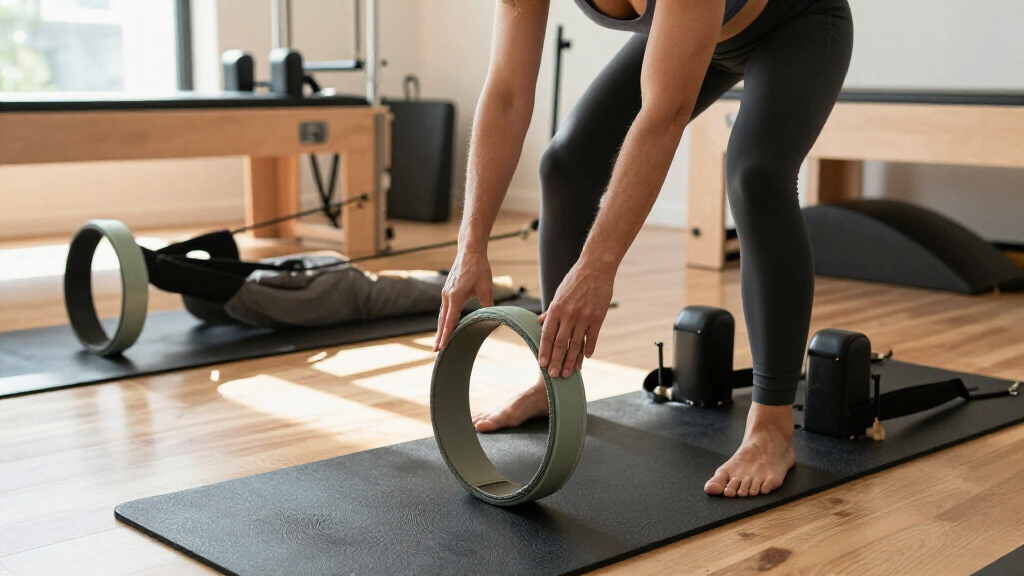
Pilates instructor Nikkii Behrens recommends the magic circle, also called a Pilates ring, as a tool for practicing controlled movement and body alignment. She says it complements rather than replaces dumbbells, and the report outlines three exercises using the ring.
A Pilates instructor has recommended the magic circle, or Pilates ring, as a way to practice controlled movement and body alignment, arguing that it serves a different purpose from dumbbells. In a Fit&Well report, Nikkii Behrens, founder of Rare Street Pilates, described the lightweight resistance tool and demonstrated three exercises; she said it should complement, not replace, weights in a rounded fitness routine.
Behrens described the ring as a lightweight resistance tool that adds resistance to Pilates exercises without aiming to provide the high load associated with traditional gym weights. Her comparison was about training goals: she said dumbbells help muscles produce more force, while the circle encourages the user to manage strength with control, balance and efficiency. Those are the instructor’s views, not findings from a comparative study presented in the report.
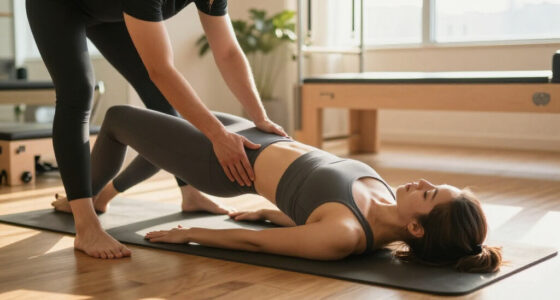
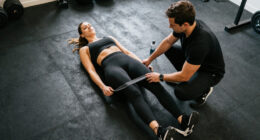
The report sets out three ways to use the ring: a dead bug crunch, a squat and press, and a side-lying leg-lift series. The first combines a crunch with gentle pressure on the circle between the knees, then adds controlled leg extensions. The squat and press involves squeezing and releasing the ring while squatting. In the side-lying series, the ring is placed between the ankles or near them, then used in a sequence of leg movements and presses.
The suggested sessions use two to three rounds. The dead bug crunch and squat and press are listed at 60 seconds each, with 20 to 30 seconds of rest; the side-lying series is listed at 30 seconds per side. The article advises people new to exercise to shorten the work periods when needed and rest longer between moves. Behrens also recommends keeping the pelvis still during the side-lying work and starting with a simpler part of the sequence if the full version is too difficult.
A Different Tool for Movement Control
The recommendation may help readers distinguish between equipment used to add load and equipment used to cue precision and stability. A Pilates ring offers resistance when squeezed, but the exercises described also ask users to coordinate their limbs and maintain position. That makes it an option for people who want to practice movement control without treating the ring as a substitute for strength training with weights.
Behrens told Fit&Well that the ring may support posture, movement quality and core stability. She also linked her dead bug exercise to deep core strength and said it trains the body to keep the spine stable as the arms and legs move. These are her explanations of the exercise; the report does not provide independent evidence that using a ring improves posture or reduces back pain. Readers should treat the exercises as an instructor’s workout guidance, not a guaranteed health outcome.
The distinction matters for equipment choices: the ring is presented as a relatively simple addition to a Pilates routine, while dumbbells remain useful for developing force. Behrens’ stated view is that both kinds of equipment have a place in a well-rounded routine. The report offers no testing or data showing that one tool is generally better than the other.
As an affiliate, we earn on qualifying purchases.
How the Ring Fits Pilates Training
The magic circle is also known as a Pilates ring. In the report, Behrens introduced it as a tool for adding gentle resistance to Pilates exercises. The equipment is used by pressing or squeezing it between body parts, or against the hands, while maintaining a controlled position. The report lists example rings from several brands but does not compare their construction, price or performance.
Fit&Well’s article frames the ring as one part of a broader approach to exercise rather than a replacement for other equipment. Behrens explicitly says weights and precision-focused tools such as the ring should both feature in a well-rounded fitness routine. The article then provides three exercises to illustrate the ring’s use, with modifications for people who find the longer side-lying sequence challenging.
“Dumbbells train your muscles to produce more force, while the circle trains your body to use that strength with greater control, balance and efficiency.”
— Nikkii Behrens, founder of Rare Street Pilates, speaking to Fit&Well
exercise ring for controlled movement
As an affiliate, we earn on qualifying purchases.
As an affiliate, we earn on qualifying purchases.
Evidence Behind the Instructor’s Claims
The report features one instructor’s assessment and exercise instructions. It does not cite a controlled comparison of Pilates rings and dumbbells, provide measurements of muscle activation, or report research confirming the claimed effects on posture, stability or back pain. It is not possible from the source to conclude that the ring is broadly better than dumbbells; Behrens herself describes the tools as serving different purposes.
The article does not give guidance tailored to people with injuries, pain, balance limitations or other health conditions. It also does not specify a particular ring’s resistance level or explain how to judge whether a movement is safe for an individual. Anyone with a pre-existing condition or uncertainty about exercise should seek guidance from a qualified health professional or instructor. Stop if a movement causes pain, and use a range and pace that can be controlled.
Pilates equipment for home workouts
As an affiliate, we earn on qualifying purchases.
As an affiliate, we earn on qualifying purchases.
How Readers Can Try the Exercises
The source does not announce a new product, study or formal program, and it gives no schedule for follow-up research. Its practical next step is the three-exercise sequence, with the suggested work and rest periods and an option to scale down. Readers who try it can begin with the simpler movements, use gentle pressure on the ring and keep the motion controlled rather than forcing repetitions.
For the side-lying series, Behrens advises keeping the pelvis still and starting with the leg swings if the full sequence feels too difficult. The report recommends longer rests or shorter work periods for people new to exercise. The broader point of the recommendation is to use the ring alongside other training tools, not to infer that it replaces dumbbells or professional instruction.
resistance ring for body alignment
As an affiliate, we earn on qualifying purchases.
As an affiliate, we earn on qualifying purchases.
Key Questions
What is a magic circle in Pilates?
A magic circle, also called a Pilates ring, is a lightweight resistance tool. The exercises in the report use pressure against the ring to add resistance while the person works to control their position and movement.
Does the instructor say a Pilates ring is better than dumbbells?
Behrens argues that the tools serve different purposes: dumbbells train muscles to produce force, while the ring can cue control, balance and efficiency. She says both can be part of a well-rounded routine, and the report does not establish that one is universally better.
Which exercises does the report recommend?
The report describes a dead bug crunch, a squat and press, and a side-lying leg-lift series. It lists two to three rounds, with work periods and rest intervals that vary by exercise.
Can beginners try the ring exercises?
The article says people new to exercise can shorten the work periods and rest longer. For the side-lying series, it suggests beginning with the leg swings if the full sequence is too difficult. People with pre-existing health conditions or concerns should seek professional guidance before starting.
Source: rss
Halloween Picks
halloween
As an affiliate, we earn on qualifying purchases.