TL;DR
Yoga mats for heated practice should suit how much you sweat, how firmly you need to balance, and how you prefer to clean and carry your gear. Compare wet-grip surfaces, thickness, materials, and care instructions, and consider a separate yoga towel if sweat makes your mat slick.
Your steady downward dog can turn into a hand-sliding scramble when a warm room fills with sweat. The mat under you matters, but there isn’t one surface that feels secure for every body or every class.

Get workout gear delivered free with Prime
- Fast, free delivery on millions of items
- Prime Video, Amazon Music and more included
- Member-only deals all year
This guide explains how to choose yoga mats for heated practice by weighing wet grip, cushioning, balance, materials, and cleanup. You’ll also see when a towel can help, what to check before buying, and how to keep your gear from smelling like yesterday’s class.
Test wet grip with damp hands when you can; “non-slip” claims don’t guarantee the same feel for every person.
Try a separate yoga towel if sweat makes your current mat slick, and check that the towel stays in place.
Compare a firmer mat for standing balance with added cushioning for kneeling comfort.
Check material, latex information, dimensions, weight, and care instructions before buying.
Clean sweat-soaked mats as directed and air-dry them fully before storage.
Choose a surface that keeps its feel as you sweat
Yoga mats for heated practice work best when their surface still feels dependable as moisture builds, but “non-slip” on a label cannot promise the same grip for everyone. Texture, material, sweat levels, and the way you place your hands all affect traction. If your palms start to slide during the first few sun salutations, a towel or a different surface may help.
Some mats have absorbent or microfiber top layers that can feel grippier as they get damp. Others shed moisture more easily and wipe clean with less fuss, though sweat can sit on top and feel slick. A mat designed to work with a towel may give you more options: practice on the bare surface on a mild day, then add a towel when the room gets hot or your hands are especially sweaty.
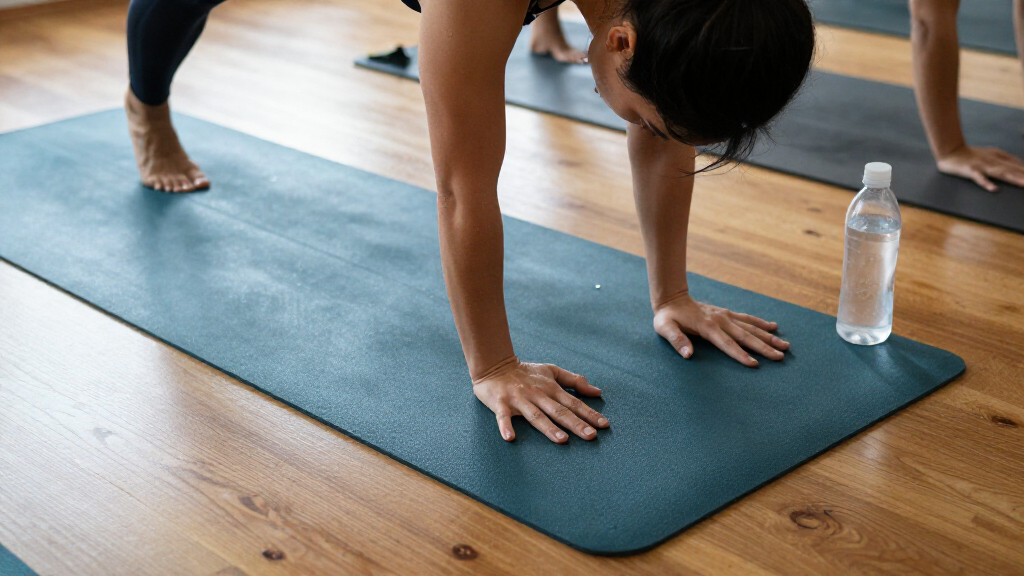
For example, imagine you’re holding plank in a warm studio and your hands inch forward every time you press back. That’s a practical sign to test a towel or compare another surface, rather than trying to muscle through a pose while losing traction. If possible, test a mat with damp hands before class, and judge the feel in the poses you actually practice.
Grip when wet is a personal experience, not a universal product guarantee. Look for a surface that maintains traction when damp, then pay attention to how it feels in your own routine. Better grip can support a more settled practice; sweat still calls for care.
Products Worth Considering

Bowflex SelectTech 840 Adjustable Kettlebell

Withings BPM Connect Wi-Fi and Bluetooth Blood Pressure Monitor

Levoit Vital 200S-P Smart Air Purifier for Large Rooms (up to 1875 ft²)
As an affiliate, we earn on qualifying purchases.
Match your mat and towel to the way you sweat
A yoga towel can absorb sweat and change how a slick mat feels, so it’s a useful option if moisture collects under your hands or feet. You don’t necessarily need a special mat for hot yoga: a regular mat paired with a suitable towel may work well, depending on the surface and your practice. The combination is especially handy when you want one mat for both heated and regular classes.
For a real-world example, say you already own a mat that feels stable in a cool room but gets slippery halfway through a heated flow. Try adding a yoga towel and see whether it stays in place through lunges, plank, and downward dog. Some towels have corner pockets or other features that help hold them on the mat. If the towel bunches underfoot, though, it may distract you instead of helping.
Absorbent mats and towels can feel different as class goes on; less absorbent mats are often quicker to wipe, but sweat may pool on their surface. That’s the tradeoff: a softer, moisture-friendly feel can ask more of your drying routine, while easy cleanup may leave you wanting a towel for extra traction when damp.
| Setup | May suit you if… | Check before class |
|---|---|---|
| Absorbent or microfiber top | You like a surface that takes up moisture | Drying time and care instructions |
| Less absorbent mat | You want a quick wipe-down | Whether sweat pools or feels slick |
| Mat plus towel | You want to manage moisture on your existing mat | Whether the towel stays put |
Use the setup that feels stable through your usual poses. A towel is an option, not a rule.
Balance cushioning with a steady base
A thicker mat can cushion your knees and wrists, while a thinner, firmer mat often gives you a steadier feel in standing balances. There isn’t one ideal thickness for everyone; your joints, preferred poses, and the studio floor all matter. Hot-yoga studios often have firm floors, so a little extra padding may feel welcome when you kneel.
Think about the poses you spend the most time in. If low lunges make your back knee ache against a hard floor, added cushioning can make it easier to settle into the shape. If you often wobble in tree pose, a softer surface may feel less stable under your standing foot. More padding can comfort one pose and complicate another.
Here’s a simple class scenario: you take a mat with thick, plush cushioning because it feels lovely in child’s pose, then notice your foot sinking slightly during a standing sequence. Before changing everything, compare a firmer mat or keep a small folded towel nearby for kneeling shapes. A focused patch of cushioning may give you comfort without making the whole mat feel soft.
When you shop, try standing on the mat and shifting weight slowly from foot to foot. Then kneel and press your hands into it. Balance and comfort are both useful; one shouldn’t have to cancel out the other. Choose based on how your body feels in the poses you practice most.
Compare materials, weight, and care before you buy
Mat materials differ in texture, grip, weight, durability, odor, and cleaning needs, so check the product details alongside its hot-yoga claims. Common options include natural rubber, PVC, polyurethane-coated surfaces, and microfiber-topped mats. No material name alone tells you exactly how a mat will feel when damp; construction and your personal grip matter too.
If you have a latex sensitivity, check carefully before choosing natural rubber. A longer or wider mat can give you more room to stretch out, but it may feel awkward to carry across town or store in a small apartment. For a studio commute, the lightest mat isn’t automatically the best choice if it doesn’t give you enough space or feels slippery under your hands.
Picture a rainy evening after class: you’re carrying a damp mat on the bus, trying to fit it beside your bag. A lighter, compact option may make the trip easier, while a larger mat might better suit your practice at home. Check the weight and dimensions against your usual space and transport routine before buying.
Interest in natural rubber and recycled or bio-based components has grown, but “eco-friendly” can mean different things from one product to another. Look at what the mat is made from and how the maker says to care for it. Follow those instructions: harsh cleaners, prolonged soaking, or direct heat can damage some mats.
Check the care label before your first deep clean. A quick wipe with the maker’s recommended method is safer than guessing with a strong cleaner or leaving a mat to soak.
Follow a simple after-class routine to keep your mat fresh
Clean a sweat-soaked mat as the maker recommends, then let it air-dry fully before you store it. Prompt cleaning and thorough drying can help prevent persistent odors and material deterioration. Rolling up a wet mat and leaving it in a gym bag traps moisture right where you don’t want it.
Try this straightforward routine after class:
- Check the care instructions. Use the cleaning method recommended for your mat’s surface and material.
- Wipe it down as directed. A gentle, approved cleaning approach is a better bet than an improvised harsh product.
- Hang or lay it out to dry. Give both sides time to air-dry completely.
- Store it only when dry. Don’t leave it rolled up damp in a bag overnight.
For example, after an evening class, hang the mat over a clean chair or drying rack while you shower and make dinner. Check it before bed; if the underside still feels damp, leave it open a little longer. That small pause is easier than dealing with a lingering musty smell later.
If your mat develops persistent odor despite regular cleaning and thorough drying, check whether the care instructions recommend a deeper clean. Odor can be a sign that your routine needs attention, and visible damage or a surface that stays slippery may mean it’s time to replace the mat. Clean, dry storage is part of your setup, right alongside grip and cushioning.
Test your setup before relying on it in class
The best way to judge a heated-practice setup is to try it in the conditions and poses where you need it. Product trends increasingly highlight wet-grip finishes, absorbent tops, cleanability, odor control, and portability, but those claims don’t mean every mat has been compared in independent testing. Your experience on the surface matters.
Before taking a new mat into a challenging class, press your palms onto it with damp hands and shift your weight as you would in plank. Try a standing balance too. If you already have a towel, test whether it stays in place through a few lunges and a downward dog. A surface can feel excellent under dry hands and quite different once you sweat.
Suppose you’re deciding between a firmer mat and a thicker one. Try both in the same few movements: stand on one foot, kneel, then move into a supported lunge. Notice whether you feel steady and whether your knees feel comfortable. That comparison gives you more useful information than choosing by thickness or material label alone.
For a first heated class, bring the gear you already own and pay attention to what happens. If your hands slide, add a towel next time; if your knees need more support, consider a firmer mat with a small cushion for kneeling poses. Replace a mat when it becomes persistently slippery, damaged, or difficult to clean. Let your actual practice guide the next purchase.
Frequently Asked Questions
Do I need a special mat for hot yoga?
Not necessarily. A regular mat may work well if it stays comfortable and grippy for you; if sweat makes it slick, try a towel or a surface intended for damp practice.
Is a yoga towel necessary for heated practice?
No, but a towel can absorb sweat and change the feel of a slick surface. Whether it helps depends on your mat, how much you sweat, and whether it stays in place as you move.
How thick should a hot-yoga mat be?
There’s no single ideal thickness. Thicker mats can cushion knees and wrists, while thinner, firmer mats may feel more stable in standing balances; try your usual poses if possible.
Can I use a natural-rubber mat if I have a latex sensitivity?
Check the material details carefully, since some natural-rubber mats may not suit people with latex sensitivity. If the label is unclear, ask the maker or choose a material you know is suitable for you.
How do I stop my yoga mat from smelling?
Clean it according to the maker’s instructions and let it air-dry fully before you roll it up. Avoid storing it damp in a closed bag; if an odor persists, check the care guidance and inspect the mat for damage.
Conclusion
Choose your setup by how it feels in your own class: steady under your hands, comfortable at your knees, and manageable to clean and carry. A mat and towel can work together, but neither can replace a surface that feels secure to you.
Test it, dry it, and let your next practice tell you what to change. The goal is simple: spend less time chasing your hands across the mat and more time breathing into the pose.