
TL;DR

Get workout gear delivered free with Prime
- Fast, free delivery on millions of items
- Prime Video, Amazon Music and more included
- Member-only deals all year
Yoga mats for hot yoga should offer reliable traction when sweaty, a stable feel for standing poses, and care requirements you can keep up with. Compare absorbent and wipe-clean surfaces, test thickness and size against your practice, and use a yoga towel if sweat makes your mat slick.
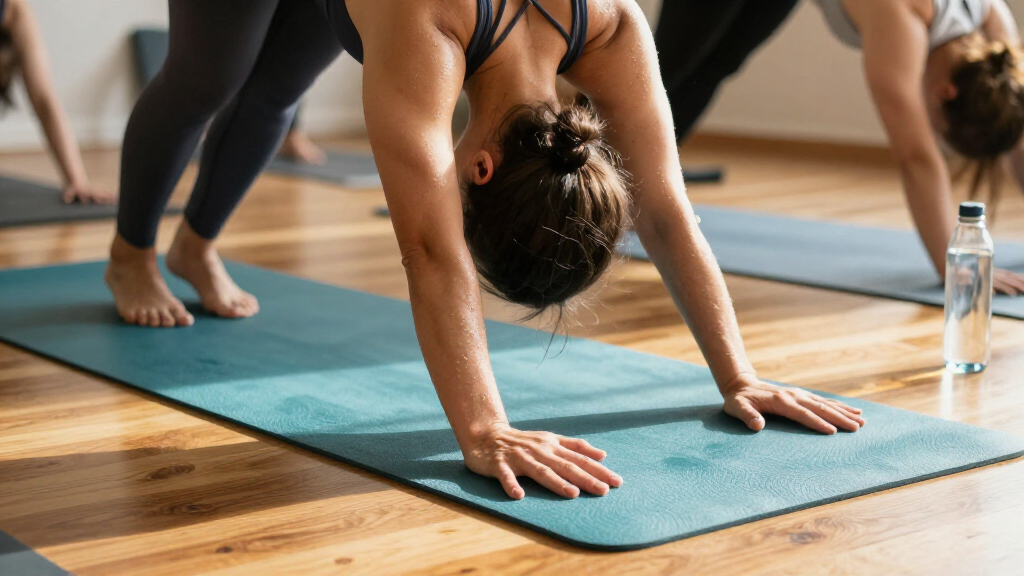
That first downward dog can feel steady; by the third, sweat may turn your palms into two little skates. Hot yoga mats face a different job from mats used for a gentle, cool-room session: they need to work with heat, moisture, and your movement, not just look good rolled out on the studio floor.
This guide will help you choose between absorbent and wipe-clean surfaces, find a useful balance of cushion and stability, and figure out whether a towel belongs in your bag. You’ll also get a simple way to compare materials and care needs before you buy, so you can spend class focusing on your breath instead of bracing for a slip.
There isn’t one perfect mat for everyone. A regular studio-goer who bikes across town has different needs from someone who practices at home twice a week; the best pick is the one you can carry, clean, and trust through your own routine.
Judge a mat by its wet grip, not only its feel in a dry shop or room.
Absorbent mats may feel secure as they take up moisture but need careful drying; wipe-clean mats may pair well with a towel.
Choose thickness by testing both standing balance and kneeling comfort.
Check size, carry weight, cleaning directions, warranty, and material details before buying.
Wipe sweat away and let the mat dry fully before rolling it up.
Choose a mat that stays dependable when sweat shows up
Yoga mats for hot yoga need to provide dependable traction when moisture reaches the surface; a mat that feels secure in a dry living room can feel very different in a heated class. Surface texture and material both affect that grip, and some practitioners add a yoga towel to absorb sweat and create a more secure contact point.
Think of the mat like a pair of shoes on a rainy sidewalk: the feel in dry conditions doesn’t tell you everything about how it performs when wet. If you’re trying a mat in a store, press your palm into it and move your hand gently; that gives you a quick first impression, but it won’t fully reproduce a sweaty class. Ask about the manufacturer’s intended use and care directions too.
For example, imagine your hands start slipping in plank halfway through class. If the mat is designed for use with a towel, laying one over the top may absorb moisture and make it easier to focus on alignment. If slipping continues, don’t push through a pose that feels unsafe; pause, wipe your hands, and talk with the instructor about options.
Dry grip isn’t wet grip. Choose for the conditions you actually practice in, and treat a towel as a practical tool—not a sign that you chose the wrong mat.
Materials and surface coatings differ in feel, weight, durability, odor, and cleaning needs. Read the product’s material details rather than choosing by a broad label alone, especially if you have a latex sensitivity or another material concern.
As an affiliate, we earn on qualifying purchases.
Match the surface to how you want to handle sweat
Absorbent surfaces can feel grippy as they take up moisture, while nonabsorbent surfaces are usually easier to wipe down after class. The tradeoff is straightforward: an absorbent mat may need more time and care to dry, while a wipe-clean mat may work best with a towel when sweat builds up.
Picture two students leaving a humid room: one rolls her mat into a bag immediately, while the other wipes hers and lets it air out at home. The first mat may stay damp longer, particularly if its material holds moisture. Warm, humid rooms make complete drying especially important; leftover sweat can leave odor or residue over time.
Use this quick comparison to make the choice less abstract:
| Surface approach | What it offers | What to plan for |
|---|---|---|
| Absorbent surface | Can feel more secure as it takes up moisture | Needs careful drying and may take longer to clean fully |
| Nonabsorbent surface | Often simple to wipe after practice | A towel may help with traction when wet |
| Mat-and-towel setup | Towel can collect sweat and be washed separately | Adds an item to carry and may shift if it isn’t secured |
If you sweat heavily, try borrowing or testing a towel before buying one. If you practice at home and can leave a mat flat to dry, an absorbent feel may suit you; if you rush to work after class, easier cleanup may matter more. Check both mat and towel care instructions, since not every mat can be soaked or machine-washed.
As an affiliate, we earn on qualifying purchases.
Find cushioning that supports you without wobbling
Mat thickness is a comfort-versus-stability choice, not a simple contest to see which mat feels softest. More cushioning can feel gentler on knees and wrists, while a thinner surface can give you a firmer connection to the floor during standing and balance poses.
Imagine holding tree pose on a plush, yielding surface. Your ankle and toes may need to make more small adjustments than they would on a firmer mat. On the other hand, if kneeling poses leave your knees uncomfortable, a very thin mat may not feel welcoming. There’s no single ideal thickness: your body, the class sequence, and the studio floor all matter.
Try a practical test before settling on a mat. Stand in a balance pose, then lower into a lunge or kneeling position; notice whether the mat feels stable underfoot and comfortable at the joints. If you take a class in a hot yoga studio, ask whether you can test your own mat in a session before committing to frequent use.
Weight matters too. A thicker mat may feel comfortable but can be more cumbersome on a walk or bus ride; a slim, portable mat may be easier to carry but less cushioned. One student who commutes on foot might prefer a lighter mat and a small towel, while a home practitioner may choose extra comfort because carrying it isn’t part of the routine.
Choose the least cushion that still feels comfortable for your needs, rather than assuming thicker is always better. If you have a pre-existing condition or persistent discomfort, ask a qualified health professional for advice about appropriate movement and support.
thick and stable yoga mat for sweaty practice
As an affiliate, we earn on qualifying purchases.
As an affiliate, we earn on qualifying purchases.
Use this five-step check before you buy
A short, practical check can help you match a mat to your classes before you spend money. Start with the way you’ll use it, then judge wet grip, comfort, transport, and care as parts of the same decision.
- Describe your practice. Note how often you attend, how sweaty your sessions get, and whether you practice mostly standing, kneeling, or both. Three weekly heated classes call for different upkeep than one gentle session at home.
- Ask how the surface handles moisture. Check whether it is absorbent, coated, or intended for use with a towel. Don’t rely only on how it feels in a dry shop.
- Test stability and comfort. Try a standing balance and a kneeling position if possible. Notice the mat’s feel rather than shopping by thickness alone.
- Check its size and carry weight. A longer or wider mat gives you more room but adds bulk and may take longer to dry. Measure the space you have and consider your commute.
- Read care and material details. Look for cleaning instructions, material information, warranty terms, and any warnings related to sensitivities.
For example, a beginner who takes one class each week may find that an affordable, easy-to-wipe mat plus a towel works well. A longtime practitioner attending hot yoga places most days may care more about a durable surface, clear warranty coverage, and a realistic drying setup than the lowest starting price.
Specific product releases, prices, and stock change often, so check current specifications with the seller before buying. Avoid broad “eco-friendly” promises without details: look for disclosed materials, sourcing information, relevant certifications where available, and guidance on disposal.
As an affiliate, we earn on qualifying purchases.
Keep your mat fresh with a simple after-class routine
Wipe your mat after practice and let it dry fully before you roll it up. Sweat left on a mat can leave residue or odor, and warm, humid rooms make drying more important. Follow the maker’s care instructions and use a cleaner the mat’s material can handle.
Here’s a common real-life trap: class ends at 7 p.m., you fold your damp mat into a bag, and you don’t open it until the next morning. That convenient shortcut can keep moisture trapped against the surface. If you need to leave quickly, wipe away visible sweat, carry the mat so air can reach it if practical, and unroll it to dry as soon as you get home.
Don’t assume every mat is safe to soak, scrub with a strong cleaner, or put in a washing machine. A surface coating may need different care from natural rubber or another material. A quick check of the care label can save you from dulling the surface or damaging the mat. If you use a towel, wash and dry it according to its own label.
- After class: wipe away sweat using a compatible cleaner or method approved by the maker.
- At home: leave the mat open in a well-aired spot until it is fully dry.
- Before storage: check that the surface no longer feels damp, then roll it loosely as directed.
With repeated use, clean habits matter as much as the mat’s price tag. A mat that needs longer to dry may be a poor fit if you practice daily and have nowhere to air it; an easy-wipe option may better match a packed schedule.
Know when a towel, a new mat, or a different setup makes sense
A yoga towel is worth trying when sweat makes your mat slick, but it isn’t required for every practitioner. Some surfaces are designed to work well without one; others feel more secure with a towel that absorbs moisture. Start with the simplest adjustment that addresses the problem you actually notice.
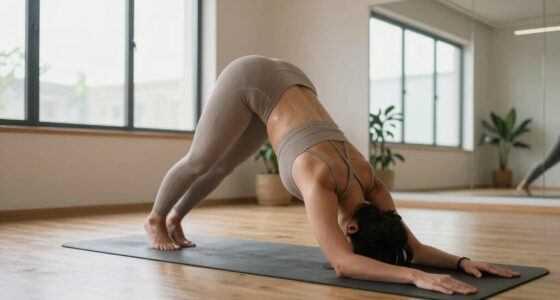
If your hands slip in downward dog, first check that the mat and floor are clean, wipe your hands, and see whether the mat’s care instructions recommend a towel. Avoid applying oils or unapproved treatments to change the surface; they can leave residue and may make traction less predictable. If the mat still feels unreliable, stop and ask your instructor about safer modifications.
Replacement is a practical decision, not a calendar rule. If the surface has lost traction, the mat is damaged, or it no longer cleans up well, it may be time to shop. Someone who practices every day may wear a mat faster than someone who attends once a week, so inspect its condition instead of relying on a fixed replacement date.
Shared studio mats and towels call for a little extra attention: follow the studio’s cleaning guidance and bring your own towel if that helps you feel more comfortable. For a personal mat, choose a cleaner compatible with its material and let it dry completely. If you notice persistent skin irritation or have a material sensitivity, stop using the product and seek suitable professional guidance.
Good hot-yoga gear supports your practice without demanding perfect conditions. A mat, towel, and care routine should work together like a well-packed gym bag: useful, manageable, and ready for the next class.
Frequently Asked Questions
Can I use a regular yoga mat for hot yoga?
Yes, but its grip and comfort may change when it gets wet. Try a towel if you notice slipping, and consider a mat intended for sweaty practice if the problem continues.
Do I need a yoga towel for hot yoga?
Not always. A towel can absorb sweat and support traction, especially on a mat that feels slick when wet; some mats are designed to work well without one.
How thick should a hot yoga mat be?
There isn’t one right thickness. More cushioning can feel comfortable for knees and wrists, while a thinner mat may feel firmer and steadier in standing poses; test both kinds of position if you can.
How do I clean and dry a hot yoga mat?
Follow the manufacturer’s instructions, wipe away sweat with a compatible cleaner, and let the mat dry fully before rolling it up. Don’t assume it can be soaked or machine-washed.
How can I tell when it’s time to replace my mat?
Replace it when the surface loses traction, becomes damaged, or no longer cleans up well. How quickly that happens depends on how often you practice and how you care for it.
Conclusion
Choose the mat you can trust under sweaty hands and realistically care for after class. Test for stability and comfort, check the cleaning directions, and add a towel if moisture makes your surface slick.
Your best mat isn’t the one with the grandest label. It’s the one that stays ready for your next steady breath and the quiet thump of feet returning to the floor.
Halloween Picks
halloween
As an affiliate, we earn on qualifying purchases.