TL;DR

Get workout gear delivered free with Prime
- Fast, free delivery on millions of items
- Prime Video, Amazon Music and more included
- Member-only deals all year
For heated yoga, a good mat must handle heavy sweating, resist slipping when damp, and be easy to clean. The best choice depends on material, construction, and personal needs. Proper care extends mat life and keeps your practice safe.
Imagine stepping onto your mat during a heated power yoga class. The sweat pours down your brow, your hands slick with moisture. Your mat needs to stay in place, grip your skin, and handle the relentless moisture. Not all mats are built for this. If you’ve ever slipped during a sweaty pose or struggled to clean your mat afterward, you know the challenge.
In this guide, you’ll learn how to pick a yoga mat that thrives in heated environments. Whether you prefer natural cork, rubber, or synthetic surfaces, understanding what makes a mat sweat-resistant and easy to clean is key. You’ll get practical tips to keep your practice safe, stable, and hygienic—so every session feels invigorating, not risky.
Prioritize wet grip when choosing a mat for heated practice—materials like natural rubber and cork perform well when damp.
Open-cell surfaces provide better traction but demand diligent cleaning to prevent odors and bacteria buildup.
A 3–5 mm thick, stable mat offers the best balance of cushioning and balance for most heated yoga styles.
Regular cleaning after each session, using manufacturer-approved products, keeps your mat hygienic and prolongs its life.
Stay aware of material safety, especially with natural rubber and synthetic blends—avoid mats with strong odors or signs of deterioration.
Why Wet Grip Is the Most Crucial Feature for Heated Yoga Mats
When it comes to heated practice, your mat’s ability to grip when soaked isn’t just a convenience—it’s a safety necessity. Think of a yoga session where your dry mat feels firm and supportive, but as soon as sweat starts to pool, the surface becomes dangerously slick. This loss of traction can lead to slips, falls, and injuries, especially during balancing poses like Tree or Warrior III. The implication is clear: a slip in a heated class isn’t just embarrassing; it can be harmful.
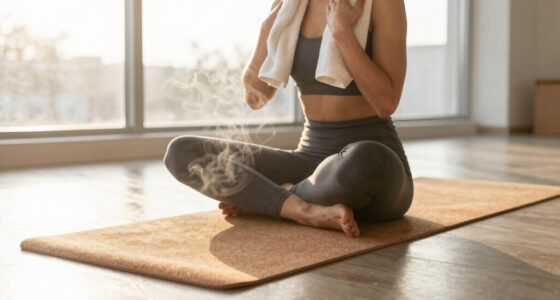
Materials like natural rubber or polyurethane are designed to maintain their grip even when wet, but each has trade-offs. For example, natural rubber offers excellent traction but can be less durable if exposed to oils or disinfectants over time. Polyurethane provides a strong grip but may stain or absorb oils, affecting long-term performance. Cork, which becomes more textured as it gets sweaty, offers a unique advantage—its surface actually improves with moisture, much like a tree’s bark becoming rougher after rain, enhancing grip precisely when you need it most.
Imagine practicing a challenging arm balance in a heated studio—without reliable wet grip, you risk slipping and falling. The choice of material isn’t just about comfort but directly impacts your safety and confidence. Therefore, understanding how different surfaces perform under moisture is critical. When selecting a mat, look for those specifically tested and rated for wet traction—this isn’t just marketing; it’s a matter of safety during your most intense, sweaty sessions.
best yoga mats for heated practice
As an affiliate, we earn on qualifying purchases.
As an affiliate, we earn on qualifying purchases.
Open-Cell vs. Closed-Cell Mats: Which Keeps You Safer in Sweat?
Open-cell and closed-cell constructions influence how your mat handles moisture, odor, and hygiene—factors that are especially critical in heated practice. Open-cell mats are like a sponge—they absorb sweat and moisture, providing excellent grip as long as they are clean. However, this absorbency can become a double-edged sword. For example, if you practice frequently without proper cleaning, sweat and bacteria can become trapped within the fibers, leading to persistent odors or even skin infections. This is comparable to a kitchen sponge that, if not cleaned regularly, develops a foul smell and harbor bacteria, risking contamination.
Closed-cell mats, on the other hand, act like plastic wrap—they resist moisture penetration, making them easier to wipe clean after each use. But because sweat stays on the surface, these mats can become slippery if not managed properly, especially during vigorous poses. Think of a glossy countertop—you can wipe off spills easily, but if you don’t clean quickly, residue can accumulate and become slick.
Many practitioners prefer a hybrid approach: an open-cell surface for superior grip, paired with a moisture-resistant backing or coating that prevents bacteria buildup. For instance, some high-end mats feature an open-cell top layer with a closed-cell underside, offering the grip of an open-cell with the hygiene of a closed design. This combination allows you to enjoy excellent traction while minimizing odor and bacteria—crucial when practicing intensely in heated environments where sweat is unavoidable. Choosing the right construction requires weighing the benefits of grip against the ease of cleaning and hygiene, especially if you practice multiple times a week or share your mat with others.
As an affiliate, we earn on qualifying purchases.
How Thick and Wide Should Your Heated Yoga Mat Be?
Most heated yoga practitioners find that a mat around 3–5 mm thick strikes the ideal balance between cushioning and stability. For example, a 4 mm mat offers enough padding to protect your knees and joints during floor poses like Pigeon or Bridge without compromising your balance in standing poses. Thicker mats—over 6 mm—might feel cozy but can make balancing poses like Half Moon or Warrior III more challenging, especially when your muscles are warm and your sweat makes the surface slick. It’s like trying to balance on a thick foam pad—comfortable but less stable.
Regarding width and length, standard mats are approximately 68 inches long and 24 inches wide, suitable for most practitioners. But if you’re tall—say, over 6 feet—or prefer extra space for fluid transitions, consider longer mats—up to 84 inches. Wider mats, around 30 inches, provide more room for dynamic sequences or when practicing with a partner. The key is stability: a mat that shifts or bunches during a sweaty flow can pose safety risks. For example, a wide, thin mat might slide during a vigorous Sun Salutation, leading to imbalance or falls.
Think about your practice style—if you tend to move swiftly or do a lot of transitions, a thicker, grippier mat with a textured underside can prevent slipping. Conversely, if you travel often or prefer a lightweight option, a thinner, portable mat might be more practical, but be prepared to add grip aids like towels or grips.
Ultimately, selecting the right size and thickness isn’t just about comfort—it’s about creating a stable, secure foundation for your heated practice. The trade-off is between cushioning and control: more padding can sometimes reduce stability, so choose based on your priorities and environment.
As an affiliate, we earn on qualifying purchases.
Material Safety and Heat Resistance: What to Watch For
While your yoga mat isn’t directly exposed to high temperatures like a baking oven, heated studios can accelerate wear and tear, especially if your mat isn’t designed for such environments. For example, a low-quality PVC mat might deform or become sticky after several sessions in a hot room, compromising safety. Conversely, high-quality natural rubber or cork mats are more resistant to heat and oils, maintaining their integrity over time. Think of it like choosing a durable outdoor shoe versus a delicate dress shoe—one is built to withstand the elements, the other isn’t.
Understanding how different materials interact with heat and sweat helps you prevent premature deterioration. Natural rubber and cork are eco-friendly options that handle moisture well but can contain latex, which some users are allergic to. They may also oxidize or discolor over time if exposed to sunlight or disinfectants. PVC and TPE are synthetic options that are highly durable but often contain chemicals like phthalates or other additives that some prefer to avoid for health or environmental reasons.
Consider scenarios such as practicing in a very hot studio—if your mat starts peeling or develops a sticky surface, it’s a sign that the material is breaking down. Similarly, a strong chemical odor upon opening a new mat indicates low-quality manufacturing. To maximize safety, always follow manufacturer instructions: avoid leaving your mat in a car trunk on a hot day, and use recommended cleaning products that won’t degrade the surface. Regularly inspect your mat for signs of wear, like cracking or peeling, which can compromise grip and safety. Replacing a worn-out mat before it becomes unsafe is a wise investment in your practice’s longevity and your well-being.
As an affiliate, we earn on qualifying purchases.
Cleaning and Drying: Keeping Your Heated Yoga Mat Fresh
After a sweaty session, a thorough cleaning is essential to prevent bacterial buildup and odors. Using a damp cloth with a gentle, manufacturer-approved cleaner helps remove sweat and oils from the surface. For example, some studios recommend a mixture of water and mild soap or natural cleaners like vinegar diluted in water. Avoid harsh chemicals such as bleach or alcohol-based disinfectants—they can damage the surface, reduce grip, or cause discoloration. Think of cleaning your mat like maintaining a car: regular, gentle care keeps it running smoothly and looking new.
Deep cleaning your mat periodically—say, once a month—by soaking it in a tub with mild soap and rinsing thoroughly can extend its lifespan. Allow it to dry completely in a shaded, well-ventilated area before rolling it up. Never fold or store a damp mat, as this can promote mold growth and lingering odors, much like leaving wet towels in a pile. If your mat has a removable cover or is made of quick-drying material, take advantage of these features for easier maintenance.
Proper storage also matters: keep your mat in a cool, shaded place, away from direct sunlight or heat sources, which can cause warping or fading. For added hygiene, consider using a microfiber towel or a specialized yoga towel with silicone dots or corner pockets. These absorb excess sweat, provide additional grip, and protect your mat from excessive moisture. For example, during a hot vinyasa flow, placing a towel over your mat can prevent sweat from seeping into the surface, making cleaning easier and prolonging its life.
Remember, consistent cleaning and proper drying are not just about hygiene—they directly impact your safety and the longevity of your investment. A clean, dry mat provides reliable traction and reduces the risk of slipping or skin irritation caused by bacteria or mold.
Latest Trends in Mats for Heated Practice
Manufacturers are innovating with features that enhance heated practice, like integrated towel surfaces that combine absorbent textiles with durable bases. For example, some mats now have a built-in microfiber layer that absorbs sweat directly, eliminating the need for an extra towel and simplifying cleaning routines. This innovation is especially useful for practitioners who move quickly through sequences or practice multiple times a week.
Wet-grip coatings are also advancing, promising better traction in both dry warm-ups and intense sweating. Brands are increasingly transparent about their materials—detailing rubber sources, chemical treatments, and eco-claims—so practitioners can make informed choices aligned with their values. For instance, eco-conscious yogis might prefer cork or recycled-rubber options that are produced with minimal environmental impact.
Eco-friendly options like cork, recycled rubber, and plant-based blends are gaining popularity, driven by a desire to reduce environmental footprint. Recycling programs and repair initiatives are emerging, helping extend the lifespan of mats and reduce waste—much like how some car manufacturers offer repair kits instead of replacements. Size options are expanding too, with longer, wider, lightweight travel mats, and those featuring alignment markings becoming common. Hygiene-focused designs with fast-drying surfaces and removable covers are also trending among serious practitioners. These innovations help practitioners customize their gear to their specific needs while supporting sustainability and hygiene.
Staying informed about these trends allows you to select a mat that not only performs well but also aligns with your environmental and health values—especially important if you practice frequently or in different environments.
Frequently Asked Questions
What is the best material for hot yoga?
Polyurethane, natural rubber, and cork are top choices because they handle moisture well. Your choice depends on allergies, cleaning habits, and environmental values. Test different surfaces to see which grip and feel best for you.
Do I need a special mat for hot yoga?
Not necessarily, but a mat designed to handle sweat—like one with good wet grip and easy-to-clean surfaces—reduces slipping and odor buildup. Consider a mat with a moisture-wicking surface or a towel layered on top.
Should I use a towel over the mat?
Yes, especially if you sweat heavily or practice in a shared studio. Towels absorb sweat, improve hygiene, and help prolong your mat’s life. Look for ones with non-slip features like silicone dots or corner pockets.
Is cork good for heated practice?
Cork is a strong option because it becomes more grippy as it gets damp. It’s naturally antimicrobial and eco-friendly, but it may feel less secure when dry. Dried thoroughly, it provides reliable traction in heated classes.
How often should the mat be cleaned?
Clean your mat after every sweaty session with a gentle wipe or manufacturer-recommended cleaner. Deep cleaning monthly or bi-weekly helps prevent odor and bacteria buildup, extending its lifespan.
Conclusion
Your mat is the foundation of a safe, stable heated yoga practice. Choosing one that handles sweat, heat, and frequent cleaning isn’t just about comfort—it’s about safety. Think of it as investing in your practice’s longevity and your well-being.
Remember: a well-chosen, well-maintained mat transforms sweat from a slip hazard into a sign of your effort. So, pick wisely, care diligently, and flow freely—your best practice is still ahead.
Halloween Picks
halloween
As an affiliate, we earn on qualifying purchases.