Choose a hot-yoga mat by checking its grip when damp, comfort, dimensions, material, and cleaning needs, then test it in class. This guide is for beginners and experienced practitioners replacing a mat who want a practical way to compare options before spending money. You can narrow down a choice in about 30-60 minutes; confirming the fit may take one class.

Get workout gear delivered free with Prime
- Fast, free delivery on millions of items
- Prime Video, Amazon Music and more included
- Member-only deals all year
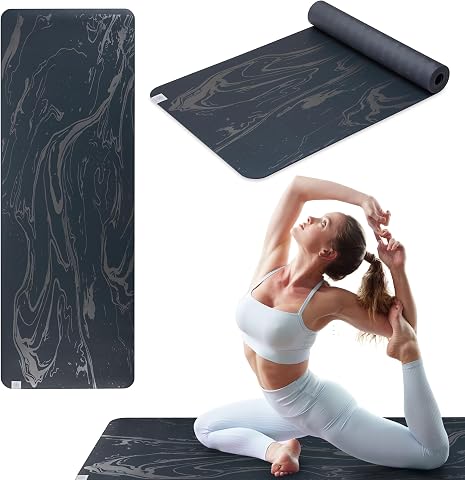
Gaiam Dry-Grip Yoga Mat – Non-Slip, Hot Yoga
- ✔ Dimensions: 68 in L × 24 in W
- ✔ Thickness: 5 mm
- ✔ Weight: 4.25 lb

IUGA Yoga Mat – Thick Non-Slip Anti-Tear Pilates Mat, Eco-Friendly, 72" x 24" x 6 mm
- ✔ Dimensions: 72 in × 24 in
- ✔ Thickness: 6 mm
- ✔ Weight: 2 lb

Gruper Yoga Mat Non Slip, Eco Friendly Exercise Mat with Carrying Strap
- ✔ Dimensions: 72 in × 24 in
- ✔ Standard thickness: 6 mm
- ✔ Standard weight: 2.6 lb
Difficulty: Beginner | Time: 30-60 minutes to compare and select; allow one class to test the mat
What You’ll Need
Tools & Materials:
- A tape measure or the dimensions of your current mat
- A clean, damp hand or cloth for a basic grip comparison
- Access to product specifications and care instructions
- A yoga towel if you plan to compare a towel-on-mat setup
Knowledge:
- Know whether your studio provides mats or requires you to bring one
- Know whether you prefer extra cushioning or a closer feel to the floor
- No specialist yoga or shopping knowledge is required
Check the studio’s rules before buying: some studios rent mats, provide towels, or specify cleaning practices. Hot yoga rooms vary in temperature and humidity, and people sweat at different rates, so a mat that works for one person may feel slippery to another. Do not judge a mat by a dry showroom test alone.
Gaiam Dry-Grip Yoga Mat – Non-Slip, Hot Yoga
Among these three, Gaiam makes the most direct case for hot yoga: its moisture-wicking topcoat is designed to help maintain traction as a session gets sweaty. That focused surface claim gives it the top spot over IUGA and Gruper, whose descriptions highlight textured or double-sided grip but do not specifically describe moisture-wicking. For buyers who prioritize a mat built around perspiration, that distinction is more relevant than simply seeing “non-slip” in a product title.The 5 mm thickness offers joint cushioning without moving into Gruper’s optional 8 mm profile, and the 4.25 lb weight remains manageable for carrying to a studio. It is, however, the heaviest of the three listed standard configurations: IUGA is 2 lb and Gruper’s 6 mm version is 2.6 lb. Gaiam is also 68 inches long, whereas both TPE alternatives measure 72 inches. We would choose it for its hot-practice surface, not for maximum length or minimum carry weight.There are practical caveats. The mat may have a strong odor when newly unwrapped, so airing it out before class is sensible. Prolonged direct sunlight can cause fading and brittleness, which makes leaving it in a sunny car a poor habit. Its PVC construction is described as latex-free and free of six common phthalates; shoppers specifically seeking a TPE mat should instead compare IUGA and Gruper.
Pros:
- Moisture-wicking topcoat is specifically aimed at sweaty sessions.
- 5 mm cushioning supports joints without the thicker 8 mm profile.
- Latex-free and listed as free of six common phthalates.
- Rolls up for studio or gym transport.
Cons:
- At 4.25 lb, it is heavier than either listed TPE alternative.
- The 68-inch length is shorter than the 72-inch Gruper and IUGA mats.
- May have a noticeable initial odor and can be damaged by prolonged direct sun.
Best for: Hot-yoga practitioners who want a moisture-wicking surface and a balanced 5 mm cushion, and do not mind a heavier, shorter mat.
Not ideal for: Buyers seeking a TPE mat, a 72-inch length, the lightest commute, or a mat that can be left in direct sunlight.
Bottom line: Choose Gaiam when a moisture-wicking, hot-yoga-focused surface matters more than minimizing weight or maximizing length.
“Choose Gaiam when a moisture-wicking, hot-yoga-focused surface matters more than minimizing weight or maximizing length.”
IUGA Yoga Mat – Thick Non-Slip Anti-Tear Pilates Mat, Eco-Friendly, 72" x 24" x 6 mm
If we expect to carry a mat to class often, IUGA is the easiest option in this comparison to justify: it weighs just 2 lb, yet provides 6 mm of cushioning and a full 72-inch length. That combination is more travel-friendly than Gaiam’s 4.25 lb build and longer than Gaiam’s 68-inch surface. Its double-sided grip, textured top, and bone-pattern underside also give buyers a specific traction design rather than a plain, smooth mat.The middle-layer mesh is intended to improve tear resistance, while the TPE material is described as SGS-certified, latex-free, and PVC-free. Those details make IUGA a strong alternative for shoppers who want a light mat with a reinforced construction. Compared with Gruper, it is 0.6 lb lighter than the standard 6 mm version and includes a carry strap, but Gruper also includes a storage bag and offers an 8 mm option. IUGA has no stated moisture-wicking feature, so we would not treat its textured surface as a guarantee of grip when drenched.Care needs attention: the instructions call for mild detergent and cold water, and prolonged direct sunlight should be avoided. That is less appealing for anyone wanting low-effort cleaning or a mat to dry outside in strong sun. IUGA earns its role through light weight and a useful blend of cushioning and length, rather than a specifically sweat-managing topcoat like Gaiam’s.
Pros:
- Lightest option listed at 2 lb.
- 72-inch length and 6 mm thickness balance room and cushioning.
- Textured double-sided surface and mesh middle layer are designed for grip and tear resistance.
- SGS-certified TPE is described as latex-free and PVC-free; a carry strap is included.
Cons:
- No moisture-wicking feature is specified for sweaty sessions.
- Cleaning requires mild detergent and cold water.
- Prolonged direct sunlight should be avoided.
Best for: Studio commuters who want a 72-inch TPE mat with 6 mm cushioning, a carry strap, and a particularly low listed weight.
Not ideal for: Practitioners who need an explicit moisture-wicking surface, want an included storage bag, or prefer simple cleaning and sun exposure.
Bottom line: IUGA is the portability pick for buyers who value a lightweight, full-length TPE mat more than a specifically moisture-wicking surface.
“IUGA is the portability pick for buyers who value a lightweight, full-length TPE mat more than a specifically moisture-wicking surface.”
Gruper Yoga Mat Non Slip, Eco Friendly Exercise Mat with Carrying Strap
Gruper is the most adjustable choice here because it offers two thickness options: 6 mm for a more moderate carry and 8 mm for additional cushioning. Both versions are 72 inches long, giving taller practitioners four extra inches over Gaiam. Its TPE construction has a sticky texture on both sides and a double-layer design described as anti-tear, so the mat makes a broader case for everyday grip and cushioning than a hot-yoga-specific surface.For sweaty classes, that distinction matters. Gruper’s two-sided texture may suit buyers who prefer tactile grip, but the product details do not identify a moisture-wicking topcoat as Gaiam does. We would rank it behind Gaiam for hot-session specificity and behind IUGA for portability: the standard version weighs 2.6 lb, and the 8 mm version weighs 3.1 lb, compared with IUGA’s 2 lb. On the other hand, Gruper includes both a carrying strap and storage bag, while IUGA lists a strap only.The material is described as non-toxic and odorless TPE, an appealing contrast for buyers avoiding the odor caveat noted for Gaiam. Its main compromise is convenience after class: it cannot be machine washed and needs manual cleaning with a damp cloth. The thicker model is also less appealing for a long walk or commute. Choose Gruper when length, accessory support, and cushioning choice outrank the weight savings and sweat-focused design of the other two.
Pros:
- Two thickness choices: 6 mm standard or 8 mm thickened.
- 72-inch length matches IUGA and exceeds Gaiam by four inches.
- Double-layer construction and textured grip on both sides.
- Includes a carrying strap and storage bag; TPE is described as odorless.
Cons:
- Heavier than IUGA, especially in the 8 mm configuration.
- No moisture-wicking topcoat is specified.
- Requires manual cleaning with a damp cloth and cannot be machine washed.
Best for: Buyers who want a 72-inch mat, a choice between 6 mm and 8 mm cushioning, and a strap plus storage bag.
Not ideal for: Hot-yoga practitioners who want an expressly moisture-wicking surface, lightweight commuters, or anyone who needs machine-washable care.
Bottom line: Gruper suits buyers who prioritize extra length, optional thicker cushioning, and included storage over the lightest carry or clearest sweat-focused surface design.
“Gruper suits buyers who prioritize extra length, optional thicker cushioning, and included storage over the lightest carry or clearest sweat-focused surface design.”
As an Amazon Associate we earn from qualifying purchases.
Before You Start
Hot-yoga mats are not all designed to work the same way. Some surfaces grip well when damp; others need a yoga towel to manage sweat. Treat claims such as “non-slip” as a starting point, not a guarantee. If you have a latex allergy or sensitivity, check the material details and contact the maker if the label is unclear. Avoid buying solely by color or thickness, and read the return policy because a mat’s feel can be hard to judge before class.
Step-by-Step Instructions
Step 1: Check your studio’s setup
Ask the studio whether you need to bring a mat, whether rental mats are available, and whether towels or specific cleaning products are provided. Ask whether the room’s heated classes use a towel on top of the mat. Write down any size limits or cleaning rules before comparing products.
Tip:If you are new to hot yoga, renting or borrowing a mat for one class can help you learn what surface and cushioning you prefer before purchasing.
Check: You know what the studio supplies and have noted any mat, towel, or cleaning requirements.
Step 2: Set your priorities
List your main needs before browsing: reliable damp grip, cushioning for knees and wrists, a lightweight mat for carrying, or easy cleaning. Rank the needs. If you sweat heavily or are unsure about grip, prioritize traction and towel compatibility; if you have sensitive joints, prioritize cushioning without ignoring stability.
Tip:No single mat is best for every hot-yoga class. A very thick, soft mat can feel unstable in standing balance poses, while a thin mat may be uncomfortable on a hard floor.
Check: You have identified your top two or three requirements instead of comparing products by marketing claims alone.
Step 3: Compare materials and surface grip
Read each product description for the mat’s material and instructions for wet or heated use. Compare the surface texture and check whether the maker recommends a towel. If possible, press a clean, slightly damp palm onto the surface and apply gentle pressure; do not test by standing on an unsecured mat. Check that the surface does not feel slick to your hand, while remembering that this small test cannot reproduce a full class.
Tip:Natural rubber, polyurethane-coated, and other synthetic mats can feel very different, and performance varies by product. Check allergy information, odor notes, cleaning directions, and whether the mat requires a break-in period.
Check: You understand whether the mat is intended for damp use, whether a towel is recommended, and what care or allergy concerns apply.
Step 4: Choose thickness, size, and weight
Compare each mat’s length and width with your height and the space you need for poses. Check its thickness in millimeters and, if listed, its weight. Choose enough cushioning for floor comfort without so much softness that balance feels unstable. If you walk or take transit to class, select a weight you can comfortably carry along with your towel and water.
Tip:Do not assume a thicker mat is safer or grippier. Thickness affects cushioning; surface grip and stability depend on the material, finish, and how the mat is used.
Check: The dimensions give you room to move, the cushioning suits your joints, and the weight is manageable for your commute.
Step 5: Decide whether you need a yoga towel
Check whether your shortlisted mat can be used alone when damp or needs a towel to absorb sweat. If you choose a towel, confirm that it covers the mat and has corner pockets or another way to stay in place. Follow the towel maker’s care instructions and use a clean, dry towel for each class.
Tip:A towel that shifts or bunches can distract you and affect footing. Test its fit at home on the mat before class, and do not place a loose towel over a slick surface without checking that it stays put.
Check: You have a clear plan for managing sweat, and any towel you plan to use covers the practice area without sliding during gentle movement.
Step 6: Check care, durability, and return terms
Read the cleaning and drying instructions before purchase. Confirm whether the mat can be wiped down after every class, how it should dry, and whether heat or direct sunlight can damage it. Check the warranty and return window, including whether the mat must remain unused for a return. Avoid products whose care directions conflict with the studio’s cleaning routine.
Tip:Do not soak or machine-wash a mat unless its manufacturer explicitly permits it. Harsh cleaners can damage some surfaces and may leave residue that affects grip.
Check: You know how to clean and store the mat, and you can return or exchange it if the fit is unsuitable under the seller’s policy.
Step 7: Test the setup in class
Bring the mat and towel, if needed, to a class. Lay the mat flat and check that it stays in place on the studio floor. During practice, notice whether your hands or feet slide in damp conditions, whether the towel bunches, and whether the mat feels comfortable in kneeling poses but stable in standing poses. Stop and reposition if the setup becomes unsafe; do not push through a slip.
Tip:Use the first class as a controlled fit check, not a test of how much slipping you can tolerate. Tell the instructor if you need help finding a stable mat position.
Check: You can move through the class without repeated hand or foot slipping, towel movement, or discomfort that makes you alter poses to avoid the mat.
Step 8: Clean and dry the mat after practice
Follow the manufacturer’s cleaning instructions and the studio’s rules after class. Wipe the surface with an approved cleaner or damp cloth as directed, then hang or lay the mat open to dry fully before rolling it up. Wash the towel after each use according to its label. Store the mat away from prolonged heat and direct sun.
Tip:Rolling up a damp mat can trap moisture and odor. If the mat remains wet after the class, give it more drying time at home.
Check: The mat is clean, fully dry before storage, and has no residue that makes its surface slick.
Common Mistakes to Avoid
- Choosing a mat based only on a dry grip test or a “non-slip” label. — Check whether the maker rates the surface for damp use, consider a towel if you sweat heavily, and test the setup in class before deciding it works for you.
- Buying the thickest mat available for extra comfort. — Balance cushioning with stability. Review thickness and, if possible, test standing poses on the mat before keeping it.
- Ignoring the care instructions or using an unapproved cleaner. — Read the cleaning directions before buying and use only the cleaning method allowed for that mat material.
- Assuming a towel will stay in place without checking its fit. — Choose a towel sized for the mat, test its anchoring at home, and reposition or replace it if it bunches during movement.
Troubleshooting
Problem: Your hands or feet slide during class.
Solution: Pause in a stable position, wipe your hands and feet if the studio permits, and check whether the surface is wet. Add a compatible yoga towel or try a mat intended for damp practice. If slipping continues, stop using that setup for poses where a slip could cause a fall and ask the instructor for a safe alternative.
Problem: The towel bunches or shifts under you.
Solution: Flatten it before class and check that its dimensions match the mat. Use corner pockets or another secure design if available. If the towel still moves, try a better-fitting towel or a mat surface that does not require one.
Problem: The mat has a strong odor after opening.
Solution: Check the manufacturer’s instructions for airing out the mat and follow them in a ventilated space. Do not use heat, solvents, or strong cleaners to remove the smell. Contact the seller if the odor persists or causes irritation.
Problem: The mat feels uncomfortable on knees or unstable in balance poses.
Solution: Check whether the thickness suits both floor poses and standing work. Try a thinner, firmer mat for better stability, or use a small folded towel under sensitive knees if the studio permits. Exchange the mat if it does not meet your needs and the return policy allows it.
What Success Looks Like
Your chosen setup fits the studio’s rules, gives you enough room and cushioning, and feels stable through a full class without repeated slipping or towel bunching. You can clean and dry it using the manufacturer’s directions. If grip or comfort fails during the trial, treat that as a reason to adjust the towel or exchange the mat rather than assuming you need to adapt to an unsafe setup.
Next Steps
After each class, clean and dry the mat and wash the towel. Recheck the surface for wear, peeling, or changes in grip; replace the mat if damage affects stability. If you are still undecided after one class, compare a towel-on-mat setup with a different surface or borrow another mat before buying again. Ask the studio or manufacturer for guidance if you have an allergy, persistent irritation, or questions about cleaning compatibility.
Frequently Asked Questions
Do I need a separate mat for hot yoga?
Not always. A mat you already own may work if it remains stable when damp and is suitable for the studio’s cleaning routine. Try it with a compatible towel if you sweat enough to make the surface slippery.
Is a yoga towel always necessary?
No. Some mats are designed to provide grip without a towel, while others work better with one to absorb sweat. Follow the mat maker’s directions and judge the setup in class; replace or adjust anything that slides.
How thick should a hot-yoga mat be?
Choose thickness based on joint comfort and balance. A thicker mat can cushion knees, but a softer surface may feel less steady in standing poses. Compare the specifications and test the mat if you can.
How should I clean my hot-yoga mat?
Use the manufacturer’s stated cleaning method and let the mat dry completely before rolling it up. Do not assume machine washing, soaking, or household disinfectants are safe for every material.
How can I tell if the mat is too slippery?
If your hands or feet repeatedly slide during ordinary poses, or you need to change your alignment to compensate, the setup is not working. Stop poses that feel unsafe and try a suitable towel or another mat.
Halloween Picks
halloween
As an affiliate, we earn on qualifying purchases.