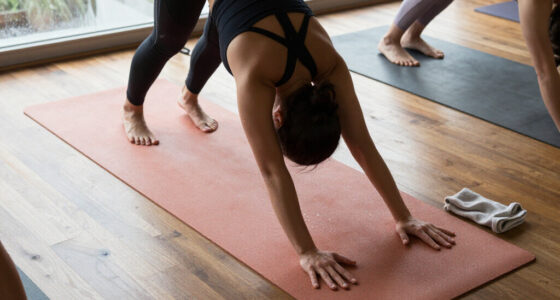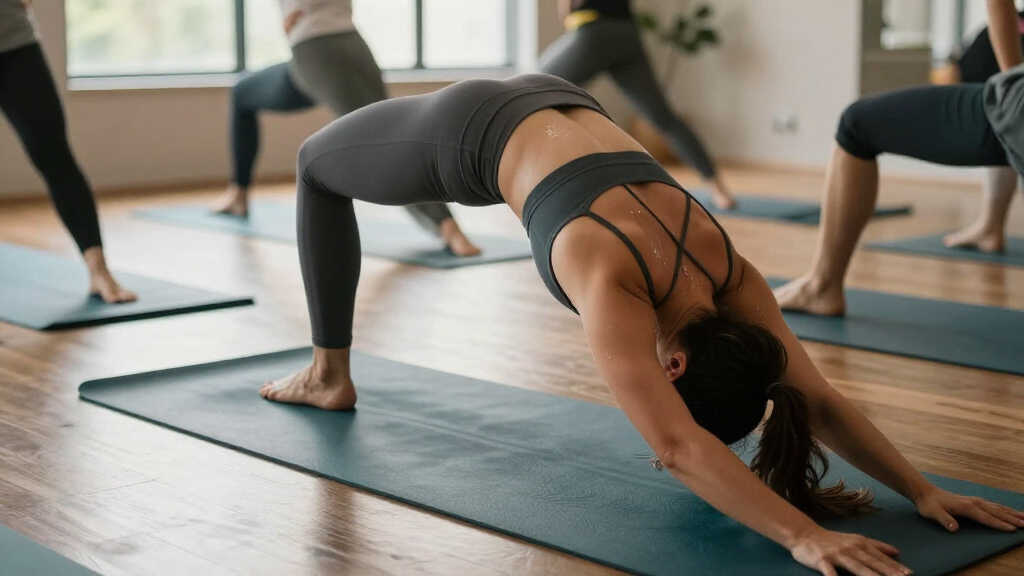
For hot yoga, a mat that feels secure when your hands are damp matters more than a long list of general-purpose features. Natural rubber and polyurethane (PU) mats are both popular premium choices, but they solve the grip problem differently: rubber typically uses a textured, naturally tacky surface, while PU surfaces absorb moisture and can become especially grippy as sweat builds.

Get workout gear delivered free with Prime
- Fast, free delivery on millions of items
- Prime Video, Amazon Music and more included
- Member-only deals all year
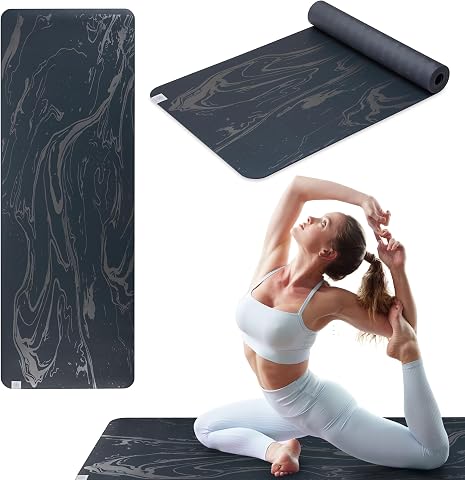
Gaiam Dry-Grip Yoga Mat – Non-Slip, Hot Yoga
- ✔ Dimensions: 68 x 24 in
- ✔ Thickness: 5 mm
- ✔ Weight: 4.25 lb

IUGA Yoga Mat – Thick Non-Slip Anti-Tear Pilates Mat, Eco-Friendly, 72" x 24" x 6 mm
- ✔ Dimensions: 72 x 24 in
- ✔ Thickness: 6 mm
- ✔ Weight: 2 lb

Gruper Yoga Mat Non Slip, Eco Friendly Exercise Mat with Carrying Strap
- ✔ Standard size: 72 x 24 in
- ✔ Standard thickness: 6 mm
- ✔ Standard weight: 2.6 lb
That difference affects more than poses. It shapes how much you need a towel, how readily the mat cleans up, how it wears, and whether its higher price pays off. Choose natural rubber for versatile grip, texture, and a more forgiving everyday mat. Choose PU if you sweat heavily and want direct hand-to-mat traction during hot classes, and you are willing to follow the maker’s care instructions. The best pick depends on how wet your practice gets and how much maintenance you will accept.
At a Glance
| Criteria | Natural rubber yoga mats | Polyurethane (PU) yoga mats | Winner |
|---|---|---|---|
| Grip as sweat builds | Textured, tacky grip that generally remains dependable through a range of moisture levels. | Often excellent when moisture reaches the surface; designed to provide strong traction in sweaty practice. | B |
| Grip before sweating | Usually strong; texture and the specific mat finish make a difference. | May feel less grippy when completely dry on some models. | A |
| Surface feel | More textured, with a stable, slightly springy feel depending on construction. | Typically smoother and more absorbent; surface can show marks or wear with use. | Depends |
| Cleaning and care | Usually straightforward to wipe down, but follow the maker’s cleaner and drying guidance. | Requires careful cleaning and thorough drying; avoid unapproved products and prolonged damp storage. | A |
| Durability and wear | Can hold up well with suitable care; oils, sunlight, and harsh cleaners may shorten its life. | Surface appearance and grip can change with abrasion or improper care; longevity varies by model. | A |
| Weight and portability | Often substantial, particularly in dense premium models. | Varies by backing and thickness; many premium versions are not especially light. | Depends |
| Value | Good for regular use across hot and non-hot classes if you want one versatile mat. | Worth the premium for heavy sweaters who benefit from its wet-grip performance. | Depends |
Gaiam Dry-Grip Yoga Mat – Non-Slip, Hot Yoga
For a roundup focused specifically on hot yoga, Gaiam’s moisture-wicking topcoat is the most directly relevant feature in this lineup. The description says it is designed to help maintain traction during sweaty sessions, giving us a clearer reason to put it ahead of the IUGA and Gruper, whose grip claims center on texture and double-sided surfaces rather than moisture management. That distinction does not guarantee the same feel for every practitioner, but it makes Gaiam the most targeted choice on paper.The 5 mm thickness balances joint cushioning with a moderate profile, and its 4.25 lb weight is manageable for some studio trips but notably heavier than the 2 lb IUGA or either Gruper configuration. At 68 by 24 inches, it is also shorter than the two 72-inch alternatives, so taller practitioners should compare the dimensions before choosing. The PVC construction is latex-free and free of six specified phthalates, which may matter to buyers checking those material details; it is not the TPE option in this group.There are practical caveats. A noticeable initial odor may require airing out, and prolonged direct sunlight can cause fading and brittleness. Compared with IUGA, Gaiam prioritizes a stated sweat-focused surface over minimal carry weight; compared with Gruper, it offers less thickness choice but a more explicit hot-yoga rationale. We would choose it when sweaty-session traction is the deciding factor, not when the lightest bag or longest mat is the priority.
Pros:
- Moisture-wicking topcoat is specifically presented for sweaty hot-yoga sessions.
- 5 mm cushioning supports joints without moving to the thickest profile in the group.
- Latex-free and free of six specified phthalates.
- Rolls up for studio or gym transport.
Cons:
- May have a strong odor when first unwrapped and need airing out.
- Heavier than IUGA and both Gruper thickness options.
- Prolonged direct sunlight may cause fading and brittleness.
Best for: Hot-yoga practitioners who want a mat with an explicitly moisture-wicking surface and prefer 5 mm cushioning.
Not ideal for: Taller buyers who want a 72-inch mat, or commuters who prioritize the lightest option; its 4.25 lb weight exceeds both TPE alternatives.
Bottom line: We rank Gaiam first for its explicit sweat-focused surface, while noting its shorter length, heavier carry, and need for initial airing out.
“We rank Gaiam first for its explicit sweat-focused surface, while noting its shorter length, heavier carry, and need for initial airing out.”
IUGA Yoga Mat – Thick Non-Slip Anti-Tear Pilates Mat, Eco-Friendly, 72" x 24" x 6 mm
IUGA is the easiest mat here to carry, weighing 2 lb while offering a 72-by-24-inch surface and 6 mm of cushioning. That combination suits studio-goers who want more length and padding than Gaiam’s 68-inch, 5 mm format without taking on a heavier mat. Its supplied carry strap reinforces the portability advantage, although the description does not specify a storage bag as Gruper does.For hot yoga, the key distinction is that IUGA relies on a textured top and bone-pattern underside for double-sided grip, rather than a stated moisture-wicking finish. This makes it a credible versatile option for sweaty flows, but we give Gaiam the edge when the primary concern is traction specifically as sweat accumulates. The middle-layer mesh adds tear resistance, and its SGS-certified TPE is described as latex-free and PVC-free. Those construction details may appeal to buyers who want to avoid PVC, though material preference alone does not establish how a mat will feel during a humid class.Care is less effortless than the lightweight build suggests: the mat needs mild detergent and cold water, and prolonged direct sunlight should be avoided. Compared with Gruper, IUGA is substantially lighter and has the same 6 mm thickness as Gruper’s standard option, but offers no 8 mm choice. We see it as the best fit for people who want to carry a longer TPE mat often and value a reinforced build, provided they are comfortable with texture-based grip instead of an explicitly moisture-wicking surface.
Pros:
- Lightest listed option at 2 lb, with a carry strap included.
- 72-inch length and 6 mm thickness offer more coverage and cushioning than Gaiam.
- Double-sided grip texture and mesh middle layer are designed for footing and tear resistance.
- SGS-certified TPE is described as latex-free and PVC-free.
Cons:
- Grip is described as textured and double-sided, not moisture-wicking.
- Requires mild-detergent, cold-water cleaning.
- Should not be left in direct sunlight for long periods.
Best for: Studio commuters seeking a lightweight, 72-inch TPE mat with 6 mm cushioning, double-sided texture, and a carry strap.
Not ideal for: Buyers who want an explicitly moisture-wicking hot-yoga surface, an 8 mm option, or minimal-care cleaning.
Bottom line: We recommend IUGA to buyers who value a light, longer TPE mat more than a specifically stated moisture-wicking surface.
“We recommend IUGA to buyers who value a light, longer TPE mat more than a specifically stated moisture-wicking surface.”
Gruper Yoga Mat Non Slip, Eco Friendly Exercise Mat with Carrying Strap
Gruper stands out for giving buyers a choice between 6 mm and 8 mm thickness, plus a carrying strap and storage bag. The standard version is 72 by 24 inches and weighs 2.6 lb; the thicker version keeps the same footprint but rises to 3.1 lb. That makes it more adaptable than IUGA if cushioning is a priority, though the extra padding and weight make the 8 mm configuration less appealing for commuters who want to travel light.Its double-layer, anti-tear construction and sticky texture on both sides provide a broader grip proposition than a single textured face. Still, hot-yoga shoppers should note the difference between general non-slip texture and a stated moisture-wicking topcoat: Gaiam explicitly addresses sweat, while Gruper’s description does not. We therefore place Gruper behind Gaiam for hot-yoga-specific evidence, even though its two-sided texture and thickness options may be attractive for mixed exercise and yoga use.The TPE material is described as non-toxic and odorless, and the included accessories make this a ready-to-carry package. However, the mat cannot be machine washed and must be cleaned manually with a damp cloth. Its standard 6 mm version is heavier than IUGA’s 6 mm mat, and the 8 mm version adds still more bulk. Choose Gruper if you want to tune cushioning to your practice and appreciate the storage kit; skip it if low carry weight or a specifically sweat-wicking surface is the priority.
Pros:
- Two thickness options let buyers choose between 6 mm and 8 mm cushioning.
- Double-layer construction and textured surfaces on both sides.
- TPE is described as non-toxic and odorless.
- Includes both a carrying strap and storage bag.
Cons:
- Heavier than IUGA at both thicknesses, especially in the 8 mm version.
- No explicit moisture-wicking claim for sweaty hot-yoga practice.
- Cannot be machine washed and requires manual damp-cloth cleaning.
Best for: Buyers who want to choose between 6 mm and 8 mm cushioning and value a carrying strap plus storage bag.
Not ideal for: Hot-yoga practitioners who want a stated moisture-wicking surface, or commuters prioritizing the lightest mat in the lineup.
Bottom line: We favor Gruper when thickness choice and included carry accessories outweigh the need for the lightest mat or explicit sweat management.
“We favor Gruper when thickness choice and included carry accessories outweigh the need for the lightest mat or explicit sweat management.”
As an Amazon Associate we earn from qualifying purchases.
Key Differences
The central choice is moisture response. A natural rubber mat generally offers texture and tack from the start, so it can feel dependable before you are sweating and remain useful in classes with changing intensity. A PU surface is often most compelling once sweat reaches it: it absorbs moisture and can provide outstanding traction during a hot, vigorous session. If your hands stay relatively dry, that wet-grip advantage may not appear when you need it.
The tradeoff is care and versatility. Rubber is often the more adaptable all-rounder, while PU is a more targeted tool for people whose palms and feet get very wet. Neither material guarantees a slip-free practice: surface finish, sweat volume, skin oils, room conditions, and technique all matter. A towel can still be useful, especially for very sweaty practice.
Price should follow that use case. A pricier PU mat can be a sound purchase if its sweat-activated traction solves a recurring problem in your classes. If you want one mat for hot yoga, dry studio sessions, and occasional travel, rubber is usually the safer value. Check each maker’s cleaning guidance, since product construction and care limits vary within both categories.
Detailed Comparison
Grip as sweat builds (Polyurethane (PU) yoga mats wins — major)
PU wins for very sweaty sessions, by a moderate-to-major margin. Its absorbent surface is designed to take in moisture, and many practitioners find its traction improves as sweat accumulates. Natural rubber remains a strong alternative, but its grip is more often associated with texture and tack than with absorbing sweat. For a class where wet palms are the main reason you slip, PU has the clearer advantage. If you sweat heavily enough to pool on the mat, a towel may still be needed.
Grip before sweating (Natural rubber yoga mats wins — moderate)
Natural rubber has a moderate advantage for dry starts. Its textured, tacky feel can provide confidence from the first pose, before the room heats up or your hands become damp. Some PU mats also grip well when dry, but performance differs by surface and can feel less dependable on certain models. If your class begins with standing sequences or you also practice in cooler conditions, rubber is the more consistent bet. Try a specific PU model in person if its dry feel is a deciding factor.
Surface feel (minor difference)
This is a preference call, not a clear win. Natural rubber usually feels more textured; that can help hands and feet locate a stable position, but it may feel too rough for people who prefer a smooth surface. PU is typically smoother and more absorbent, though it may feel different once damp. The practical distinction is tactile: choose rubber if you like noticeable texture, and PU if a smoother contact surface suits your practice. Construction varies, so material labels alone do not settle comfort.
Cleaning and care (Natural rubber yoga mats wins — moderate)
Natural rubber usually wins by a moderate margin for easier upkeep. Both types need regular cleaning after hot yoga, but PU surfaces can be more sensitive to what you use and how long they remain damp. Follow the manufacturer’s directions rather than assuming any household cleaner is safe. Rubber also has care limits, including exposure to sunlight and unsuitable products, but it is often a less demanding choice for routine wiping and drying. If a mat will be cleaned frequently between classes, care instructions deserve real weight.
Durability and wear (Natural rubber yoga mats wins — moderate)
Natural rubber is the safer general pick, though the difference is model-dependent. A well-made rubber mat can tolerate frequent practice when cleaned and stored as directed. PU surfaces may show wear, marks, or changes in feel from abrasion, and poor care can affect their performance. This is not a guarantee that every rubber mat outlasts every PU one; backing, thickness, manufacturing, and use all matter. The practical edge goes to rubber for people seeking a workhorse mat rather than a specialist surface.
Weight and portability (minor difference)
No material wins consistently. Both premium rubber and PU mats can be heavy, while weight depends substantially on thickness, dimensions, and backing. If you walk or take public transport to class, compare the actual weight and folded or rolled size of the models you are considering. A lightweight mat may be easier to carry but can sacrifice cushioning or stability. Do not pay a premium for a material without checking the specifications that affect your commute.
Value (major difference)
The better value depends on your sweat level, with rubber winning for broader use. A PU mat’s higher cost makes sense when sweat-related slipping disrupts your practice and its wet grip reduces reliance on a separate towel. For moderate sweaters or anyone using one mat across different class types, rubber typically delivers more flexibility for the money. Compare the specific mat’s warranty, care requirements, and expected use rather than judging value by material name alone.
Natural rubber yoga mats: Pros and Cons
Pros:
- Textured grip can feel reliable before sweating starts.
- Versatile across hot yoga and less sweaty classes.
- Often a more forgiving choice for routine cleaning and general use.
- Can suit people who prefer a tactile surface.
Cons:
- May not match PU’s traction when hands are extremely sweaty.
- Dense premium models can be heavy to carry.
- Needs suitable storage and cleaning; harsh products and prolonged sun exposure can cause damage.
- Texture may feel uncomfortable to people who prefer a smooth mat.
Polyurethane (PU) yoga mats: Pros and Cons
Pros:
- Often provides exceptional traction as sweat reaches the surface.
- A strong specialist choice for hot, vigorous classes and heavy sweaters.
- Smooth feel may appeal to people who dislike pronounced texture.
- Can reduce the need for a full-length towel for some practitioners.
Cons:
- Wet-grip benefits may be less apparent during dry or cooler practice.
- Care and drying instructions can be more demanding.
- Surface appearance or performance may change with abrasion or improper cleaning.
- The premium is poor value if sweat-related slipping is not a real problem.
Who Should Choose What
Choose Natural rubber yoga mats if:
- You want one mat for hot yoga and other studio practices.
- You need dependable grip before sweating begins, not only once the mat is damp.
- You prefer a textured surface and want relatively straightforward routine care.
- You want a premium mat but do not have a persistent problem with sweaty hands.
Choose Polyurethane (PU) yoga mats if:
- Your hands and feet get very sweaty and you regularly lose traction in hot classes.
- You prefer a smoother surface and want a mat designed to absorb moisture.
- You practice hot yoga often enough to benefit from specialized wet grip.
- You are comfortable following specific cleaning and drying instructions and paying more for a targeted benefit.
Skip both if: Skip both premium options if you are unsure what surface suits you, have a tight budget, or need an especially light travel mat. Consider a less expensive mat paired with a yoga towel, then invest in a premium surface only if slipping remains a problem.
Value for Money
Paying more for PU is worth it when sweat is the main cause of slipping, you attend hot classes regularly, and the mat’s damp-surface grip makes a practical difference to your poses. In that situation, the extra cost buys a specific performance benefit rather than prestige alone. It may also reduce how often you need a separate towel, though very heavy sweating can still call for one.
For everyone else, natural rubber is generally the stronger value. Its useful grip is not as dependent on sweat, and its versatility makes it better suited to mixed practice. The actual price, warranty, weight, and cleaning requirements vary by product, so compare individual models before deciding. Do not pay more for PU unless you expect to use its wet-grip advantage often.
Final Verdict
For most hot-yoga practitioners who want a single mat, choose natural rubber. It offers a more adaptable mix of grip, dry-start confidence, and everyday usability, so it is the safer purchase when your sweat level or class schedule varies. Choose PU instead if you are a heavy sweater and slipping during hot practice is a recurring problem: its absorbent surface can provide the stronger traction you are paying for.
The biggest deciding factor is not whether one material is universally better; it is whether your practice is wet enough to benefit from PU. If not, rubber is the better value. If yes, the specialist performance can justify the premium, provided you accept the care routine.
Frequently Asked Questions
Is a PU mat better than a rubber mat for hot yoga?
For very sweaty hands, often yes: PU absorbs moisture and can offer strong traction once damp. Rubber is usually more versatile and may feel grippier before sweating begins. The best option depends on how wet your practice gets and the particular mat’s finish.
Do you still need a towel on a PU yoga mat?
Not always. Many people choose PU because its surface handles sweat, but a towel may still help if you sweat heavily or moisture pools. Follow the mat maker’s guidance, and consider a small towel for your face or hands regardless of mat type.
Which material is easier to clean after hot yoga?
Natural rubber is often less demanding for routine care, but both materials need regular cleaning and complete drying. PU may be more sensitive to cleaners or damp storage. Use the instructions for the specific mat; material category alone does not tell you which products are safe.
Is an expensive hot-yoga mat worth the price?
It can be if it solves a regular grip problem and you practice often. A premium PU mat is easiest to justify for heavy sweaters; a rubber mat may offer better value for mixed classes and moderate sweating. Compare the model’s weight, care rules, warranty, and surface before paying extra.
Fall Picks
fall essentials
As an affiliate, we earn on qualifying purchases.