
TL;DR

Get workout gear delivered free with Prime
- Fast, free delivery on millions of items
- Prime Video, Amazon Music and more included
- Member-only deals all year
Fit&Well published a three-exercise kettlebell routine designed to train core stability at home in about 10 minutes. The plan pairs half-kneeling halos, suitcase carries and a dead bug variation with suggested sets, repetitions and starting weights; its benefits are presented as expert guidance, not as results from a reported clinical study.
Fit&Well has published a three-move kettlebell workout designed to train core stability at home in about 10 minutes. The routine, attributed to certified kettlebell specialist Faith Ellis, combines a half-kneeling halo, a single-arm suitcase carry and a kettlebell dead bug variation, with suggested sets and starting weights for each exercise.
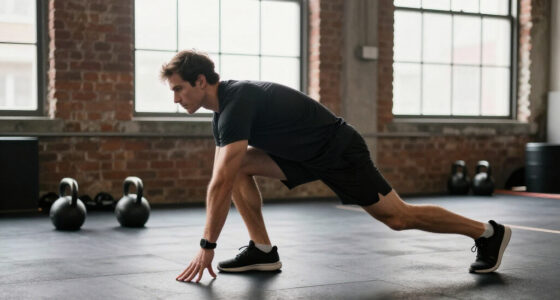
The program calls for three sets of each movement. For the half-kneeling halo, the report recommends four circles in each direction on each side, using a starting kettlebell weight of 10–18 pounds (4–8 kilograms). The exercise is performed from a half-kneeling position while the weight is circled around the head and the hips are kept square. Fit&Well lists the obliques, shoulders, upper back and deep core among the areas targeted.
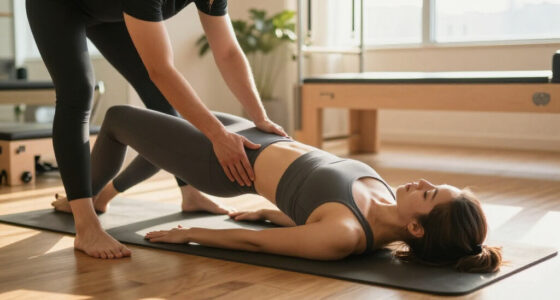
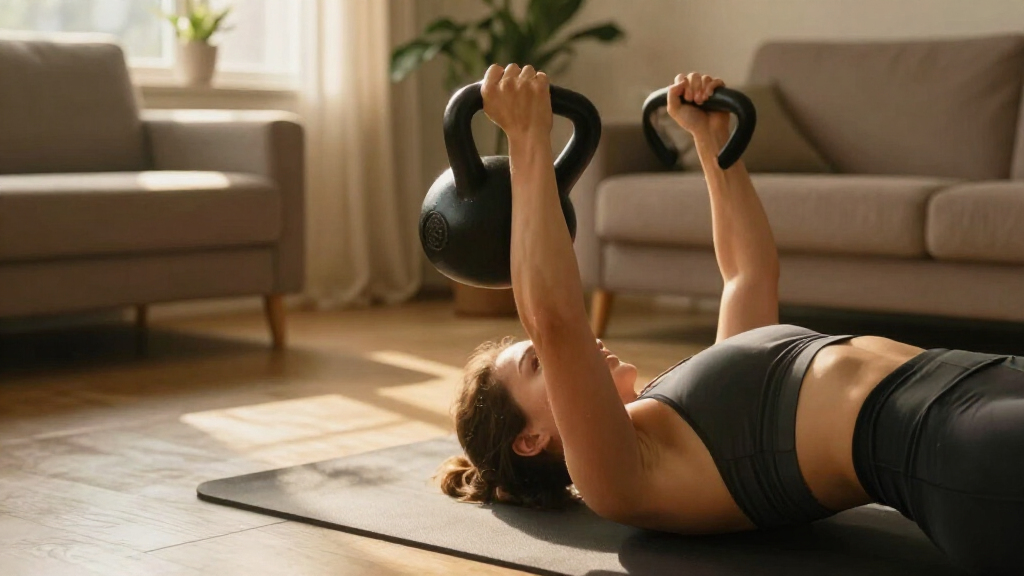
For the suitcase carry, the suggested starting weight is about 18–26 pounds (8–12 kilograms), an exercise featured in kettlebell moves for beginners. The routine specifies a 30-second walk while holding the kettlebell at one side, followed by switching hands and repeating. The third movement is a dead bug with a kettlebell pullover: lying on the back, the participant holds a light kettlebell over the chest, keeps the knees bent above the hips, and alternates lowering one leg while moving the weight behind the head. Fit&Well recommends six to eight repetitions per side and a starting weight of 10–18 pounds (4–8 kilograms).
Ellis advises people new to training to begin with a light-to-medium weight, prioritize controlled breathing and a neutral spine, and increase the challenge gradually. The report suggests adding four to eight pounds (two to four kilograms), increasing repetitions or slowing the movement once a set can be completed with good form. The workout’s actual duration will depend on rest periods and pace; the source provides no timed circuit instructions confirming that every person will finish in exactly 10 minutes.
A Short Routine for Home Training
The workout offers readers a structured option for a brief home session using one piece of equipment, rather than requiring a gym or a series of machines. Its three exercises challenge the trunk in different ways: controlling a weight around the head, resisting side-to-side movement while walking, and coordinating the arms and legs while lying down.
Ellis’s explanation is that kettlebell movements can call on the core to stabilize and transfer force, not only to flex the spine. That is an expert’s description of the training approach, not evidence in the source of a measured strength outcome. Readers should treat the proposed routine as a workout template, adjusting the load and movements to their ability rather than assuming that a short session guarantees a particular result.
Products Worth Considering

Bowflex SelectTech 840 Adjustable Kettlebell

Fitbit Versa 2 Health and Fitness Smartwatch with Heart Rate, Alexa, Music, Sleep and Swim Tracking

Withings BPM Connect Wi-Fi and Bluetooth Blood Pressure Monitor
As an affiliate, we earn on qualifying purchases.
Ellis’s Advice on Kettlebells
Fit&Well presents the routine as beginner-friendly and quotes Ellis, identified as a certified kettlebell specialist and founder of The KettleBelle. She describes a kettlebell as a versatile home-training tool that can be used for strength, mobility and cardiovascular exercise. The report does not provide independent testing or comparative evidence for that description.
The workout’s progression advice is tied to technique: Ellis says to add load only after a set feels manageable and can be completed with good form. Her suggested increase is four to eight pounds (two to four kilograms), though the article also offers repetitions or slower reps as alternatives. The report does not specify rest intervals, warm-up time or adaptations for particular injuries or health conditions.
“A single kettlebell trains strength, mobility and cardiovascular endurance simultaneously, making it ideal for efficient workouts.”
— Faith Ellis, certified kettlebell specialist and founder of The KettleBelle, as quoted by Fit&Well
What the Workout Does Not Establish
The source describes the exercises and Ellis’s reasoning but reports no trial, participant results or measured strength changes. It does not establish that the routine produces a particular level of deep core strength, nor does it explain how the 10-minute estimate was calculated. Time spent setting up, resting and changing positions may affect the total.
The report also does not give individualized guidance for people with pain, injuries, balance limitations or other health concerns. Starting weights are suggestions, not a fit for every person. Readers who are unsure whether the exercises are appropriate should seek guidance from a qualified fitness professional or healthcare provider, and stop if a movement causes pain.
How to Use the Routine Safely
Readers following the plan can begin with a load they can control, practice the movements without rushing, and follow Ellis’s advice to keep the spine neutral and breathing steady. They can increase repetitions, slow the pace or add weight gradually only when they can maintain consistent form. The article provides no announced follow-up test or scheduled update; its next practical step for readers is to try the movements at an appropriate level and adjust based on their own ability.
Key Questions
What exercises are in the kettlebell routine?
The plan includes a half-kneeling kettlebell halo, a single-arm suitcase carry and a kettlebell dead bug with a pullover variation.
Is the workout confirmed to take exactly 10 minutes?
No. Fit&Well describes it as a 10-minute workout, but the listed instructions do not set rest periods or provide a timed circuit. The total may vary with pace and breaks.
What weights does the report recommend for beginners?
It suggests 10–18 pounds (4–8 kilograms) for the halo and dead bug variation, and about 18–26 pounds (8–12 kilograms) for the suitcase carry. Ellis advises starting with a light-to-medium weight that can be controlled with good form.
How should someone progress the exercises?
Ellis recommends first mastering the technique. When a set feels easy and form remains consistent, the report suggests adding four to eight pounds (two to four kilograms), increasing repetitions or slowing the repetitions.
Does the report prove the routine builds deep core strength?
No study results are included. Fit&Well presents Ellis’s expert explanation of how the movements challenge stabilization, but does not report measured outcomes from people completing the workout.
Source: fitandwell.com