TL;DR

Get workout gear delivered free with Prime
- Fast, free delivery on millions of items
- Prime Video, Amazon Music and more included
- Member-only deals all year
Fit&Well published a beginner-friendly, no-equipment Pilates routine designed to take about 10 minutes and focus on core control and stability. Instructor Andrew Griffiths recommends six movements and suggests doing the workout three times weekly, with a day between sessions; the guidance is a workout plan, not evidence of guaranteed results.
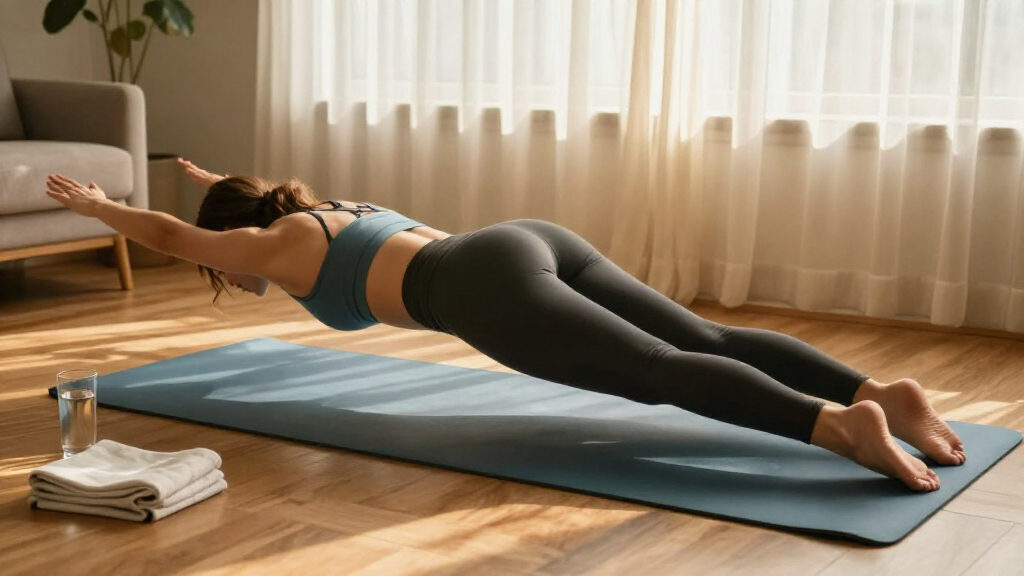
Fit&Well has published a 10-minute Pilates workout for beginners that uses six no-equipment exercises to practise core control and stability. The routine, created by Pilates instructor Andrew Griffiths, is intended for people with floor space and no prior Pilates experience, and includes easier options for some movements.
The sequence begins with pelvic tilts, followed by the Hundred, dead bug, glute bridge, bird dog and a child’s pose. The first movements are performed lying on the back; the bird dog starts on hands and knees, while child’s pose is used as the final held position. Fit&Well’s instructions specify repetitions and rest periods for most exercises, rather than a fixed amount of time for each one.
For the pelvic tilt, the participant lies with knees bent and feet flat, then gently moves the pelvis so the lower back approaches the floor before returning to neutral. Griffiths says the movement should be small and controlled, coming from the pelvis rather than the legs. In the Hundred, participants pulse their arms while breathing in and out across groups of five pulses. The plan sets 40 pulses as a starting point, with 100 as a longer-term target; keeping the feet on the floor is offered as an easier version.
The dead bug calls for extending the opposite arm and leg while keeping the lower back connected to the floor. The glute bridge raises the hips until the body forms a line from shoulders to knees, without over-arching the lower back. During bird dog, participants reach one arm forward and the opposite leg back while keeping the hips level. The routine ends with 30 to 60 seconds in child’s pose, if the position is comfortable.
A Short Routine With Scaled Options
The plan gives beginners a defined sequence they can try without buying equipment or committing to a long session. It also spells out ways to reduce the challenge: leave the head and shoulders down during the Hundred, keep the feet on the floor, and choose a smaller range of movement where needed. Those modifications may make it easier to start, though the source does not report outcomes from people who have followed the routine.
Griffiths says the exercises work the core and muscles involved in supporting the spine, while the glute bridge and bird dog target the glutes and back-supporting muscles. He also describes the routine as a way to practise controlled movement and link breathing with motion. These are the instructor’s explanations of the exercises, not findings from a clinical study cited in the report. The routine does not promise a particular change in strength, posture or pain.
Fit&Well’s proposed frequency is three sessions a week, with a day off between workouts. Griffiths says that schedule can leave time for recovery and suggests progressing once the routine feels easy. The report does not prescribe a specific next level or set a timeline for progression.
As an affiliate, we earn on qualifying purchases.
How the Six Moves Fit Together
The workout moves from awareness of the pelvis to exercises that ask participants to coordinate limbs while holding a stable trunk, then finishes with a gentle stretch. The Hundred, dead bug and bird dog are identified by Griffiths as core-stability exercises; the glute bridge and bird dog also involve the glutes. Pelvic tilts and child’s pose provide gentle movement for the spine and hips, according to the report.
Griffiths advises keeping the pace measured: the dead bug, he says, rewards control rather than speed. For bird dog, he offers an image for maintaining balance: “picture a glass of water balanced on your lower back” and try not to spill it. The cues are intended to help participants focus on form as they follow the sequence.
There is no equipment list beyond access to a clear floor area. The source presents the plan as suitable for people new to Pilates, but does not describe a screening process or tailor the exercises to particular health conditions or mobility limitations.
““Small and controlled is the aim. The movement comes from the pelvis, not the legs.””
— Andrew Griffiths, Pilates instructor and fitness expert at Net World Sports, as quoted by Fit&Well
As an affiliate, we earn on qualifying purchases.
Limits of the Workout Guidance
The source does not provide a publication date, research data, or measured results showing how much strength or stability participants might gain. Its descriptions of possible effects, including support for posture and the lower back, are attributed to Griffiths and should not be read as guaranteed outcomes. The report also does not explain how to adapt every exercise for pain, injury, pregnancy or other individual circumstances, or give criteria for deciding whether a movement is appropriate.
The routine’s title calls it a 10-minute workout, but the instructions list sets, repetitions, rest periods and a held pose rather than a minute-by-minute schedule. The total time can vary with pace and rest. It is also unclear what specific progression Griffiths recommends after the session becomes easy.
As an affiliate, we earn on qualifying purchases.
Repeating and Progressing the Plan
Fit&Well recommends repeating the workout three times per week and leaving a day between sessions. Griffiths says participants can consider progressing when the routine starts to feel easy, but the report provides no detailed follow-up plan or scheduled reassessment. Readers following the guidance should use the easier options where needed and stop if an exercise causes pain; those with health concerns or existing injuries can seek advice from a qualified health professional before starting.
As an affiliate, we earn on qualifying purchases.
Key Questions
What exercises are in the beginner Pilates workout?
The six movements are pelvic tilt, the Hundred, dead bug, glute bridge, bird dog and child’s pose.
Do you need equipment?
No equipment is specified. The report says participants need space on the floor to perform the exercises.
How often does the report recommend doing the routine?
Instructor Andrew Griffiths recommends doing it three times a week, with a day off between sessions.
What can beginners change if an exercise feels difficult?
For the Hundred, the report suggests keeping the head and shoulders on the floor or leaving the feet down. Participants can also begin with 40 or 50 pulses rather than aiming straight for 100.
Does the report show that the workout will improve posture or reduce back pain?
No measured results are provided. Griffiths describes how the exercises may support core control and muscles around the back, but the report does not establish a guaranteed effect on posture, pain or strength.
Source: rss
Halloween Picks
halloween
As an affiliate, we earn on qualifying purchases.