TL;DR
For heated practice, choose a stable mat with a surface that maintains traction as moisture builds, then decide whether a washable yoga towel would help manage sweat. Compare the actual surface, cushioning, materials, and care instructions; labels like “non-slip” and “hot yoga” do not guarantee the same performance in every class.
In a heated class, your first downward dog can feel steady, then your palms start to slide as the room warms and sweat gathers. That change can turn a focused flow into a hunt for grip. The mat beneath you matters, but so do your sweat level, the class, and whether you prefer a towel.

Get workout gear delivered free with Prime
- Fast, free delivery on millions of items
- Prime Video, Amazon Music and more included
- Member-only deals all year
This guide helps you choose yoga mats for heated practice by comparing surfaces, materials, cushioning, size, and cleanup. You’ll also find a simple way to decide whether a yoga towel belongs in your bag. The goal is practical: feel grounded enough to move with attention, without buying features you don’t need.
There isn’t one perfect mat for every body or studio. A slower class in a mildly warm room asks different things of your setup than a vigorous session where sweat runs down your forearms. Think of your mat as a piece of practice equipment: the best choice fits the way you actually move.
Test damp grip or check for detailed moisture guidance; a dry surface and a “non-slip” label cannot predict every sweaty class.
Decide whether a towel fits your sweat pattern. It can absorb sweat and wash easily, but it may shift if it does not fit or grip the mat.
Choose cushioning based on the poses you practice most, and consider a separate knee pad if you want extra comfort without softening the whole surface.
Check material disclosures for latex and read the care instructions before using a cleaner or storing a damp mat.
Match mat size and weight to your commute and class routine so you’ll actually bring it to practice.
Choose a surface that stays steady as sweat builds
Yoga mats for heated practice work best when their surface keeps reliable traction as moisture builds, but no label can promise grip under every combination of sweat, pressure, and movement. Traction matters because hands or feet that slide can interrupt a pose and make it harder to move with control. A surface that feels grippy when dry may feel different after twenty minutes in a warm room. Start with the maker’s description of damp grip, then consider how much you sweat and whether you like using a towel.
Hot yoga usually means practice in a heated room, though temperature, humidity, class length, and intensity vary by studio. Those conditions affect how quickly you sweat and where moisture collects, so a mat that suits your friend’s gentle evening class may not suit your fast morning flow. If your hands get slick during plank while your feet stay planted, a compatible towel can absorb sweat where you need it. If both hands and feet slide, you may need a surface better suited to your practice rather than relying on a small towel to solve the whole problem.
Textured surfaces and moisture-focused finishes have become common product features, but texture alone doesn’t prove traction. Texture may give your hands a more noticeable point of contact, yet a surface can still feel slick when damp, or feel distracting against sensitive palms. If a studio has loaner mats or a retailer offers a trial period, test a few movements that matter to you: downward dog, a lunge, and a standing balance. Notice whether your hands and feet stay in place as you shift weight, since grip during a still pose may not tell you how the mat behaves in motion.
For example, imagine your palms slide in the second half of class, but your feet feel planted. A towel across the hand area may address the problem without changing how the mat feels underfoot. But if you find yourself bracing or gripping with your toes to avoid slipping, the issue affects your movement more broadly. Treat “non-slip” as a claim to investigate, and look for a surface designed to maintain traction as moisture builds.
Products Worth Considering

Hyperice Hypervolt Go 3 Percussion Massage Gun with Carry Case

Theragun Relief Massage Gun

Oral-B iO5 Rechargeable Electric Toothbrush with 3 Brush Heads and Travel Case
As an affiliate, we earn on qualifying purchases.
Compare mat materials by feel, care, and personal fit
No single mat material is best for every sweaty practice; the right pick depends on the specific surface, your comfort preferences, and how you want to care for it. Natural rubber, polyurethane-coated mats, PVC, and thermoplastic elastomer (TPE) each appear in yoga-mat options. Their grip, cushioning, weight, durability, odor, and cleaning needs can differ, and the top layer and construction matter alongside the material name. This means material is a starting point for comparison, not a shortcut to predicting how a mat will perform. Two mats with the same base material can feel different because their surface finishes and construction differ.
Use product details to answer practical questions: Can you wipe it with the cleaner you already use? Does the maker say to air it out before first use? Will you carry it on the bus or leave it at the studio? These details shape whether a mat fits your routine. A heavier option may feel reassuring underfoot but become a nuisance on a commute; a surface that needs careful cleaning may be a poor match if you have little time after class. Some new mats have an odor or need a break-in period. Follow the care instructions and let the mat air out; don’t assume soaking or harsh scrubbing is safe.
If you have a latex allergy, check whether a mat contains natural rubber and contact the maker if the information is unclear. That product detail can matter more than grip or price if exposure is a concern. If environmental impact matters to you, look for specific disclosures about composition and manufacturing. Broad phrases such as “eco-friendly” don’t tell you exactly what a product contains, so they offer little basis for comparing options.
Picture two students after class: one wipes down a mat at home and has space to let it dry; the other rushes to catch a train with a damp mat in a bag. Their best choices may differ even if both want strong grip. For the first student, cleaning and drying may be easy enough that surface performance takes priority. The second may value a towel that can be packed separately or a mat whose care routine fits limited time. Compare how each mat fits your routine, rather than choosing by material name alone.
Balance knee comfort with steady standing poses
Choose enough cushioning to make kneeling and floor poses comfortable while keeping the stable feel you want for standing balances. A thicker mat can cushion your knees and wrists, yet it may feel less steady when you shift into a single-leg pose because your foot presses into a softer surface. That can make balance adjustments feel less direct, especially if you already feel wobbly. There’s no universal ideal thickness: comfort, stability, and the floor beneath you all matter.
Try to picture your own class, not a product photo. If you spend a lot of time in low lunges and your knees feel tender against a hard studio floor, extra padding may help you stay in the pose comfortably. If you wobble on a soft surface during tree pose, a firmer mat could feel more dependable. The tradeoff is that a firm surface may feel harsh on sensitive joints, while a soft one may make standing transitions less stable. You can also use a separate knee pad for sensitive moments, so the full mat stays firm under your feet.
A useful test is to try a few positions on the mat before committing, if that option is available. Press your hands into tabletop, step forward into a lunge, and stand on one foot for a few breaths. Notice whether the mat compresses under your weight or shifts as you move. Also notice whether you can settle into a kneeling pose without bracing against discomfort. That small check helps you judge the balance between cushioning and stability better than a thickness number alone.
For example, a beginner who spends class in tabletop may value wrist comfort, while a seasoned practitioner working on standing balances may prefer a closer connection to the floor. Neither choice is wrong: each person is prioritizing a different part of practice. Choose the trade-off that supports your practice today, knowing you can add a small pad if one pose needs extra care. That can be a more flexible option than choosing a softer mat that affects every standing pose.
Use this five-step check before you buy
Choose a mat by matching it to your sweat, movement, comfort, and cleanup needs, then check the maker’s care guidance before purchase. A quick, repeatable checklist helps you compare products without getting swept up in color or marketing. Each answer narrows the choice: your sweat pattern points to the surface or towel you need, while your commute and cleaning routine show whether the mat will be practical to use. Start with the class you attend most often, not the rare retreat you might take someday.
- Notice your sweat pattern. Do your palms slip, or do your feet slide too? This tells you whether the problem is localized enough for a towel or affects the mat more broadly. If you’re unsure, pay attention during your next class.
- Check damp-grip details. Read how the surface performs with moisture and whether the maker recommends a towel. A towel may help when sweat is the main issue, but it adds a layer that can move if it does not fit well.
- Choose your comfort level. Look for cushioning that supports knees and wrists without making balances feel unstable. Think about the poses you spend the most time in; a tradeoff that helps one pose may affect the feel of others.
- Check fit and carry weight. Make sure the mat gives you room to step and that you can comfortably bring it to class. A mat that stays home because it is cumbersome cannot support your regular practice.
- Read material and care notes. Check for latex details if relevant, and learn which cleaning method the maker recommends. Care requirements matter because a surface that performs well but is difficult to clean or dry may not fit your routine.
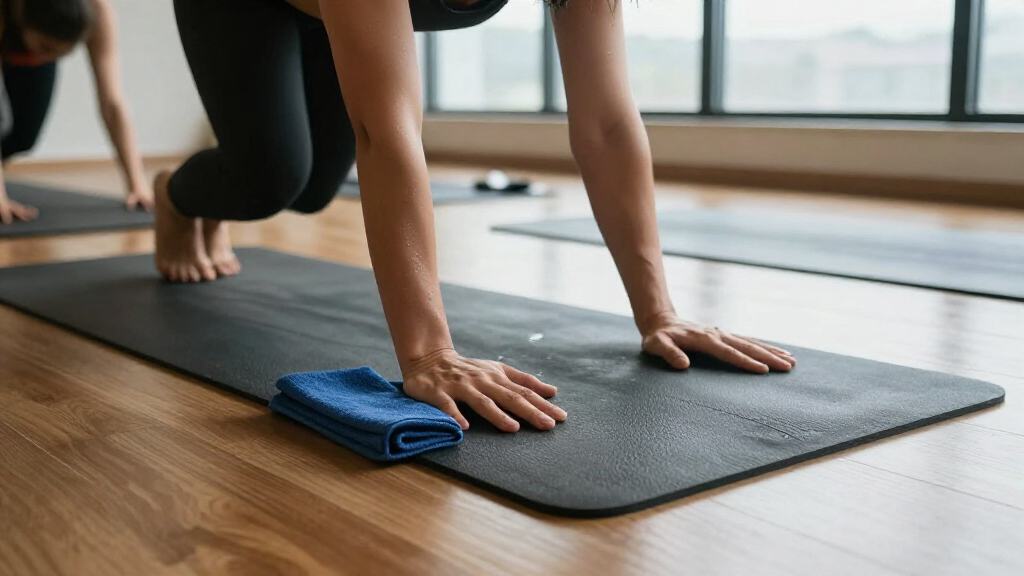
As a real-world example, if you take a busy studio class by train and sweat heavily through your hands, a lighter mat plus a well-fitting towel may suit you better than a bulky mat you dread carrying. The towel can catch sweat and wash easily, while the lighter mat makes the commute manageable. It does add a layer between you and the mat, though, and can shift if it does not fit well or has no grip backing. Some towels have silicone grip dots or other underside treatments; check that they suit your mat.
After the checklist, compare your top two options in the store or during a trial. A few careful movements may reveal that a surface feels great under dry hands but slick when damp. Your own practice offers the most useful evidence because it reflects how the mat responds to your weight, sweat, and transitions.
Keep your mat cleaner without damaging its grip
Wipe sweat from your mat after class, follow the maker’s cleaning directions, and let it dry completely before you roll it up. Sweat, skin oils, and cleaning products can affect a surface over time, especially if residue builds up. Cleaning helps remove that residue, but the wrong product or rough scrubbing can also affect some surfaces. A washable yoga towel can make cleanup easier by catching much of the sweat before it reaches the mat.
Keep your routine simple. Check whether the maker permits a particular cleaner, use a clean cloth, and spread the mat out until it no longer feels damp. Don’t soak it or scrub it with a harsh product unless the instructions say that’s safe. A mat rolled up while wet can trap moisture, while an incompatible cleaner can affect a coated surface. These habits help protect the mat and make it more pleasant to use, though care can’t restore a surface that has worn out.
Say you take a heated class before work and have only a few minutes before your commute. A towel gives you a removable, washable layer to pack separately, while the mat can air out at home. That can make your cleanup more manageable, but it does not remove the need to follow the mat’s care directions. If your routine means you must roll the mat immediately, consider whether that fits the care guidance for your chosen model.
Check the surface every so often, too. Loss of grip, peeling, crumbling, or persistent damage can signal that a mat has worn out. These changes matter because they can affect the stability and comfort you rely on in class. Lifespan varies with material, use, and care, so there’s no reliable universal number of years. A clean, intact mat that still feels steady is a better guide than the calendar.
Frequently Asked Questions
What kind of yoga mat works well for hot yoga?
A stable mat with traction that holds up as it gets damp is a sensible starting point. Compare the specific surface and care instructions, and decide whether you want to use a towel. Room heat, humidity, class intensity, and your sweat level can change how the same mat feels.
Do you need a yoga towel for heated practice?
Not always. A towel can absorb sweat and give you a washable layer, especially if your palms slide, but it may shift unless it fits well or has a suitable grip backing. Try one in class if your mat works for your feet but feels slick under your hands.
Is rubber or polyurethane better when you sweat?
Neither material name guarantees better damp grip; the particular surface and construction matter. Compare product details or test the mat if possible, and check latex information if you have an allergy or sensitivity.
How thick should a mat be for hot yoga?
Choose enough cushioning for your knees and wrists while keeping the stable feel you want in standing poses. A separate knee pad can add comfort without making the whole mat softer. Try a few movements if you can before deciding.
How do you stop a mat from getting slippery?
Consider a compatible yoga towel, clean the mat as its maker recommends, and let it dry fully before storage. More texture does not automatically mean better traction, so pay attention to how the actual surface feels during practice.
Can you use a regular yoga mat in a heated class?
Often, yes, though sweat may change its grip. If you find the surface slippery, a towel may be a practical addition. Check the mat’s care directions so your post-class cleaning routine suits its material.
Conclusion
Choose a mat that feels steady for your own sweat level, supports the poses you practice, and fits the way you travel and clean up. If your current mat works except for slick palms, try a compatible towel before replacing it. Follow the maker’s care instructions and give the mat time to dry fully.
Then step onto your mat, take one breath, and notice whether it lets you focus on moving. The best surface is the one that helps you stay present when the room grows warm and your practice gets going.