
Choosing the right yoga mat sets the foundation for a comfortable and safe practice, yet the sheer variety of materials and thicknesses can confuse new practitioners. My top recommendation for most people is the Manduka Begin Yoga Mat, which offers a balanced blend of durability, cushioning, and trusted brand reliability without the premium price tag of professional-grade mats. For those prioritizing budget-friendly options with solid performance, the Gaiam Thick Yoga Mat provides excellent value, while the YOGATI Yoga Mat stands out for beginners who struggle with alignment due to its helpful printed guides. The main tradeoff you will face is between cushioning and stability; thicker mats protect joints but can compromise balance in standing poses. Continue reading for a detailed breakdown of how these thirteen options compare in grip, material safety, and long-term wear.

Get workout gear delivered free with Prime
- Fast, free delivery on millions of items
- Prime Video, Amazon Music and more included
- Member-only deals all year
Complete the kit


Key Takeaways
- Thicker mats (6mm+) offer superior joint protection but often reduce stability for standing balances, making 4-5mm the sweet spot for most new practitioners.
- Open-cell materials like natural rubber and some TPEs absorb sweat effectively but require more rigorous cleaning to prevent odor and bacteria buildup compared to closed-cell PVC.
- Alignment lines, as seen on the YOGATI mat, significantly reduce the learning curve for proper hand and foot placement, acting as a visual teacher for those without studio access.
- Weight and portability are often overlooked; lightweight mats like the amazon.com/dp/B07JQCVBBZ?tag=corehotyoga-20&ascsubtag=dc-1155077″ target=”_blank” rel=”nofollow sponsored noopener”>Gruper TPE models are easier to carry to class but may slide on smooth floors if not properly textured.
- Durability correlates strongly with material density; budget PVC mats often peel or flatten within six months, whereas higher-density TPE and rubber mats maintain their shape for years.
| Gruper Non-Slip TPE Yoga Mat with Carrying Strap and Bag |  | Best Overall for a Versatile First Mat | Material: Thermoplastic elastomers (TPE) | Dimensions: 72 x 24 in | Thickness options: 0.24 in (6 mm) or 0.32 in (8 mm) | VIEW LATEST PRICE | See Our Full Breakdown |
| CAP 1/2-Inch Thick Yoga and Exercise Mat with Strap, Green |  | Best for Joint Cushioning | Material: High-density NBR foam | Dimensions: 68 x 24 in | Thickness: 1/2 in | VIEW LATEST PRICE | See Our Full Breakdown |
| Manduka Begin Yoga Mat, 68 x 24 Inches, 5 mm |  | Best for Learning Alignment | Material: Thermoplastic elastomer | Dimensions: 68 x 24 in | Thickness: 5 mm | VIEW LATEST PRICE | See Our Full Breakdown |
| Gaiam Thick Yoga Mat with Carrying Strap |  | Best for Extra-Plush Home Practice | Material: NBR foam | Thickness: 10 mm (2/5 in) | Dimensions: 72 x 24 in | VIEW LATEST PRICE | See Our Full Breakdown |
| Retrospec Solana Extra-Thick Non-Slip Yoga Mat with Nylon Strap, 72 x 24 x 0.5 in |  | Best for Cushioned Practice with a Simple Carry Strap | Brand: Retrospec | Dimensions: 72 x 24 x 0.5 in | Weight: 1.07 kg | VIEW LATEST PRICE | See Our Full Breakdown |
| Gruper Non-Slip TPE Yoga Mat with Carrying Strap |  | Best Overall for Grip and Portability | Material: Thermoplastic elastomers (TPE) | Dimensions: 72 x 24 in | Thickness options: 0.24 in (6 mm) or 0.32 in (8 mm) | VIEW LATEST PRICE | See Our Full Breakdown |
| Gaiam Premium 6mm Print Yoga Mat |  | Best for a Lightweight, Familiar Starting Point | Brand: Gaiam | Material: Polyvinyl chloride (PVC) | Thickness: 6 mm (0.24 in) | VIEW LATEST PRICE | See Our Full Breakdown |
| Amazon Basics Extra Thick Exercise Yoga Mat with Carrying Strap |  | Best Value for Extra Cushioning | Material: Foam | Color: Pink | Dimensions: 74 x 24 x 0.5 in | VIEW LATEST PRICE | See Our Full Breakdown |
| YOGATI Yoga Mat with Alignment Lines and Carry Strap | 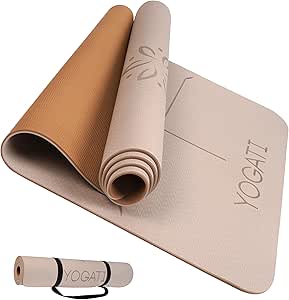 | Best for Learning Pose Placement | Brand: YOGATI | Material: Thermoplastic elastomers (TPE) | Dimensions: 72 x 24 x 0.24 in | VIEW LATEST PRICE | See Our Full Breakdown |
| Gaiam Thick Yoga Mat with Carrying Strap |  | Best for Beginners Who Need Joint Padding | Material: Nitrile butadiene rubber (NBR) foam | Thickness: 10 mm (2/5 in) | Dimensions: 72 x 24 in | VIEW LATEST PRICE | See Our Full Breakdown |
| Fitvids 1/4-Inch High-Density Exercise Yoga Mat with Carrying Strap |  | Best Lightweight, Easy-Care Pick | Brand: Fitvids | Material: Foam | Dimensions: 68 x 24 x 0.25 inches | VIEW LATEST PRICE | See Our Full Breakdown |
| Instructional Yoga Mat with 75 Poses and 75 Stretches |  | Best for Learning Poses at Home | Brand: CIGOCIVI | Dimensions: 68 x 24 x 0.25 inches | Thickness: 0.25 inches | VIEW LATEST PRICE | See Our Full Breakdown |
| Gaiam Classic Print Yoga Mat, 4mm |  | Best Versatile Everyday Starter | Brand: Gaiam | Material: Polyvinyl chloride (PVC) | Dimensions: 68 x 24 inches | VIEW LATEST PRICE | See Our Full Breakdown |
| yoga mats for beginner | Material | Dimensions | Color | Care |
|---|---|---|---|---|
| Gruper Non-Slip TPE Yoga Mat w | Thermoplastic elastomers (TPE) | 72 x 24 in | Matcha Green / Black | Hand wash; dry flat |
| CAP 1/2-Inch Thick Yoga and Ex | High-density NBR foam | 68 x 24 in | Green | Wipes clean; mold and mildew resistant |
| Manduka Begin Yoga Mat | Thermoplastic elastomer | 68 x 24 in | Lavender Fig | Hand wash; hang dry |
| Gaiam Thick Yoga Mat with Carr | NBR foam | 72 x 24 in | Balsam | Wipe clean with a damp cloth |
| Retrospec Solana Extra-Thick N | Foam | 72 x 24 x 0.5 in | Rose | Hand wash only; do not submerge |
| Gruper Non-Slip TPE Yoga Mat w | Thermoplastic elastomers (TPE) | 72 x 24 in | Grey blue / black | Hand wash; dry flat |
| Gaiam Premium 6mm Print Yoga M | Polyvinyl chloride (PVC) | 68 x 24 in | Sublime Sky | Unroll and air out for 2–3 days before use |
| Amazon Basics Extra Thick Exer | Foam | 74 x 24 x 0.5 in | Pink | Hand wash only |
| YOGATI Yoga Mat with Alignment | Thermoplastic elastomers (TPE) | 72 x 24 x 0.24 in | Brown | Hand wash only |
| Gaiam Thick Yoga Mat with Carr | Nitrile butadiene rubber (NBR) foam | 72 x 24 in | Green | — |
| Fitvids 1/4-Inch High-Density | Foam | 68 x 24 x 0.25 inches | Blue | Wash with water and soap |
| Instructional Yoga Mat with 75 | Non-toxic construction | 68 x 24 x 0.25 inches | — | — |
| Gaiam Classic Print Yoga Mat | Polyvinyl chloride (PVC) | 68 x 24 inches | Pink Marrakesh | — |
More Details on Our Top Picks
Gruper Non-Slip TPE Yoga Mat with Carrying Strap and Bag
I’d put the Gruper TPE mat first for beginners who want a balanced mat they can use for yoga, Pilates, and general floor workouts. Its textured surfaces on both sides offer more grip options than the single textured surface described for the CAP mat, while the two thickness choices let buyers favor a lighter, thinner feel or more padding. The included strap and storage bag also make it easier to take to class or keep tidy at home.
The tradeoff is care: this mat needs hand washing and flat drying, not a machine cycle. Its surface may also be damaged by shoes or pet paws. Compared with the softer, thicker Gaiam mat, the Gruper is a more flexible all-purpose choice, but it provides less cushioning at its thickest option.
Pros:- Textured grip surfaces on both sides
- Two thickness options suit different cushioning preferences
- Suitable for yoga, Pilates, and other fitness exercises
- Includes both a carrying strap and storage bag
Cons:- Hand washing and flat drying require more care than a wipe-clean mat
- Shoes or pet paws may tear the surface
- The thicker option still offers less padding than the 1/2-inch and 10 mm foam mats
Best for: New practitioners who want one mat for home yoga, Pilates, and occasional classes, plus a choice of thickness and carry accessories.
Not ideal for: Buyers who want plush joint padding, need machine-washable gear, or expect to exercise in shoes or around pets.
- Material:Thermoplastic elastomers (TPE)
- Dimensions:72 x 24 in
- Thickness options:0.24 in (6 mm) or 0.32 in (8 mm)
- Weight options:2.6 lb or 3.1 lb
- Surface:Textured on both sides
- Color:Matcha Green / Black
- Included accessories:Carrying strap and storage bag
- Care:Hand wash; dry flat
Our verdict“Choose the Gruper if you want a versatile beginner mat with two thickness choices and useful carry accessories, rather than maximum cushioning.”
CAP 1/2-Inch Thick Yoga and Exercise Mat with Strap, Green
For a beginner whose knees, elbows, or hips complain on a thin mat, I’d favor the CAP 1/2-inch NBR foam mat. Its thick, high-density foam gives more cushioning than the Gruper’s 6 mm or 8 mm options and the Manduka Begin’s 5 mm build, making floor stretches and low-impact workouts less punishing. The latex-free material and wipe-clean surface are practical extras for shared home spaces or regular use.
That comfort comes with a less compact feel, and its 68 x 24-inch size is shorter than the 72-inch Gruper and Gaiam mats. The generous padding may also feel less firm for standing poses where a stable connection to the floor matters. I’d choose it for comfort-led practice, not for a compact carry or the most grounded feel.
Pros:- 1/2-inch foam cushions knees, elbows, hips, and back
- Latex-free material
- Textured surface provides grip
- Wipes clean and is described as mold and mildew resistant
Cons:- At 68 inches long, it may feel short for some users
- Thick foam can feel less firm underfoot than thinner mats
- Includes a carrying strap but no storage bag
Best for: Beginners who prioritize cushioning for kneeling poses, stretching, Pilates, and floor workouts, especially those seeking a latex-free mat.
Not ideal for: Taller users who want more length, or beginners focused on balance poses who prefer a thinner, firmer surface.
- Material:High-density NBR foam
- Dimensions:68 x 24 in
- Thickness:1/2 in
- Color:Green
- Latex-free:Yes
- Surface:Textured
- Care:Wipes clean; mold and mildew resistant
- Included accessory:Carrying strap
Our verdict“Pick the CAP mat if joint comfort matters more to you than extra length or a firm, close-to-the-floor feel.”
Manduka Begin Yoga Mat, 68 x 24 Inches, 5 mm
The Manduka Begin is the clearest fit for a beginner who wants a little guidance built into the mat. Its center alignment stripe gives a visual reference for placing hands and feet, which can help newcomers orient themselves during poses without adding a separate instructional design. At 5 mm, it has useful cushioning while staying lighter and less padded than the CAP and Gaiam foam mats.
That thinner profile is a tradeoff: anyone seeking substantial support for sensitive knees may prefer the CAP’s 1/2-inch foam. The Manduka is also only 68 inches long, unlike the 72-inch Gruper, and care is hand wash and hang dry rather than a quick wipe. I’d choose it for guided, portable practice, not for maximum padding or minimal upkeep.
Pros:- Center alignment stripe offers a clear positioning reference
- 5 mm cushioning balances comfort with a less bulky feel
- Lightweight and reversible
- Latex-free TPE material
Cons:- Less cushioning than the CAP and Gaiam thick foam mats
- 68-inch length may not suit taller users
- Requires hand washing and hanging to dry; avoid soaking
Best for: New yoga students who want a center line for positioning and prefer a lighter, moderately cushioned mat for home or class.
Not ideal for: Beginners needing thick joint padding, a longer-than-68-inch surface, or a mat that can simply be wiped clean.
- Material:Thermoplastic elastomer
- Dimensions:68 x 24 in
- Thickness:5 mm
- Design:Reversible with center alignment stripe
- Color:Lavender Fig
- Care:Hand wash; hang dry
- Storage guidance:Store in a cool, dry place
Our verdict“Choose the Manduka Begin if a visible alignment guide and manageable cushioning matter more than extra length or plush support.”
Gaiam Thick Yoga Mat with Carrying Strap
If comfort is the priority, I’d point beginners toward the Gaiam Thick Yoga Mat. Its 10 mm NBR foam offers more padding than the 5 mm Manduka Begin and the Gruper’s 6 mm or 8 mm options, which can make kneeling and seated work more comfortable. The 72-inch length also gives it an advantage over the 68-inch CAP and Manduka mats, while its textured surface and adjustable strap keep the setup straightforward.
The softness is not ideal for every pose: beginners working on balance may prefer a firmer, thinner surface that feels closer to the floor. This mat may also have an initial foam odor that takes 24–48 hours to fade. Compared with the Retrospec Solana, it shares a comfort-first approach, but the Gaiam is thicker and described as wipe-clean with a damp cloth.
Pros:- 10 mm NBR foam provides substantial cushioning
- 72-inch length is longer than the 68-inch CAP and Manduka mats
- Textured surface helps reduce slipping on most hard floors
- Adjustable carrying strap and damp-cloth cleaning
Cons:- Soft cushioning may feel unstable for balance-focused poses
- May have an initial foam odor that takes 24–48 hours to fade
- At 3.11 lb, it is heavier than a lightweight-first option
Best for: Home practitioners who want extra padding for kneeling, stretching, and low-impact floor work on a longer mat.
Not ideal for: Beginners focused on standing balance or those who want a firm, compact mat with no possible initial foam odor.
- Material:NBR foam
- Thickness:10 mm (2/5 in)
- Dimensions:72 x 24 in
- Weight:3.11 lb
- Surface:Textured
- Included accessory:Adjustable carrying strap
- Care:Wipe clean with a damp cloth
- Color:Balsam
Our verdict“Choose the Gaiam if you want a longer, extra-cushioned mat for home workouts and can accept a softer feel underfoot.”
Retrospec Solana Extra-Thick Non-Slip Yoga Mat with Nylon Strap, 72 x 24 x 0.5 in
The Retrospec Solana suits beginners who want a long mat with substantial joint padding and a straightforward way to carry it. Its 1/2-inch foam is a marked step up in thickness from the Gruper and Manduka Begin, and the 72-inch length matches the longer Gaiam. The non-slip surface is intended to support stability during yoga, Pilates, and stretching, while the nylon strap helps with storage and transport.
Its comfort-first build has the same limitation as the thicker Gaiam: extra padding can feel less firm during standing balance poses. The supplied details also call for hand washing only; while gentle soap and water are suitable, the mat must not be submerged. It may release a harmless odor when first unrolled. I’d favor it over the Gaiam for its specified half-inch build, but not for a no-fuss cleaning routine.
Pros:- 1/2-inch foam cushions joints during floor exercises
- 72-inch length gives more room than the 68-inch mats
- Non-slip surface supports stability during workouts
- Includes a nylon carrying strap and is BPA-free
Cons:- Thick cushioning may feel less firm for standing balance poses
- Hand wash only and must not be submerged
- May release a harmless odor when first unrolled
Best for: Beginners wanting a 72-inch, half-inch-cushioned mat for joint-sensitive floor workouts and home practice.
Not ideal for: Balance-focused students who prefer a firmer surface, or buyers who want machine washing or submersion-safe cleaning.
- Brand:Retrospec
- Dimensions:72 x 24 x 0.5 in
- Weight:1.07 kg
- Material:Foam
- Color:Rose
- Included component:Nylon yoga mat strap
- Care:Hand wash only; do not submerge
- BPA-free:Yes
Our verdict“Choose the Solana if you want a long, half-inch-cushioned mat with a carry strap and do not mind hand-wash-only care.”
Gruper Non-Slip TPE Yoga Mat with Carrying Strap
For beginners who want one mat for home sessions and classes, this Gruper pairs textured grip on both sides with a useful carry strap and storage bag. Its 72-by-24-inch footprint gives more length than the 68-inch Gaiam Premium 6mm Print Yoga Mat, while the two thickness choices let buyers favor a firmer feel at 6 mm or more cushioning at 8 mm. That flexibility makes it a more adaptable starting point than a single-thickness option such as the YOGATI Yoga Mat with Alignment Lines. The tradeoff is that added padding can feel less steady in balance poses, particularly in the thicker version. TPE also calls for careful handling: shoes and pet paws may damage the surface, and cleaning is hand-wash only.
Pros:- Textured, non-slip surfaces on both sides
- Two thickness options suit different cushioning and balance preferences
- 72-inch length gives more room than the 68-inch Gaiam Premium 6mm Print Yoga Mat
- Includes both a carrying strap and storage bag
Cons:- Shoes or pet paws may damage the mat
- Hand washing and flat drying take more care than wipe-clean options
- The 8 mm version may feel less firm for balance work
Best for: New yoga students who want a grippy, portable mat and the choice between a firmer or more cushioned feel
Not ideal for: People who practice in shoes, share their workout space with pets, or need a mat they can machine wash
- Material:Thermoplastic elastomers (TPE)
- Dimensions:72 x 24 in
- Thickness options:0.24 in (6 mm) or 0.32 in (8 mm)
- Weight options:2.6 lb or 3.1 lb
- Surface:Textured, non-slip on both sides
- Color:Grey blue / black
- Included accessories:Carrying strap and storage bag
- Care:Hand wash; dry flat
Our verdict“Choose the Gruper if you want a portable beginner mat with dual-sided texture and a choice of cushioning, and can care for it gently.”
Gaiam Premium 6mm Print Yoga Mat
The Gaiam Premium 6mm Print is a straightforward pick for beginners who want moderate cushioning without a bulky mat. At 3.1 pounds, it is lighter than the 0.5-inch Amazon Basics Extra Thick Exercise Yoga Mat, and its 6 mm padding offers a middle ground between floor feel and joint comfort. The textured surface supplies traction for basic poses, while its 68-by-24-inch size suits many home routines. Compared with the Gruper Non-Slip TPE Yoga Mat, it has no alternate thickness or included carrying accessories, and it is four inches shorter. Its PVC construction also comes with a practical setup step: the manufacturer advises airing it out for two to three days after unwrapping because of a harmless odor. Beginners who need a longer mat or want to practice right away may prefer another option.
Pros:- 6 mm cushioning supports joints without the bulk of extra-thick foam
- Textured surface provides traction for basic poses
- Suitable for yoga, Pilates, and floor workouts
- Free of six listed phthalates
Cons:- Needs two to three days of airing after unwrapping to reduce the initial odor
- At 68 inches, it is shorter than the 72-inch Gruper and YOGATI mats
- No carrying strap or storage bag is listed
Best for: Beginners seeking a moderately cushioned, lightweight mat for yoga, Pilates, and floor workouts at home
Not ideal for: Taller users who want extra length, or buyers who need a mat ready for use immediately after opening
- Brand:Gaiam
- Material:Polyvinyl chloride (PVC)
- Thickness:6 mm (0.24 in)
- Dimensions:68 x 24 in
- Weight:3.1 lb
- Color:Sublime Sky
- Surface:Textured, non-slip
- Care:Unroll and air out for 2–3 days before use
Our verdict“Pick this Gaiam if a light, moderately padded mat fits your routine and you can air it out before your first session.”
Amazon Basics Extra Thick Exercise Yoga Mat with Carrying Strap
Among these options, the Amazon Basics mat puts cushioning ahead of a close-to-the-floor feel. Its half-inch foam is substantially thicker than the 6 mm Gaiam Premium 6mm Print Yoga Mat, which can be welcome for beginners who find kneeling or seated poses uncomfortable on hard floors. At 74 inches long, it also gives a little more room than the 72-inch Gruper and Gaiam Thick mats. The textured surface adds traction, and the elastic strap makes the light, one-kilogram mat easy to carry or store. That softness has a cost: beginners working on standing balance may find a thick foam base less stable than the firmer YOGATI Yoga Mat with Alignment Lines. The listed care is hand wash only, so it suits buyers comfortable with basic upkeep rather than machine cleaning.
Pros:- Half-inch foam provides substantial padding for knees and hips
- 74-inch length offers more room than the 72-inch mats in this group
- Textured surface adds traction
- Lightweight design and elastic strap support carrying and storage
Cons:- Thick, soft foam may feel less stable for standing balance poses
- Hand wash only
- Foam construction may be less suitable for users seeking a firmer yoga surface
Best for: Beginners with sensitive knees or hips who mainly practice seated, kneeling, or low-impact floor exercises
Not ideal for: Students focused on standing balance poses who prefer a firmer surface, or anyone seeking machine-washable care
- Material:Foam
- Color:Pink
- Dimensions:74 x 24 x 0.5 in
- Thickness:0.5 in
- Weight:1 kg
- Surface:Textured
- Care:Hand wash only
- Included:Elastic carrying strap
Our verdict“Choose this Amazon Basics mat if joint cushioning matters more to you than a firm, stable feel for balance practice.”
YOGATI Yoga Mat with Alignment Lines and Carry Strap
For a beginner still figuring out where hands and feet belong, the YOGATI gives a useful visual cue: alignment markings help guide placement without needing extra instruction. Its 72-by-24-inch TPE surface is reversible, textured, and cushioned while remaining relatively firm. That makes it a better match for balance practice than the half-inch Amazon Basics Extra Thick mat, whose softer, deeper padding favors comfort over steadiness. The tradeoff is thinner cushioning: at 0.24 inches, the YOGATI offers less padding for sensitive knees than the Amazon Basics or Gaiam Thick Yoga Mat. It is also hand-wash only. The 820-gram weight and shoulder strap make it easy to carry, but buyers who do not value alignment guides may get more flexibility from the Gruper, which offers two thickness choices.
Pros:- Alignment markings offer placement cues for learning poses
- Textured surface helps support grip
- Cushioned but firm construction favors balance over very soft foam
- Lightweight design includes a shoulder carry strap
Cons:- 0.24-inch thickness provides less padding than the Amazon Basics or Gaiam Thick mats
- Hand wash only
- Alignment markings may not appeal to buyers who prefer a plain surface
Best for: New students who want visual help positioning hands and feet while building confidence in basic poses
Not ideal for: People who need substantial knee or hip cushioning, or prefer a mat that can be cleaned by machine
- Brand:YOGATI
- Material:Thermoplastic elastomers (TPE)
- Dimensions:72 x 24 x 0.24 in
- Weight:820 g
- Color:Brown
- Design:Reversible, two-tone, with alignment markings
- Included:Shoulder carry strap
- Care:Hand wash only
Our verdict“Choose the YOGATI if pose-placement cues and a firm, portable surface matter more than extra joint padding.”
Gaiam Thick Yoga Mat with Carrying Strap
The Gaiam Thick is the comfort-first choice here: its 10 mm NBR foam cushions knees, hips, and other pressure points more than the 6 mm Gaiam Premium Print mat. That extra padding can make early floor-based practice easier on hard surfaces, and the adjustable strap helps with storage and transport. Its 72-by-24-inch size is similar to the Gruper, but unlike that TPE mat, this one has a single thick, soft feel rather than a choice of firmer or more cushioned versions. That softness is the key compromise: it may feel less steady for balance poses than the firmer YOGATI with alignment lines. The foam can also have an initial odor, so airing it out for 24 to 48 hours may be needed. Buyers seeking precise balance feedback should choose a thinner mat.
Pros:- 10 mm foam offers substantial support for knees, hips, and joints
- Textured surface helps reduce slipping on hard floors
- Works for yoga, Pilates, stretching, and other low-impact floor workouts
- Adjustable carrying strap supports transport and storage
Cons:- Soft cushioning may feel less stable for balance poses than the YOGATI
- Initial foam odor may call for airing it out for 24–48 hours
- Hand washing and damp-cloth cleaning require more care than machine washing
Best for: Beginners with sensitive joints who prioritize comfort for kneeling, stretching, and low-impact floor workouts
Not ideal for: Students focused on standing balance or buyers who want a firmer, thinner surface with no initial foam odor
- Material:Nitrile butadiene rubber (NBR) foam
- Thickness:10 mm (2/5 in)
- Dimensions:72 x 24 in
- Weight:3.11 lb (1.27 kg)
- Color:Green
- Surface:Textured
- Included accessory:Adjustable carrying strap
- Care instructions:Hand wash; wipe clean with a damp cloth
Our verdict“Pick the Gaiam Thick if joint comfort is your priority and you are willing to trade some balance stability for padding.”
Fitvids 1/4-Inch High-Density Exercise Yoga Mat with Carrying Strap
The Fitvids makes sense for beginners who want a straightforward mat they can carry to class and clean without fuss. At 1.5 pounds, it is lighter than the 2.1-pound Gaiam Classic Print, and its double-sided non-slip surfaces offer grip on either side. The 68-by-24-inch surface gives a standard amount of room, while moisture resistance and soap-and-water care suit regular workouts. Its quarter-inch thickness adds some padding for floor poses, but it is less protective on hard floors than thicker options such as the CAP 1/2-Inch mat. That tradeoff keeps this pick easier to carry, but beginners with sensitive knees or hips may want more cushioning. Choose it for portability and simple upkeep, not maximum joint support.
Pros:- Light 1.5-pound design and included carrying strap make it easy to transport.
- Double-sided non-slip surfaces provide grip whichever side faces the floor.
- Moisture-resistant foam can be washed with soap and water.
- Standard 68-by-24-inch dimensions provide room for common beginner poses.
Cons:- Quarter-inch thickness offers limited cushioning compared with half-inch mats such as the CAP.
- The listed dimensions may feel short for taller practitioners.
Best for: Beginners who carry a mat to classes or workouts and want a light, washable option with grip on both sides.
Not ideal for: People practicing on hard floors who need generous padding for sensitive knees, hips, or elbows.
- Brand:Fitvids
- Material:Foam
- Dimensions:68 x 24 x 0.25 inches
- Weight:1.5 pounds
- Color:Blue
- Included components:Yoga mat and carrying strap
- Care:Wash with water and soap
- Model number:BFGY-P1BL
Our verdict“Choose the Fitvids if easy carrying and washing matter more to you than deep cushioning.”
Instructional Yoga Mat with 75 Poses and 75 Stretches
For a beginner who is not yet sure what to practice, this mat’s standout feature is printed guidance: 75 illustrated yoga poses and 75 stretches put ideas directly within reach during a home session. That makes it more instructional than the Fitvids, which focuses on portability and straightforward use, and more useful as a starting point than a plain mat such as the Gaiam Classic Print. The 68-by-24-inch size gives a familiar practice area, and the included carrying bag supports taking it outdoors or on a trip. The compromise is physical comfort: at 0.25 inches thick, it may not cushion knees and hips enough on a hard surface. Pick it for visual prompts and self-guided routines; skip it if padding is your main concern.
Pros:- Illustrations cover 75 yoga poses and 75 stretching exercises for at-home guidance.
- 68-by-24-inch surface provides standard space for a beginner practice.
- Included carrying bag makes it easier to take to outdoor sessions or travel.
- Non-toxic construction is specified in the product details.
Cons:- Quarter-inch thickness may provide too little cushioning for sensitive joints.
- Printed instructions may be less useful to buyers who already follow a class or video.
Best for: New home practitioners who want pose and stretch prompts on the mat while building a self-guided routine.
Not ideal for: Beginners with sensitive joints or those practicing on hard floors who need thicker cushioning.
- Brand:CIGOCIVI
- Dimensions:68 x 24 x 0.25 inches
- Thickness:0.25 inches
- Material:Non-toxic construction
- Illustrated yoga poses:75
- Stretching exercises:75
- Included accessory:Carrying bag
- Number of items:1
Our verdict“Choose this mat if printed pose prompts will help you practice independently and you can manage with modest padding.”
Gaiam Classic Print Yoga Mat, 4mm
The Gaiam Classic Print is a practical choice for beginners who want one mat for yoga, Pilates, and general floor workouts. Its textured, non-slip surface gives it a defined grip-focused feel, while 4 mm of cushioning offers a familiar balance between floor contact and basic padding. Compared with the instructional CIGOCIVI mat, it gives up printed pose guidance but suits a wider range of workout routines; compared with the lightweight Fitvids, it weighs more and its care notes call for keeping it out of prolonged sun. This model is made without six common phthalates and includes a downloadable class, but expect to air it out for two to three days because of its harmless initial odor. It is a versatile starter, not the pick for extra-thick cushioning.
Pros:- Textured, non-slip surface provides a grippy feel for practice.
- 4 mm thickness adds cushioning while retaining a standard mat profile.
- Suitable for yoga, Pilates, and floor workouts.
- Made without six common phthalates and includes a downloadable yoga class.
Cons:- May have a strong harmless odor when first unwrapped and needs airing for two to three days.
- Prolonged sun exposure can cause fading or brittleness.
- At 4 mm, it offers less padding than thicker options such as the CAP 1/2-Inch mat.
Best for: Beginners who want a textured mat for yoga, Pilates, and floor workouts, plus a downloadable class to get started.
Not ideal for: People sensitive to initial odors, seeking thick joint padding, or planning to leave a mat in direct sun for long periods.
- Brand:Gaiam
- Material:Polyvinyl chloride (PVC)
- Dimensions:68 x 24 inches
- Thickness:4 mm
- Weight:2.1 pounds
- Color:Pink Marrakesh
- Surface:Textured, non-slip
- Included:Downloadable yoga class
Our verdict“Choose the Gaiam Classic Print for a textured, multipurpose starter mat if you can air it out before use.”

How We Picked
I evaluated these thirteen yoga mats based on criteria specifically relevant to someone starting their practice, rather than advanced yogis who might prioritize specific performance metrics like extreme tackiness. Grip and Stability were the primary filters, as beginners often lack the muscle memory to stabilize themselves on slippery surfaces. I looked for mats with textured surfaces or closed-cell structures that provide consistent traction even when hands are dry or slightly damp. Joint Protection was the second major factor; since beginners may not yet know how to distribute weight evenly, adequate cushioning is necessary to prevent discomfort in knees, wrists, and hips.
I also considered Material Safety and Maintenance, favoring options free from harmful phthalates and those that are easy to clean. A mat that is difficult to wash becomes a hygiene issue quickly. Finally, I assessed Value and Durability, balancing the upfront cost against how long the mat is likely to last. Products that offer basic functionality at the lowest price point were ranked differently than those offering long-term investment value, ensuring that readers with different budgets and commitment levels can find a suitable match.
| yoga mats for beginner | Surface |
|---|---|
| Gruper Non-Slip TPE Yoga Mat w | Textured on both sides |
| CAP 1/2-Inch Thick Yoga and Ex | Textured |
| Manduka Begin Yoga Mat | — |
| Gaiam Thick Yoga Mat with Carr | Textured |
| Retrospec Solana Extra-Thick N | — |
| Gruper Non-Slip TPE Yoga Mat w | Textured, non-slip on both sides |
| Gaiam Premium 6mm Print Yoga M | Textured, non-slip |
| Amazon Basics Extra Thick Exer | Textured |
| YOGATI Yoga Mat with Alignment | — |
| Gaiam Thick Yoga Mat with Carr | Textured |
| Fitvids 1/4-Inch High-Density | — |
| Instructional Yoga Mat with 75 | — |
| Gaiam Classic Print Yoga Mat | Textured, non-slip |
Factors to Consider When Choosing Yoga Mats For Beginners
Selecting a yoga mat is not just about picking a color or brand; it involves understanding how physical properties affect your ability to learn and stay injury-free. Here are the critical factors that influence your experience as a novice.Understanding Thickness and Stability Tradeoffs
Thickness is the most misunderstood specification for beginners. A 1/4-inch (4-6mm) mat offers a balanced compromise, providing enough cushion for the knees and wrists while maintaining enough firmness to feel the floor for balance in poses like Tree or Warrior III. Extra-thick mats (1/2-inch or more) are ideal if you have sensitive joints or practice on hard concrete floors, but they introduce a layer of instability that can make balancing difficult and potentially unsafe for new students. Conversely, very thin mats (under 3mm) offer excellent stability but provide almost no protection for pressure points, leading to discomfort during floor-based sequences. I recommend starting with a 4-6mm thickness unless you have specific medical needs requiring more padding.
Material Types: PVC, TPE, and Rubber
The material determines the mat’s grip, durability, and environmental impact. PVC mats are the most common and affordable, offering decent durability and easy cleaning, though they can be slippery when wet and are not biodegradable. TPE (Thermoplastic Elastomer) mats are a popular eco-friendly alternative that is lightweight and recyclable, though they tend to wear out faster than PVC or rubber and may lack the same level of tackiness. Natural rubber mats provide superior grip and cushioning but are heavier, more expensive, and can cause allergic reactions in those sensitive to latex. Beginners should weigh their budget against their commitment to sustainability and any material allergies.
The Importance of Surface Texture and Grip
Grip is vital for safety, preventing your hands and feet from sliding out of alignment during active poses. Closed-cell surfaces resist sweat absorption and are easy to wipe down, making them hygienic for hot yoga or heavy sweaters, but they may feel slick until broken in. Open-cell surfaces absorb moisture quickly, offering exceptional traction when wet, but they require thorough drying to prevent mold and odor. For a beginner, a mat with a textured, non-slip surface is preferable to a smooth one, as it provides tactile feedback and security while you are still learning proper alignment. Look for mats with specific grip patterns or materials designed to enhance friction without requiring excessive sweat activation.
Alignment Guides and Learning Aids
Some mats, like the YOGATI model, feature printed alignment lines that show where to place your hands and feet for standard poses. These guides can be incredibly helpful for beginners practicing at home without a teacher, providing immediate visual feedback to correct posture. However, they can become a crutch, preventing you from developing the internal body awareness needed to practice without visual cues. Consider whether you need external guidance or if you prefer to develop proprioception from the start. If you attend classes with instructors, these lines are less necessary; if you rely on online videos, they can accelerate your learning curve significantly.
Portability and Weight Considerations
If you plan to carry your mat to a studio, weight and size matter more than you might think. Dense rubber mats can weigh over five pounds, making them cumbersome for daily commutes, while lightweight TPE or PVC mats are easy to roll into a bag. However, lighter mats often sacrifice durability and cushioning. If you practice primarily at home, weight is irrelevant, and you can prioritize comfort and thickness. For commuters, look for mats that roll up compactly and come with a sturdy carrying strap, ensuring that the inconvenience of transport does not become a barrier to consistent practice.
Frequently Asked Questions
Do I really need a yoga mat, or can I practice on a carpet or towel?
While it is possible to practice on carpet or a towel, a dedicated yoga mat provides essential traction and cushioning that household surfaces lack. Carpet can be too soft, causing instability in balancing poses, while hard floors offer no protection for sensitive joints. A mat creates a consistent, non-slip surface that helps you maintain proper alignment and prevents injuries from slipping. Additionally, a mat creates a personal hygiene barrier in shared spaces, keeping sweat and bacteria off your body and the floor.
How often should I replace my beginner yoga mat?
The lifespan of a yoga mat depends heavily on material quality and usage frequency. A high-quality PVC or rubber mat can last several years with regular use, while cheaper TPE or low-density PVC mats may show signs of wear, such as flattening, peeling, or loss of grip, within six to twelve months. You should replace your mat when the surface becomes uneven, the grip deteriorates significantly, or it develops a persistent odor that cleaning cannot remove. Investing in a slightly more durable mat often saves money in the long run by reducing replacement frequency.
What is the best way to clean a yoga mat to prevent smell and bacteria?
Cleaning frequency depends on how much you sweat, but a weekly wipe-down is generally sufficient for most practitioners. Mix mild dish soap with water and gently scrub the surface with a soft cloth or sponge, then rinse with a damp cloth to remove soap residue. Allow the mat to air dry completely in a shaded, well-ventilated area before rolling it up to prevent mold growth. Avoid harsh chemicals like bleach or ammonia, which can degrade the material, and never put a yoga mat in the washing machine unless the manufacturer explicitly states it is safe to do so.
Is a thicker mat always better for beginners?
No, thicker mats are not always better because they can compromise stability, which is critical for learning balance poses. While extra thickness protects knees and wrists, it creates a soft surface that makes it difficult to feel the ground, leading to wobbling in standing postures. For most beginners, a 4-6mm mat offers the best balance of comfort and stability. Only choose a thicker mat if you have specific joint pain or practice on extremely hard surfaces without any additional cushioning.
Can I use a yoga mat for other exercises like Pilates or HIIT?
Most yoga mats can be used for Pilates and low-impact HIIT, but they may not be suitable for high-impact jumping exercises. Yoga mats are designed for slow, controlled movements and may lack the durability needed for heavy weights or intense jumping, which can cause them to tear or flatten quickly. If you plan to use the mat for diverse workouts, look for a high-density material that resists compression and has a textured surface for grip during dynamic movements. However, for dedicated strength training, a specialized gym mat may offer better protection and stability.
Conclusion
Choosing the right yoga mat for beginners requires balancing comfort, stability, and budget. For the majority of new practitioners, the Manduka Begin Yoga Mat offers the best overall combination of durability, appropriate thickness, and trusted quality, making it a safe investment for a growing practice. If you are working with a tighter budget but still want reliable performance, the Gaiam Thick Yoga Mat provides excellent value with solid grip and adequate cushioning. For those who struggle with alignment or practice without an instructor, the YOGATI Yoga Mat with its printed guides serves as an invaluable tool for self-correction. Ultimately, the best mat is the one that encourages you to practice consistently, so prioritize the features that address your specific physical needs and logistical constraints.
Halloween Picks
halloween
As an affiliate, we earn on qualifying purchases.