
TL;DR

Get workout gear delivered free with Prime
- Fast, free delivery on millions of items
- Prime Video, Amazon Music and more included
- Member-only deals all year
Pilates instructor and Studio 281 founder Georgia Testa says Pilates helped her rebuild strength after skin cancer treatment and a complicated C-section. In a Fit&Well workout diary, she described a routine built around at least three weekly sessions, with Pilates, strength work and other activities, and said her focus is long-term health rather than pushing as hard as possible.
Pilates instructor Georgia Testa says she used exercise, particularly Pilates, to rebuild strength after having skin cancer in 2018 and a complicated C-section birth three years later. In a workout diary published by Fit&Well, the Studio 281 founder outlined a routine of at least three sessions a week and described a shift toward long-term strength and health, rather than training as hard as possible.
Testa told Fit&Well that she was 22 when she had skin cancer in 2018. Three years later, she experienced a complicated C-section birth. She said it took her around three years after giving birth to feel that she had properly rebuilt herself. The report does not give further medical details about her cancer or birth, or describe a specific treatment or rehabilitation plan.
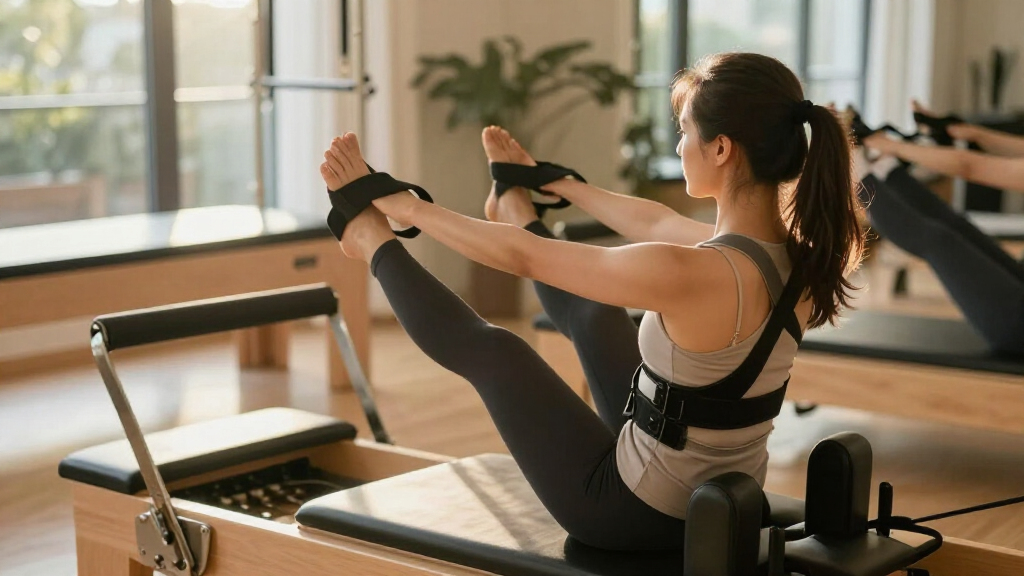
She said Pilates was central to her postpartum recovery because it helped her slow down, reconnect with her body and rebuild strength from the foundations. Testa now aims for a minimum of three workouts a week, generally lasting 20 to 45 minutes. Three sessions are her baseline; she described five as a particularly good week, not a requirement.
Her sample week includes a walk or treadmill session on Monday, a Hyrox or functional fitness session on Tuesday, 30 minutes of boxing on Wednesday, strength training on Thursday, rest on Friday, Hyrox training on Saturday and another rest day on Sunday. Testa said Pilates, including both Reformer and mat work, remains part of her broader training, alongside running and strength work. The schedule is an example of her routine, not a prescription for others.
A Sustainable Approach to Strength
Testa’s account offers a specific example of how a person’s exercise priorities can change after major health and birth-related setbacks. She describes fitness less as a return to a previous level and more as a gradual effort to build a body that feels strong, capable and healthy over the long term. That distinction matters for readers who may assume recovery means quickly returning to earlier routines or performance.
Her routine also illustrates a moderate baseline: three planned workouts, sessions as short as 20 minutes and designated rest days. Testa advises people starting out to choose two or three achievable sessions and increase gradually if it suits them. Her comments are personal experience, not medical guidance, and the report does not establish that the same approach is appropriate for every person recovering from illness or surgery.
Testa also links consistency to scheduling, enjoyment and social connection. She said training with people she enjoys helps make exercise something to look forward to. She cited her daughter as a motivation to stay energetic and to model exercise as a positive part of life. Those motivations help explain why she favors a routine she can maintain rather than a demanding target she may not sustain.
As an affiliate, we earn on qualifying purchases.
From Recovery to Weekly Training
Fit&Well presented Testa’s account as part of its Workout Diaries series, which asks trainers to describe their exercise routines. The report focuses on her own experience and weekly schedule; it is not a clinical account of cancer recovery, postpartum rehabilitation or an evaluation of the health effects of her training.
Testa said Pilates helped her rebuild after childbirth, but she did not describe it as her only form of exercise. Her current week mixes walking, functional fitness, boxing and strength training, alongside Pilates in her broader routine. She said her view of fitness has shifted toward mobility, capability and longevity. She also emphasized that not every day needs to involve the same type of movement: some days she prefers a class with other people, while on others she may run or train independently.
“It took me around three years [after the birth] to feel as though I had properly rebuilt myself.”
— Georgia Testa, speaking to Fit&Well
resistance bands for Pilates and strength training
As an affiliate, we earn on qualifying purchases.
As an affiliate, we earn on qualifying purchases.
Limits of the Personal Account
The Fit&Well report does not specify the type or treatment of Testa’s skin cancer, the medical complications associated with her C-section, or what care she received during recovery. It also does not provide a publication date, independent medical assessment or evidence that her routine would produce similar outcomes for others. Her statements about rebuilding strength and her workout schedule are her own account; readers should not treat them as individualized medical or rehabilitation advice.
It is also unclear whether the listed week is a fixed schedule or a representative example. Testa describes flexibility, rest days and a minimum target, but the report does not explain how often she changes activities or how her routine is adapted around health needs and other commitments.
high-waisted workout leggings for postpartum recovery
As an affiliate, we earn on qualifying purchases.
As an affiliate, we earn on qualifying purchases.
Her Routine and Advice
The report provides no announced program, event or further update from Testa. For now, the practical takeaway she offers is to make a routine manageable: schedule sessions, choose activities that are enjoyable and build up gradually instead of immediately aiming for five or six workouts each week. Her sample schedule includes two rest days and a range of activities, but she presents it as her own week rather than a template everyone should follow.
Anyone returning to exercise after cancer treatment, childbirth, surgery or another health setback should seek guidance from a qualified health professional familiar with their circumstances before changing activity levels. Testa’s account does not provide a substitute for that advice.
compact Pilates mat for exercise at home
As an affiliate, we earn on qualifying purchases.
As an affiliate, we earn on qualifying purchases.
Key Questions
Who is Georgia Testa?
Georgia Testa is a Pilates instructor and founder of Studio 281. She discussed her personal recovery and workout routine in Fit&Well’s Workout Diaries series.
What health setbacks did Testa describe?
Testa said she had skin cancer in 2018, when she was 22, and a complicated C-section birth three years later. The report does not provide further medical details.
How often does she work out?
Testa said she aims for at least three sessions a week, usually lasting 20 to 45 minutes. She said five sessions would make a good week but is not a required target.
What does her sample weekly routine include?
Her example week includes walking or a treadmill session, Hyrox or functional fitness, boxing, strength training, a second Hyrox session and two rest days. She also says Pilates remains a major part of her overall training.
Is Testa’s routine medical advice?
No. It is a description of her personal experience, not a treatment or rehabilitation plan. People returning to exercise after illness, surgery or childbirth should consult an appropriate health professional about their own needs.
Source: rss
Halloween Picks
halloween
As an affiliate, we earn on qualifying purchases.