
TL;DR

Get workout gear delivered free with Prime
- Fast, free delivery on millions of items
- Prime Video, Amazon Music and more included
- Member-only deals all year
Physical therapist Raj Suppiah recommends cat-cow, open-book thoracic rotations and a half-kneeling hip-flexor stretch for people who feel stiff after prolonged sitting. He advises moving regularly rather than trying to hold one perfect posture, and says to stop if a move worsens pain.
Physical therapist Raj Suppiah recommends three gentle movements—cat-cow, open-book thoracic rotation and a half-kneeling hip-flexor stretch—for people who feel stiff after spending much of the day sitting. In a Fit&Well report, Suppiah said regular movement and mobility matter more than trying to maintain one supposedly perfect sitting posture.
The suggested sequence starts with 10–12 cat-cow repetitions, followed by 10–12 open-book rotations on each side. Finish with a 20–30-second hip-flexor stretch per side. The source advises resting for 15–30 seconds and repeating the sequence once. These are the report’s recommendations, not a diagnosis or a guarantee that the movements will relieve pain for everyone.
For cat-cow, start on hands and knees, with hands beneath the shoulders and knees beneath the hips. Slowly round the back toward the ceiling, then gently lower the belly and lift the chest, moving only through a comfortable range. Suppiah said the exercise takes the spine through two directions after it has remained relatively still. One slow move in both directions counts as one repetition.
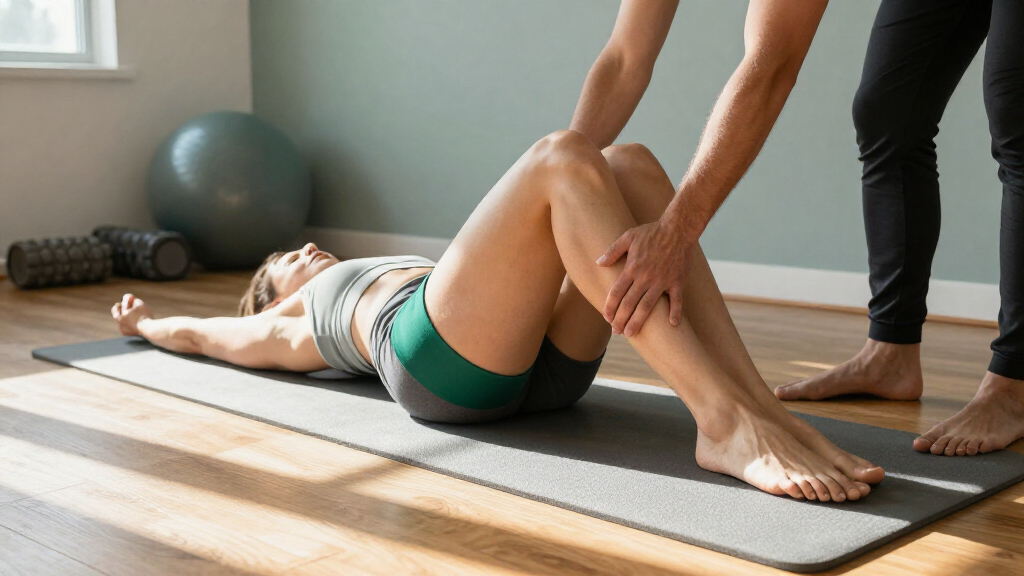
For the open book, lie on one side with hips and knees bent, arms extended in front and palms together. Sweep the top arm across the body while letting the chest and upper back rotate; the hand does not need to reach the floor, and the knees should stay together. For the final stretch, kneel on one knee, place the other foot forward, keep the torso upright and gently tuck the pelvis before shifting the hips forward. A cushion may be placed beneath the kneeling knee.
Movement Breaks Instead of Perfect Posture
The routine offers a practical option for people who notice discomfort after working or sitting in one position for a long time. Suppiah’s central point is that changing positions regularly may be more useful than trying to hold a single posture throughout the day. He said even a posture someone considers good can become uncomfortable when maintained for too long.
The advice also addresses the hips as well as the back. The report says prolonged sitting keeps the hips flexed, and some people may feel stiff when moving them into extension afterward. Suppiah’s explanation is that the hips and spine work together; the stretch is intended to encourage comfortable hip movement, not to claim that sitting permanently shortens hip muscles or that stretching treats an underlying condition.
These movements take little equipment and can be done at home or during a work break. The useful takeaway is modest: gentle mobility may help some people feel more comfortable after sitting, while frequent position changes and strength work are also part of the therapist’s broader advice.
Products Worth Considering

Garmin Venu 3S GPS Smartwatch with AMOLED Display, Soft Gold and French Gray Silicone Band

Hyperice Hypervolt Go 3 Percussion Massage Gun with Carry Case

Garmin Venu Sq 2 GPS Smartwatch, Slate and Shadow Gray
As an affiliate, we earn on qualifying purchases.
Why Long Sitting Can Feel Uncomfortable
The Fit&Well report grew from its writer’s experience working at a dining table instead of a usual workspace and feeling back stiffness. Suppiah, identified as a physical therapist and co-founder of Foundation Physiotherapy & Wellness, was asked to suggest movements for mobility after sitting. The source does not provide a study testing this specific three-move sequence.
Suppiah attributed post-sitting discomfort in part to muscles and joints remaining in relatively static positions, and to some muscles working continuously to support a seated posture. He also said a poorly fitted chair or desk that encourages leaning forward may add discomfort. At the same time, he cautioned that sitting itself is not inherently damaging and that research does not establish one sitting posture as a cause of back pain for everyone.
His wider recommendation is to change positions through the day and include exercises that build strength and endurance in the muscles supporting the spine and hips. The supplied report excerpt ends before giving specific strength exercises, so it does not establish a full training plan.
“Our bodies are designed to move, not to hold one position perfectly for eight hours.”
— Raj Suppiah, physical therapist and co-founder of Foundation Physiotherapy & Wellness
What the Routine Cannot Establish
The source describes a physical therapist’s recommendations, but it does not report clinical trial results, quantify how much the exercises reduce discomfort or establish that the routine works for all causes of back pain. Individual results may vary, and the report does not identify the reader’s medical history or the reason for any particular person’s symptoms.
The advice is to move gently within a comfortable range and stop if an exercise makes pain worse. It recommends seeking advice from a healthcare professional if back pain persists for a few weeks or interferes with everyday activities. The source does not specify which condition might be causing persistent pain, and the routine should not be treated as a substitute for assessment when that is needed.
How Readers Can Apply the Advice
Readers who choose to try the routine can follow the stated repetitions and holds, use a cushion under the kneeling knee if needed, and keep each movement comfortable rather than forcing a deeper stretch. The report advises one repeat of the sequence after a 15–30-second rest. Stop if symptoms worsen; seek professional guidance if pain persists for weeks or affects daily activities.
Beyond the sequence, Suppiah recommends changing positions regularly and developing strength and endurance alongside mobility. The supplied material does not give a detailed strengthening program or a specific schedule for movement breaks, so those details would require further guidance from a qualified professional or a fuller source.
Key Questions
Which three movements does the physical therapist recommend?
Cat-cow, open-book thoracic rotation and a half-kneeling hip-flexor stretch. The routine combines spinal movement with rotation and a stretch at the front of the hip.
How many repetitions or how long should each movement take?
The report suggests 10–12 cat-cow repetitions, then 10–12 open-book rotations per side, followed by a 20–30-second hip-flexor stretch per side. Rest 15–30 seconds and repeat the sequence once.
Should someone try the moves if they feel pain?
The source advises moving gently within a comfortable range and stopping if an exercise makes pain worse. It recommends professional advice if back pain lasts a few weeks or interferes with everyday activities.
Does the therapist say there is one correct sitting posture?
No. Suppiah says even a posture considered good may become uncomfortable if held too long, and that regularly changing positions is preferable to trying to maintain one supposedly perfect posture all day.
Source: fitandwell.com