
TL;DR

Get workout gear delivered free with Prime
- Fast, free delivery on millions of items
- Prime Video, Amazon Music and more included
- Member-only deals all year
For yoga mats for heated practice, prioritize traction when damp, a stable feel, and care instructions you can follow. A mat-and-towel setup can help manage sweat, but it is not necessary for everyone; test your setup carefully and dry it fully after class.
Your hands can feel planted during the first sun salutation, then start sliding as sweat beads across your palms. That’s why choosing yoga mats for heated practice is less about finding the thickest mat and more about matching its surface, stability, and care needs to your class.
Heated classes vary in temperature, humidity, style, and length, so the same mat can feel steady for one person and slick for another. You’ll learn what wet grip really means, when a towel helps, how to compare materials and cushioning, and how to keep your mat fresh without damaging it. The goal is simple: a setup you trust enough to focus on moving, not chasing your hands around the floor.
Prioritize damp traction, but treat “non-slip” as a product claim to test, not a guarantee.
Use a mat for cushioning and stability; add a towel when sweat absorption or a washable top layer helps.
Compare firmness and surface feel along with thickness, especially if you alternate between standing and kneeling poses.
Check material details for cleaning needs, odors, portability, and latex sensitivity.
Wipe your mat after class and let it dry completely before rolling it up.
Choose a mat that still grips when sweat appears
Yoga mats for heated practice should give you dependable traction when damp, but no surface guarantees a slip-free experience in every class. Grip depends on the mat’s texture and material, how much you sweat, your skin, and whether your hands or feet are wet. A mat advertised as “non-slip” still needs a cautious real-world test.
Some surfaces are designed to maintain traction when damp; others work best when paired with a towel. Some mats feel grippier as moisture builds, while others get slick. That difference matters when you move from a dry standing pose into a faster sequence and your palms start to shine. More sweat does not automatically mean better grip.
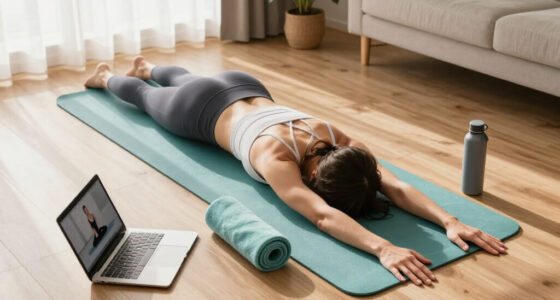
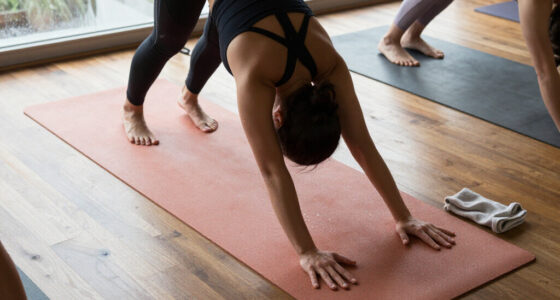
For example, if your hands slide in downward-facing dog but your feet stay steady, try a small towel under your palms before replacing the whole mat. If the towel shifts, stop and adjust rather than pushing through a pose. Keep lotion off your hands and feet before class, since it can add another slippery layer.
“Non-slip” is not a promise for every body or every room. Test your setup gently, follow studio guidance, and pause if you lose traction.
Grip is personal, not a contest. If you practice in a particularly humid room, a surface that feels secure in a cooler studio may behave differently. Look for clear descriptions of damp performance, and, when possible, try the mat or ask about a return policy before committing.
yoga mats for heated practice with wet grip
As an affiliate, we earn on qualifying purchases.
As an affiliate, we earn on qualifying purchases.
Decide whether you need a mat, a towel, or both
A mat provides a cushioned, stable base, while a yoga towel absorbs sweat and can cover your mat or a shared studio surface. You may need one, the other, or both: the best setup depends on how wet your practice gets and how securely the towel stays in place.
A dedicated mat with a surface designed to grip when wet can keep your setup simple. A towel offers a washable layer that catches sweat, which can be useful during long, very sweaty sessions. Some towels use corner pockets or a grippy backing to reduce bunching; without those features, a towel may shift when you step back from a lunge.
Think about a first-time heated-class scenario: you bring a regular mat, then find your hands slipping halfway through. A towel placed across the mat may help, but only if it lies flat. At your next class, test the towel before the opening sequence and pause to smooth it if it wrinkles. For some practitioners, dampening the towel according to its care directions helps it stay in place; for others, a dry towel or a different surface works better.
| Setup | What it offers | What to check |
|---|---|---|
| Mat only | Cushion and a single surface | How its grip feels as you sweat |
| Towel over a mat | Sweat absorption and a washable top layer | Whether it bunches or shifts |
| Mat-and-towel combo | A stable base plus added absorption | Extra laundry, drying time, and carrying weight |
The tradeoff is practical as well as tactile: a towel can catch moisture before it saturates the mat, but it adds laundry and another layer that needs to dry. A wet towel that moves underfoot may create a new stability problem while solving the sweat problem. If you practice often, consider whether you have enough time and space to wash and dry it between classes.
A towel is not an automatic upgrade. If your mat already feels secure and stays clean with routine care, adding one may only mean another damp item to carry home. Choose the simplest setup that gives you steady footing.
non-slip yoga mat for sweaty classes
As an affiliate, we earn on qualifying purchases.
As an affiliate, we earn on qualifying purchases.
Balance cushioning with a steady feel underfoot
Comfort depends on more than thickness: cushioning can ease pressure on your knees and wrists, while a firmer, thinner mat may feel steadier in standing balances. Your best choice leaves you comfortable on the floor without making your feet feel wobbly when you shift into a pose.
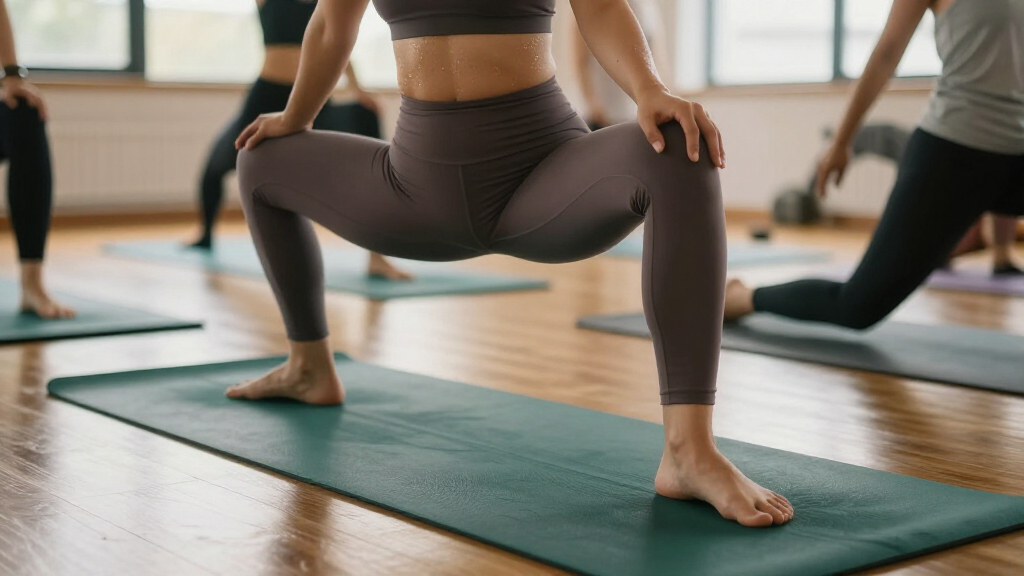
Imagine holding warrior two on a very soft, thick mat. Your joints may appreciate the padding, but your feet can feel less connected to the floor. On a thinner, firmer surface, you may feel more grounded, yet notice discomfort when you lower onto your knees. Neither tradeoff makes one mat right for everyone.
The difference comes from how the mat compresses under changing loads. In standing poses, your weight shifts between your feet; a soft surface can compress unevenly and make those shifts feel less predictable. In kneeling or floor poses, that same give can reduce pressure on sensitive joints. Consider which discomfort or instability is more likely to interrupt your practice, rather than assuming extra cushioning is always better.
Try the mat in the kinds of poses you actually practice: a standing balance, a kneeling lunge, and a short plank. Notice whether it compresses under your feet and whether your knees feel comfortable when they meet the floor. If you like a steady mat but want more knee support, use a folded towel or separate knee pad rather than adding softness across the entire surface.
One person’s ideal cushion may feel unstable to someone else. If you practice a mix of standing flow and floor poses, a moderate, firm mat plus targeted padding can offer a useful middle ground. Check thickness alongside firmness, texture, and stability; a number on a product page cannot tell you how the mat will feel under your body.
When trying a new mat, move slowly through a few familiar poses before joining a fast sequence. A mat should support your practice, not persuade you to force a balance or ignore discomfort. If you have a pre-existing condition or specific support needs, ask a qualified health professional for guidance on equipment and movement choices.
As an affiliate, we earn on qualifying purchases.
Compare materials by feel, care, and sensitivity
No single mat material suits everyone. Natural rubber, PVC, polyurethane, and thermoplastic elastomer (TPE) can differ in grip, weight, feel, durability, and cleaning needs, so compare the particular mat rather than assuming its material name settles the choice.
Those differences affect the whole routine, not just the first impression. A surface with appealing traction may need careful cleaning or more drying time; a lighter mat may be easier to carry but feel less substantial underfoot. Product construction and surface finish also matter, so material labels are a starting point for questions rather than a reliable ranking of performance.
A practitioner who walks to class may care most about weight; someone who practices at home may accept a heavier mat if it feels comfortable and holds its position. A new mat can also have a noticeable smell that fades with airing, though intensity and duration vary by product. If you are sensitive to smells, unpack it in a ventilated space before your first class.
Check ingredient and material descriptions if you have a latex sensitivity: some natural-rubber mats may not suit you. Also read the maker’s care instructions before buying. A surface that feels appealing but needs cleaning products you cannot use—or takes longer to dry than your schedule allows—may not be the easiest choice for weekly classes.
Environmental labels need the same careful reading. Some brands describe recycled or bio-based materials and lower-waste manufacturing, but “eco-friendly” has no single standard meaning. Look for specific material details or credible independent certifications, and weigh those claims alongside grip and expected care. For instance, a lighter mat that travels easily may be a better fit for a bus commuter than a bulky model that stays at home.
Make your choice with a short list: damp traction, comfort, portability, sensitivity, and care. Think through a normal week: where the mat will be stored, how you will clean it, and whether it can dry before your next class. A mat that performs well but is awkward to carry or maintain may end up getting used less. Product formulas and models change, so check current manufacturer details rather than relying on a broad claim or a familiar material label alone.
cushioned yoga mat for heated practice
As an affiliate, we earn on qualifying purchases.
As an affiliate, we earn on qualifying purchases.
Use this simple test before you trust a new mat
Test your mat slowly before using it for demanding poses. A few familiar movements can show you how the surface feels dry and damp, whether the mat shifts, and whether your setup remains manageable when you sweat.
- Check the dry feel. Stand, step back into a lunge, and place your hands on the mat. Notice the texture and whether the mat stays flat.
- Add a little moisture safely. Follow the maker’s guidance; if appropriate, use slightly damp hands rather than soaking the mat. Check whether your palms keep traction.
- Test familiar movements. Try a short plank, downward-facing dog, and a standing balance at a controlled pace. Stop if your hands or feet slide.
- Try a towel if needed. Lay it flat, check any corner pockets or backing, and see whether it stays put as you move.
- Practice and clean as directed. After class, wipe the surface according to its care label and let it dry fully before storage.
This test does not reproduce every heated studio. Room temperature, humidity, class style, and length vary, and a short home check cannot predict exactly how much you’ll sweat in class. Treat your first session with a new setup as a trial, keeping a towel nearby if you are unsure.
For example, if a mat feels grippy when dry but slippery after a few minutes of movement, do not try to solve the problem by rushing or gripping harder. Pause, adjust your hands, use a suitable towel, or choose a different surface. Reliable traction beats an ambitious pose.
Keep your mat fresh by drying it completely
Wipe your mat after practice and let it dry fully before rolling it up. Sweat left on the surface can contribute to odor and buildup, while trapped moisture inside a rolled mat can leave it smelling stale. Follow the care label, because cleaners and methods that suit one material may damage another.
After class, a quick wipe with a product approved by the manufacturer can clear away visible sweat. Then hang or lay the mat flat in a well-ventilated spot until it feels completely dry. If you arrive home late and roll a damp mat straight into a bag, that convenient shortcut can turn into an unpleasant smell by the next session.
Cleaning and drying are separate parts of the job: wiping removes sweat from the surface, while airing lets moisture evaporate from the mat. Rolling too soon traps dampness where air cannot reach it. If you have limited drying space, a routine that lets the mat stay open until dry may matter as much as the cleanser you choose.
Avoid assuming that every mat can go in a washing machine or tolerate harsh cleaners, heat, or prolonged sun. Those conditions can damage some surfaces. A towel may be easier to wash separately, but it still needs to dry before you pack it. If the mat has a lingering smell, check its care instructions rather than masking it with a strong fragrance.
Size affects this routine, too. A longer or wider mat gives you more room to move, but it can weigh more and take longer to dry. If you carry a damp mat home on public transport, a suitable carrying bag may help keep other belongings separate, though it does not replace drying at home.
Use a personal mat or towel if you want less direct contact with shared studio surfaces, and clean it consistently. Storage is part of the practice: leave enough time for air to reach the whole mat, then roll it only when it is dry to the touch.
Frequently Asked Questions
What kind of yoga mat works best for a heated class?
Choose a mat with reliable damp traction, suitable cushioning, and care instructions you can follow. The best fit depends on how much you sweat, the poses you practice, and how the surface feels under your hands and feet.
Do you need a yoga towel for heated practice?
Not always. A towel can absorb sweat and add a washable layer, especially in a very sweaty class, but it may bunch or shift unless it has a grippy backing or corner pockets. Try your mat first and add a towel if it improves your footing.
How do you stop your hands and feet from slipping?
Try a mat designed to maintain traction when damp or a towel that stays flat, and arrive with hands and feet free of lotion. If you still slide, pause and adjust your setup rather than forcing a pose.
How thick should a mat be for heated yoga?
Choose enough cushioning for comfort while keeping the stable feel you need for standing poses. Thickness alone does not determine suitability; a folded towel or separate knee pad can add support where you need it without softening the whole mat.
How should you clean and dry a yoga mat after class?
Follow the manufacturer’s care instructions, wipe away sweat after practice, and let the mat air-dry completely before rolling it up. Do not assume every mat can be machine-washed or cleaned with the same product.
Conclusion
Choose a mat by testing how it feels when you move, not by chasing one thickness, material, or “non-slip” label. If your hands stay planted, your knees feel supported, and the cleanup fits your routine, you have a setup worth keeping.
Try it gently in your next class, pause if traction changes, and let the mat dry before you roll it away. A steady practice starts with a surface you can trust.
Halloween Picks
halloween
As an affiliate, we earn on qualifying purchases.