TL;DR

Get workout gear delivered free with Prime
- Fast, free delivery on millions of items
- Prime Video, Amazon Music and more included
- Member-only deals all year
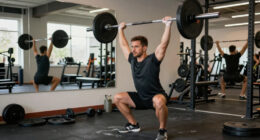
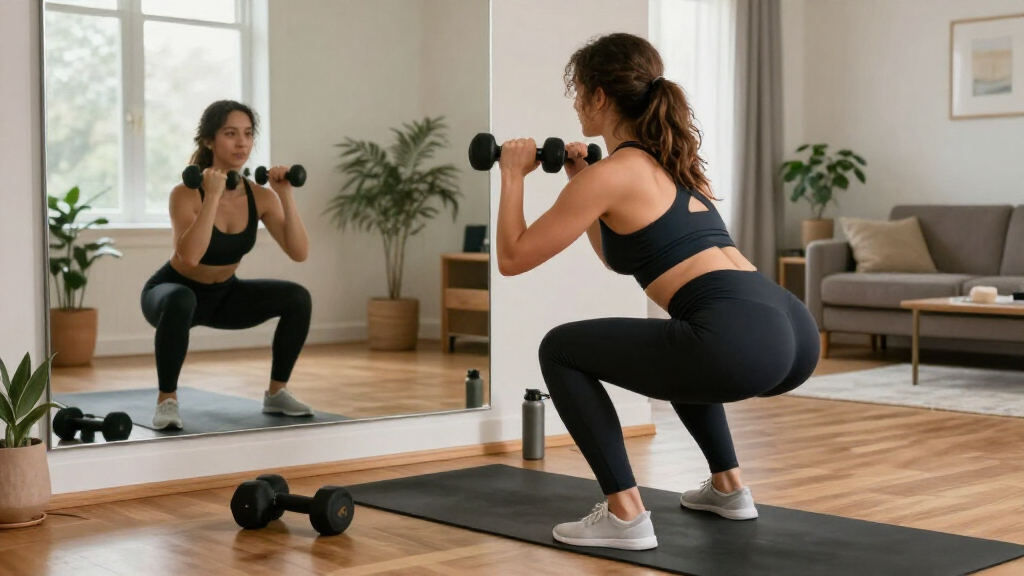
Personal trainer Pippa Sealey recommends using shorter rest periods and unilateral movements to make home dumbbell sessions more challenging when heavier weights are unavailable. Her sample routine combines supersets and tri-sets, but the workout is intended for people already comfortable with basic strength exercises.
Personal trainer Pippa Sealey has outlined two ways to make home dumbbell workouts more challenging without buying heavier weights: use shorter rest periods and add unilateral exercises, which work one side of the body at a time. In a Fit&Well report, Sealey shared a routine using supersets and tri-sets to apply those methods; it is aimed at people already confident with foundational movements such as squats and deadlifts.
Sealey said she uses shorter rests and unilateral movements when heavier loads are not available at home. A superset pairs two exercises in sequence, with one set of the second exercise following the first before the rest period. A tri-set follows the same idea with three exercises. The report also describes agonist supersets, which pair movements that target the same muscle groups to increase the challenge to that area.
The sample routine includes a deficit calf raise, hamstring bridge march and wall sit in its opening tri-set. It then pairs a single-leg Romanian deadlift with a split squat, and later groups core and upper-body exercises. The listed work generally calls for three rounds of each exercise group. Rest is set at zero seconds between movements in some sequences, followed by 60 to 90 seconds after the group; the wall-sit sequence also specifies a 60-to-90-second rest.
Repetitions vary by movement: the workout prescribes 12 repetitions per side for the single-leg Romanian deadlift and split squat, while push-ups are performed for as many repetitions as possible while maintaining good form. The report’s supplied exercise instructions also describe a single-arm dumbbell push press. The plan mixes dumbbell exercises with bodyweight movements, so the challenge does not rely exclusively on increasing the load.
How the Routine Raises the Challenge
The advice addresses a common limitation of home strength training: people may own only a small set of dumbbells, and repeating the same exercises with the same weight can make it harder to progress. Sealey’s approach offers ways to change the structure and demands of a session without adding equipment, using one-sided work and shorter recovery periods rather than heavier loads.
That does not mean the routine is suitable for everyone or that it guarantees continued progress. The source presents it as a workout for people who already know basic strength movements, and it does not provide evidence comparing this plan with other training methods. Shorter rests and balance-demanding single-leg exercises can also make technique more difficult to maintain, so the report’s instruction to stop push-ups when good form falters is relevant to the workout as a whole.
adjustable dumbbells for home strength training
As an affiliate, we earn on qualifying purchases.
As an affiliate, we earn on qualifying purchases.
The Methods Behind Sealey’s Plan
In the report, Sealey’s two suggestions are shorter rest periods and choosing unilateral instead of bilateral movements when heavy weights are not available. A bilateral movement uses both sides together; a unilateral movement emphasizes one side at a time. Exercises such as a single-leg Romanian deadlift and split squat are examples in the workout.
The routine organizes exercises into groups, with participants completing each movement in the group before resting and repeating the sequence three times. It also includes moves that do not require dumbbells, such as a wall sit, push-up and plank variation. The article frames the workout as a way to increase the challenge of home training, not as a replacement for learning sound technique or choosing an appropriate level of difficulty.
“You may also want to use more agonist supersets.”
— Pippa Sealey, as quoted by Fit&Well
non-slip exercise mat for home workouts
As an affiliate, we earn on qualifying purchases.
As an affiliate, we earn on qualifying purchases.
Limits of the Workout Guidance
The source does not provide a publication date, a full account of Sealey’s training credentials, or research showing how this particular routine affects strength or fitness. It also does not specify the dumbbell weights to use, how often to repeat the workout, or how to adapt every exercise for different ability levels. The supplied workout text includes an instruction for a single-arm push press, but the overview list does not clearly show where that movement fits. Readers should not assume the routine is appropriate for their circumstances; the report specifically targets people already confident with basic lifts.
resistance bands for strength training at home
As an affiliate, we earn on qualifying purchases.
As an affiliate, we earn on qualifying purchases.
Choosing a Safe Starting Point
The report offers a workout plan rather than announcing a scheduled follow-up or a new fitness program. Anyone using the approach would need to choose manageable weights, leave enough time to perform each repetition with control, and adjust the pace if technique begins to break down. People who are new to strength training or unsure whether the movements suit them can seek instruction from a qualified trainer. The source does not set out a progression schedule or say when to increase the number of repetitions, rounds or exercise difficulty.
Key Questions
What are Sealey’s two suggested ways to make home dumbbell workouts harder?
Sealey recommends shorter rest periods and unilateral movements, which emphasize one side of the body at a time when heavier weights are unavailable.
What is a superset in this workout?
A superset means completing a set of one exercise and then a set of another exercise before resting. The report also suggests agonist supersets, which pair exercises that target the same muscle groups.
Who is the sample workout intended for?
Fit&Well describes it as a workout for people already confident with foundational movements such as squats and deadlifts. The report does not present it as a beginner plan.
Does every exercise in the routine use dumbbells?
No. The listed workout includes dumbbell movements alongside bodyweight exercises such as a wall sit and push-up.
How much rest does the routine prescribe?
Some exercise sequences list no rest between paired movements, with 60 to 90 seconds after the group. The opening tri-set also specifies that rest period after the wall sit.
Source: rss
Halloween Picks
halloween
As an affiliate, we earn on qualifying purchases.