
TL;DR
Anew is expanding its U.S. water business with American-sourced spring water and bottles manufactured domestically, while publishing test results as part of its wellness-market pitch. One submitted water sample showed no microplastics within the test method’s detection limits; the result does not establish that all Anew products are free of microplastics or nanoplastics.
New Zealand-founded water brand Anew is expanding in the United States with American-sourced spring water and domestic manufacturing of its plant-based bottles, while making published laboratory tests part of its pitch to wellness, fitness, hospitality and retail customers. The company says testing found no microplastics in one submitted water sample within the method’s detection limits; that result applies to the sample tested, not necessarily to every bottle or to nanoplastics.

Get workout gear delivered free with Prime
- Fast, free delivery on millions of items
- Prime Video, Amazon Music and more included
- Member-only deals all year
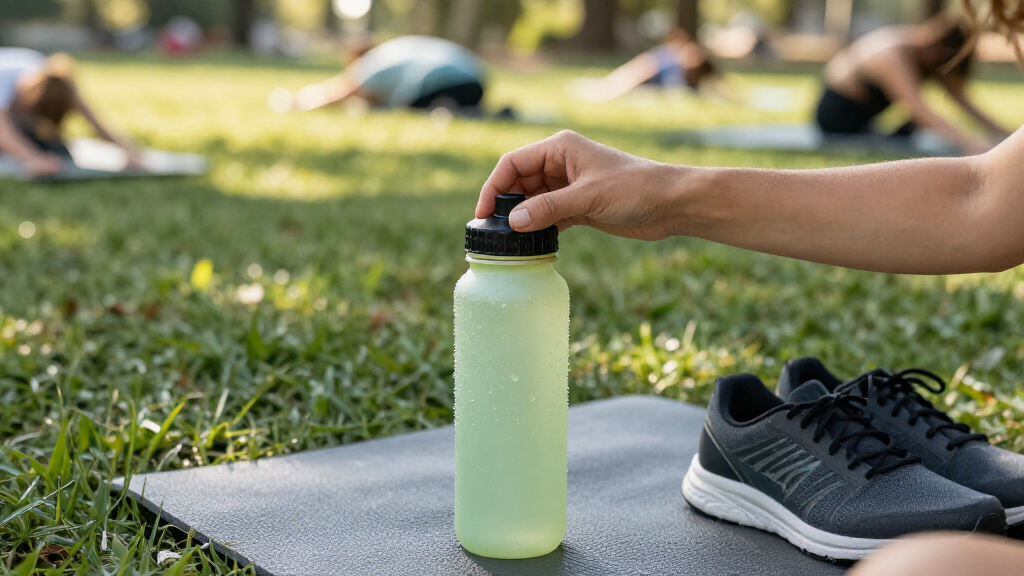
Anew says its U.S. rollout uses water from a protected underground artesian aquifer and that the water is bottled without reverse osmosis or artificial remineralization. The brand describes its bottle and cap as plant-based, lightweight and dishwasher-safe for repeated refilling. It says U.S. bottle manufacturing began in October 2026, though the source report does not give production volumes or identify the manufacturing site.
The company’s microplastics test was designed to reflect a bottle’s journey before reaching a customer. According to Anew, bottles filled in New Zealand traveled by sea to Los Angeles without climate control, were trucked to Las Vegas and remained in storage for 2.5 months before a sample was sent to EMSL Analytical. EMSL’s report, dated May 5, 2025, recorded no microplastics in the single submitted sample within the method’s detection limits. The analysis used microscopy and Fourier transform infrared spectroscopy and referenced ISO 24187:2023 and other analytical guidance.
Anew has also published a water-testing report that found no detections among 14 PFAS compounds analyzed using EPA Method 537.1. A company-prepared summary of SGS testing reports no BPA or BPS detected in the bottle bodies tested. Those findings concern the particular samples and substances examined. The brand lists Bristol Farms, Lassens, HUME, Pop Up Grocer and The Shelf among its stockists, as well as select hotels and Pilates studios; products are also sold through its U.S. website.
Testing Becomes Part of Anew’s U.S. Pitch
Anew is competing in a U.S. wellness market where packaging, sourcing and product testing can all shape consumer decisions. Publishing laboratory documents gives customers a way to inspect evidence behind the company’s claims rather than relying only on marketing language. The test reports also make the scope of those claims important: a result from one submitted sample cannot establish that every bottle, production run or water source has the same result.
The company’s approach reflects growing public attention to plastic particles in water. A 2024 study in the Proceedings of the National Academy of Sciences reported an average of about 240,000 plastic particles per liter across samples from three bottled-water brands, with roughly 90% classified as nanoplastics. That study used a different analytical technique, and its results are not directly comparable with Anew’s microplastics analysis. Anew’s reported result also does not establish the absence of nanoplastics.
For retailers and wellness businesses considering the brand, the rollout combines a domestic supply chain with reusable-bottle positioning and disclosed test results. Whether those features lead to wider distribution or repeat purchases is not established by the available information.
Products Worth Considering

Garmin Venu 4 GPS Fitness Smartwatch, 45 mm, Black Silicone Band

Levoit Vital 100S-P Air Purifier with Washable Pre-Filter

Garmin Forerunner 970 GPS Running and Triathlon Smartwatch
As an affiliate, we earn on qualifying purchases.
From New Zealand Supply to U.S. Bottling
Anew was founded in New Zealand and is now adding an American water source and U.S. bottle production as it pursues distribution across retail, hospitality, wellness and fitness. The shift is a change in its supply and manufacturing model, not just a new sales channel. The company says the U.S. water is bottled at its source without reverse osmosis or artificial remineralization, but the report does not detail the source’s capacity or the scale of the rollout.
The company’s testing claims cover separate questions. The EMSL report concerns microplastics in one water sample; the PFAS report covers 14 specified compounds; and the SGS summary addresses BPA and BPS in tested bottle bodies. These results should not be treated as a single general certification of the product or packaging. In April 2026, the U.S. Environmental Protection Agency included microplastics in its draft Sixth Contaminant Candidate List, which identifies contaminants for consideration in future drinking-water regulatory decisions. Inclusion on the draft list does not establish a federal drinking-water limit.
Anew founder Jayden Klinac has said the company’s aim is to make its evidence available to customers. In the source report, he said the brand wanted to test the bottle customers actually drink from rather than one sitting on a production line. He also described the bottle as central to why he started the business. Those statements explain the company’s positioning; they do not independently verify the performance or environmental impact of the packaging.
Limits of the Published Test Results
The microplastics finding is limited to one submitted sample and the detection limits of the method used. The available material does not establish how many bottles or production batches were tested, whether testing will be repeated, or whether results would be the same across the U.S. water source and future production. A finding of no detected microplastics within a method’s limits is not proof that no particles were present at any level.
The report also does not establish that Anew’s water is free of nanoplastics. The 2024 bottled-water study cited in the source used a different technique, and its measurements cannot be directly compared with the EMSL result. For PFAS and packaging, the published findings likewise apply only to the specific compounds and samples analyzed; the source material does not provide a broader assessment of all possible contaminants or packaging substances.
Other details remain unreported, including the scale of U.S. production, the full schedule for the rollout, and the terms of any retail or hospitality distribution agreements. The source material does not provide independent testing of the company’s broader environmental claims about plant-based packaging or repeated use.
U.S. Distribution and Further Testing
Anew says it is pursuing sales through U.S. retail, hospitality, wellness and fitness businesses, with products already listed at named retailers, select hotels and Pilates studios and through its website. The company has not provided a detailed timetable for additional stockists or broader distribution. Its stated start of domestic bottle manufacturing in October 2026 is the clearest production milestone in the source report.
Further detail that would help customers and business buyers assess the rollout includes production volumes, the location and capacity of bottle manufacturing, and whether the company will publish additional test reports across more samples or production runs. For now, the published results offer a record of specific tests while leaving those wider questions open.
Key Questions
What is Anew launching in the United States?
Anew is expanding U.S. sales with American-sourced spring water and plant-based bottles made domestically, targeting retail, hospitality, wellness and fitness businesses.
What did the microplastics test find?
EMSL Analytical’s report found no microplastics in one submitted sample within the method’s detection limits. The result does not establish that all Anew bottles are free of microplastics or that the water contains no nanoplastics.
What do Anew’s PFAS and bottle-material results cover?
Anew says a water report found no detections among 14 PFAS compounds tested using EPA Method 537.1. A company-prepared summary of SGS testing reports no BPA or BPS detected in the bottle bodies tested. Both findings apply to the samples and substances examined.
Where can customers buy Anew products?
The company lists Bristol Farms, Lassens, HUME, Pop Up Grocer and The Shelf among its stockists, along with select hotels and Pilates studios. It also sells products through its U.S. website.
Source: athletechnews.com