TL;DR

Get workout gear delivered free with Prime
- Fast, free delivery on millions of items
- Prime Video, Amazon Music and more included
- Member-only deals all year
Fit&Well published a beginner-friendly, four-movement yoga flow created by Yogalina Studios founder Alina Boyett for gentle movement after exercise or prolonged sitting. Boyett recommends moving within a comfortable range and says people with injuries or relevant medical conditions should seek professional guidance before trying it.
Fit&Well has reported on a four-movement yoga flow created by Alina Boyett, founder of UK-based Yogalina Studios, for people seeking gentle movement after a workout, a run or a day spent sitting. The beginner-friendly sequence requires no equipment; Boyett advises participants to move slowly, avoid pain and seek professional guidance if they have an injury or relevant medical condition.
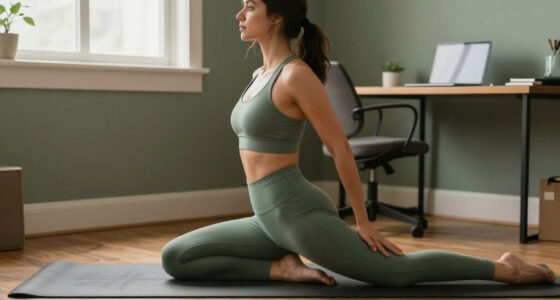
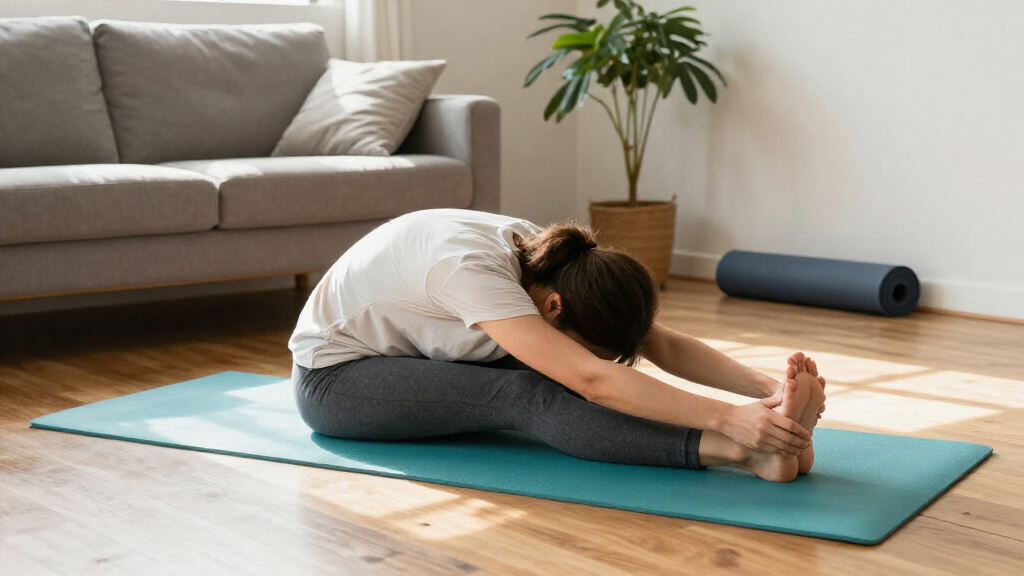
The routine includes Waterfall pose, Child’s pose, a Ragdoll forward fold and a Seated spinal twist. Yogalina teacher Misha Clarke demonstrates the sequence in a video accompanying the Fit&Well report. The poses are presented as a short recovery option at home, not as a demanding workout or a substitute for individual medical advice.
Boyett recommends holding Waterfall pose and Child’s pose for three to five breaths. For the Ragdoll fold, the instructions call for two rounds of three to five breaths, with softly bent knees and the upper body hanging comfortably. The seated twist is performed for two rounds, holding each side for two to three breaths. These timings are the report’s suggested sequence; readers can use a smaller range of motion if that feels more comfortable.
The steps begin lying on the back near a wall, with both legs raised against it. In Child’s pose, participants start on hands and knees, bring their big toes together and lower their hips toward their heels. The standing fold uses a hip-width stance and a slow bend from the hips. For the final movement, sit with legs crossed or extended, lengthen the spine and rotate gently to each side. Boyett’s main safety instruction is not to force a stretch or push through pain.
A Short Option for Recovery Days
The report highlights recovery as part of an exercise routine, rather than treating progress as a matter of training harder or more often. For readers who have been active or sitting for long periods, this sequence offers a structured way to pause and move gently without special equipment or advanced yoga experience.
That makes the instructions accessible, but the reported benefits should be understood as Boyett’s guidance, not proof that the poses will produce a particular result for everyone. She says the movements target areas that can feel tense, including the legs, hips, spine and shoulders. People’s comfort and mobility vary, and the routine is not presented as treatment for an injury or medical condition.
Products Worth Considering

Oral-B iO Series 7 Rechargeable Electric Toothbrush with 2 Brush Heads and Charging Travel Case

Oura Ring 5 Smart Ring – Silver – Size 10

Blueair Blue Pure 211i Max Smart Air Purifier for Large Rooms
As an affiliate, we earn on qualifying purchases.
Four Poses, One Gentle Sequence
Boyett frames the routine around the idea that recovery is more than doing nothing. In comments to Fit&Well, she says a few minutes of slow movement and breathing may change how someone feels, whether they have completed exercise or spent the day at a desk. That is her stated perspective as a yoga teacher, rather than a measured outcome from a clinical study described in the report.
The four poses move from resting with the legs elevated to positions involving the back, hips and shoulders, then finish with gentle rotation of the torso. The report recommends slow, comfortable movement throughout. It does not require previous yoga experience, specialized clothing or equipment beyond a nearby wall for Waterfall pose.
Benefits and Individual Suitability
The Fit&Well report describes the poses and attributes possible effects to Boyett, but it does not cite a study measuring this specific flow or establish that it will reduce tightness or improve flexibility for every participant. Individual results and comfort may vary, and the article does not provide tailored modifications for particular injuries or conditions.
The source material also does not specify a publication date or report on follow-up testing, participant feedback or medical review of the sequence. Anyone who experiences pain, has limited mobility or is uncertain whether a pose is appropriate should stop and seek suitable professional advice rather than attempt to push through discomfort.
How to Try the Sequence Safely
The next step for readers interested in the routine is to follow the demonstrated movements at a comfortable pace, using the breath counts as suggestions rather than targets to force. Begin with a gentle range of motion, keep knees softly bent where instructed, and stop if a position causes pain. No equipment is required, although the first pose uses a wall.
Boyett’s guidance is to seek professional advice before trying the sequence when an injury or relevant medical condition is involved. The source report does not announce a follow-up or a new research milestone, so any further guidance or updates from Fit&Well or Yogalina Studios are not specified.
Key Questions
What is the yoga flow?
It is a four-pose recovery sequence created by Alina Boyett: Waterfall pose, Child’s pose, a Ragdoll forward fold and a Seated spinal twist.
Do I need yoga experience or equipment?
Boyett describes the flow as suitable for beginners and says it needs no equipment. Waterfall pose is performed near a wall.
How long should I hold each pose?
The report suggests three to five breaths for Waterfall and Child’s pose, two rounds of three to five breaths for the fold, and two to three breaths per side for the seated twist. These are suggested timings, not a reason to continue through discomfort.
Is the flow intended to treat pain or an injury?
No. The report presents it as gentle movement for recovery and does not describe it as treatment. Boyett says to never push through pain and advises people with an injury or relevant medical condition to seek professional guidance before trying it.
Source: fitandwell.com