
TL;DR

Get workout gear delivered free with Prime
- Fast, free delivery on millions of items
- Prime Video, Amazon Music and more included
- Member-only deals all year
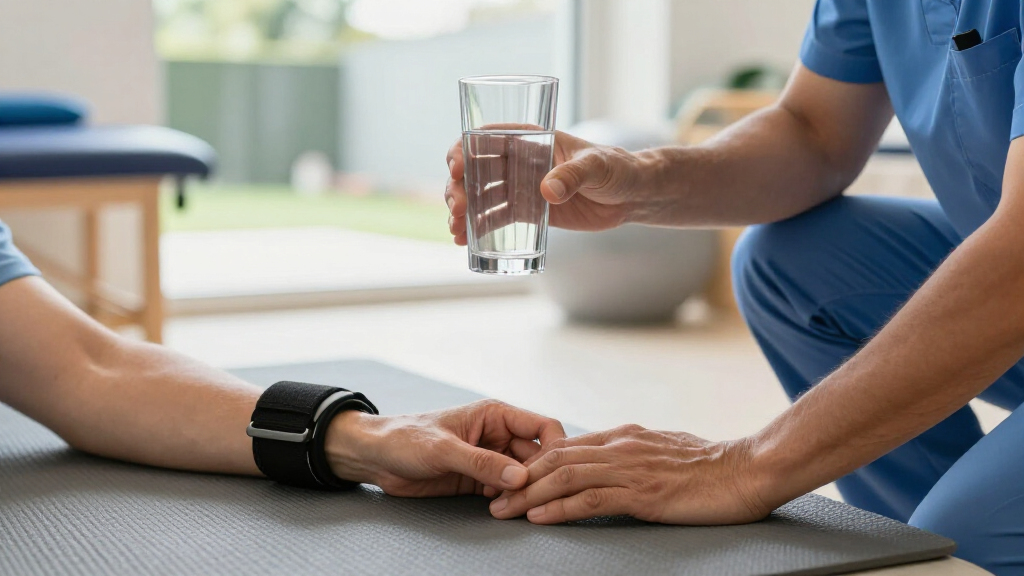
The FDA cleared Encora Therapeutics’ wrist-worn device to help adults with essential tremor. The technology began as a 2017 MIT class project and uses mechanical vibration; the company reports that 78% of patients in one trial reported benefits after 90 days of home use.
The FDA cleared a wrist-worn device from Encora Therapeutics in February to help adults with essential tremor, turning a prototype built by MIT students into a treatment option after years of development and testing. The device applies mechanical vibration intended to reduce tremors, and the company says one clinical trial found that 78% of patients reported benefits after 90 days of home use.
Encora’s device grew out of a 2017 project in MIT’s 2.009 product-design class. At the class’s final presentation, a man identified by MIT News as Michael, who had tremors associated with Parkinson’s disease, tried the prototype. The report says his shaking decreased after he activated it, allowing him to draw a spiral with greater precision. That demonstration led people in the audience to ask how they could obtain the device for relatives with tremors.
The original prototype was rudimentary: co-founder Daniel Carballo described it as a foam-core box with a Raspberry Pi chip and wires. Carballo, Allison Davanzo and Kyle Pina were among the students who carried the idea forward. The team drew on MIT entrepreneurship programs and became the company Encora Therapeutics in 2020. It then worked through multiple hardware iterations and clinical testing before the FDA clearance.
Encora initially explored use for Parkinson’s disease and ran a 2022 clinical trial with 20 Parkinson’s patients in collaboration with Mass General Brigham, according to MIT News. The company later focused on essential tremor, which the report describes as a condition that causes shaking, often in the hands. MIT News says a separate trial found that 78% of patients reported benefits following 90 days of use at home. The available source does not provide further trial details, such as the number of participants or how benefit was measured.
A New Option for Essential Tremor
The clearance matters because it brings a wearable, vibration-based device to adults with essential tremor, a condition that can interfere with everyday hand tasks. The original demonstration involved a person with Parkinson’s, but the FDA clearance described in the report is specifically for helping adults with essential tremor. Those are distinct conditions, and the classroom demonstration should not be read as evidence that the cleared device is authorized for Parkinson’s.
Encora co-founder Daniel Carballo told MIT News that the company shifted focus after learning that essential tremor represented a greater unmet need in its view. He said more drugs were being developed for Parkinson’s than for essential tremor. The clearance therefore marks both a commercial milestone for the company and the arrival of a device-based approach for the population covered by its authorization. It does not, by itself, establish how much the device helps each user or whether it works for everyone.
FDA-cleared wrist tremor relief device
As an affiliate, we earn on qualifying purchases.
As an affiliate, we earn on qualifying purchases.
From 2017 Prototype to Clearance
The project began as one of many ideas proposed by students in MIT’s product-engineering class. Carballo suggested using mechanical vibration to affect the body’s movement-control feedback systems. The team chose the idea despite his reservations that it might be too ambitious for a semester. Its encounter with Michael shortly before the final presentation gave the students a chance to test the prototype with someone experiencing substantial tremors.
MIT News describes the journey from that public demonstration to FDA clearance as nearly nine years. Along the way, the students used MIT programs including MIT Sandbox, MIT FUSE and the Venture Mentoring Service, incorporated Encora in 2020 and conducted clinical work. The research and development process included dozens of hardware iterations, according to the report. The team’s initial Parkinson’s focus changed as it learned more about the needs of people with essential tremor.
““It’s been a long and difficult — very difficult — journey, but also very rewarding, especially when we get feedback from patients.””
— Daniel Carballo, Encora co-founder and vice president of strategy, speaking to MIT News
essential tremor vibration therapy device
As an affiliate, we earn on qualifying purchases.
As an affiliate, we earn on qualifying purchases.
Evidence and Use Details Still Missing
The source report does not specify the device’s exact operating instructions, price, availability, or the full terms and limits of the FDA clearance. It also does not identify the size or design of the trial behind the 78% patient-reported benefit figure, define how participants rated benefit, or provide a comparison group’s results. Those details are needed to judge the strength and scope of the reported outcome.
It is also not clear from the provided information how long benefits last beyond the reported 90-day home-use period, which patients are most likely to benefit, or what side effects or practical limitations were observed. The clearance is for helping adults with essential tremor; the source does not establish that the device treats Parkinson’s disease or stops tremors for every user.
wearable tremor reduction device for adults
As an affiliate, we earn on qualifying purchases.
As an affiliate, we earn on qualifying purchases.
Availability and Further Evidence
The next practical questions are when and where adults with essential tremor can obtain the device, how much it will cost, and what guidance clinicians and the company will provide for use. The source report confirms FDA clearance but does not give a launch date, distribution plan or price. Encora’s longer-term work will also be judged by how the device performs outside the trial setting and whether further studies clarify the scale and duration of patient benefit.
For now, the milestone closes one chapter of a project that began in a classroom but leaves key questions about access and outcomes open. Readers considering the device should seek current product and clinical guidance from qualified health professionals rather than treating one patient’s demonstration or a company-reported trial result as a guarantee of personal results.
mechanical vibration tremor treatment
As an affiliate, we earn on qualifying purchases.
As an affiliate, we earn on qualifying purchases.
Key Questions
What did the FDA clear?
The FDA cleared an Encora Therapeutics wrist-worn device to help adults with essential tremor. The source does not provide the full authorization terms or detailed instructions for use.
How does the device work?
The device uses mechanical vibration intended to send sensory signals through the wrist and affect movement-related feedback. The source describes the approach but does not give a full technical account of how the cleared product operates.
Does the clearance cover Parkinson’s disease?
The reported clearance is for helping adults with essential tremor. Although the 2017 prototype was demonstrated by a person with Parkinson’s, the source does not say that the cleared device is authorized for Parkinson’s disease.
What does the 78% figure mean?
MIT News reports that 78% of patients said they benefited after 90 days of home use in one trial. The source does not provide the trial’s participant count, comparison results or the measure used to define benefit.
When will the device be available, and what will it cost?
The source confirms FDA clearance in February 2026 but does not state a release date, price or distribution plan. Those details remain unreported in the material provided.
Source: hn
Fall Picks
fall essentials
As an affiliate, we earn on qualifying purchases.