
TL;DR

Get workout gear delivered free with Prime
- Fast, free delivery on millions of items
- Prime Video, Amazon Music and more included
- Member-only deals all year
UC Davis Health researchers are testing whether an AI-assisted home medication dispenser helps older adults with mild cognitive impairment or dementia take prescriptions as scheduled. The yearlong trial will enroll 50 people, comparing device use plus training and support with participants’ usual medication routines; results are not yet available.
UC Davis Health researchers are testing an AI-assisted medication dispenser to find out whether it helps older adults with mild cognitive impairment or dementia take prescriptions as scheduled. The 50-person clinical trial will compare device use, training and support with participants’ usual medication routines, addressing a persistent concern for people living independently and the caregivers who support them.
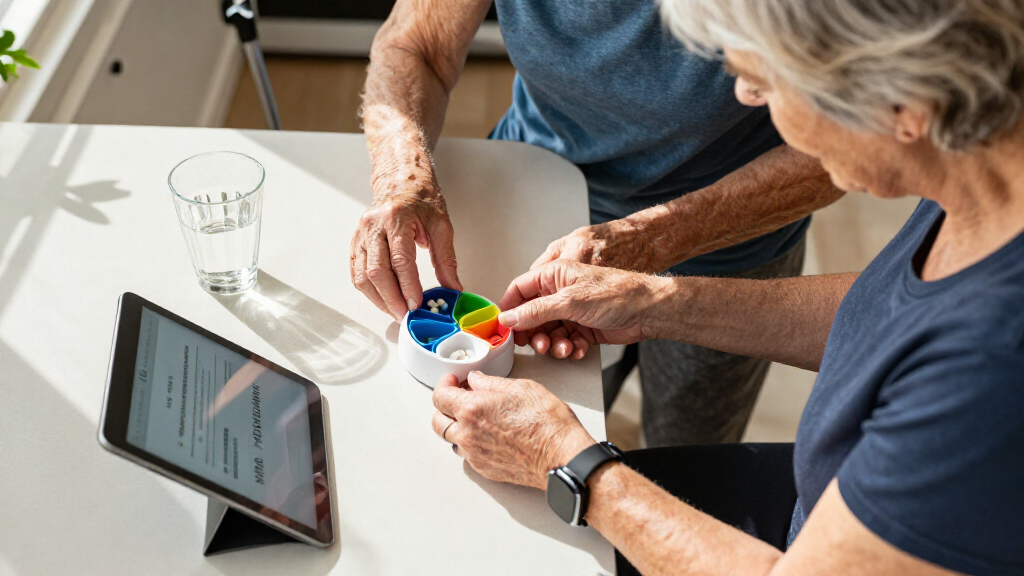
The countertop device, made by HiDO Health, is about 17 inches tall and can hold a 90-day supply of up to seven medications. It is designed to dispense the prescribed medication at the scheduled time, identify who is taking it and record whether a dose was taken. Approved caregivers can receive information remotely, according to the report. Unlike a reminder alarm or pill organizer, the device is intended to record more than whether a pill was removed from a container.
The trial will include people whose conditions range from mild cognitive impairment to moderate dementia. Half of the participants will use the device with training and support; the other half will continue their usual medication routine. Researchers plan to follow both groups for one year, measuring medication adherence, cognition and daily functioning. Blood samples will also be collected to track health indicators, including cholesterol and glucose, for conditions treated with participants’ medications.
A UC Davis Health pharmacy team will review participants’ medications before they begin the study as a safety measure. The research is funded by a $2.48 million National Institute on Aging Phase II Small Business Innovation Research grant. The report does not provide trial results: the study is intended to test whether the device works in practice, not to establish that it already improves adherence or health.
Testing Medication Support at Home
Medication routines can be difficult to manage when memory and thinking change, while missed or incorrectly taken doses can create risks for people with chronic conditions. The report cites research estimating that 4.3 million older Americans living alone have memory and thinking problems, and that medication errors have been associated with a higher likelihood of hospitalization. Those figures describe broader concerns; they are not outcomes from this trial.
For caregivers who cannot be present at each medication time, a reliable record of whether a dose was taken could offer more useful information than a reminder or a pillbox. It could also help identify when a person needs additional support. But the potential value depends on whether the device is accurate, usable and helpful for different participants. Those are questions the trial is designed to examine, rather than benefits that can yet be assumed.
AI medication dispenser for seniors
As an affiliate, we earn on qualifying purchases.
As an affiliate, we earn on qualifying purchases.
From Pill Reminders to Recorded Doses
Many existing medication aids focus on organization or reminders. Alarms can prompt a person to take a dose, while a conventional pillbox can show that medication has been taken out. Neither necessarily establishes that the person swallowed the medicine. The HiDO system is designed to address that gap by dispensing doses and recording use, with information available to caregivers approved by the participant.
The report describes Marianne Blake, 88, and her daughter, Patty Soulsby, as an example of the concern behind the research. Soulsby said her mother sometimes delays or misses morning medication and finds evening doses harder to remember. Blake said she remains comfortable living at home despite recognizing changes in her memory. Their experience illustrates the issue motivating the study; it does not establish how the device will perform for other people.
Researchers say earlier peer-reviewed work has offered preliminary evidence that HiDO is practical, accurate and easy to use for people with dementia and caregivers. The new UC Davis study is intended to provide additional evidence, including whether adherence changes and which participants may benefit. A national study cited in the report found that more than 13% of older adults with dementia had difficulty managing medications.
“Mom’s pretty good about taking her morning pills, but sometimes she won’t take them until 2 p.m. or not at all. The evening pills are the harder ones to remember to take.”
— Patty Soulsby, caregiver to Marianne Blake
automatic pill organizer with remote monitoring
As an affiliate, we earn on qualifying purchases.
As an affiliate, we earn on qualifying purchases.
Adherence Benefits Remain Untested
No results have been reported for the UC Davis trial, so it is not yet known whether the dispenser improves medication adherence, cognition or daily functioning compared with usual routines. The report also does not specify when enrollment began, when the study will finish, or when findings are expected.
It remains unclear how participants will respond to the device over a full year, which people may benefit most, and whether caregiver access to medication records will reduce the practical burden of support. The study will compare groups and collect health indicators, but the source does not state what changes would count as a clinically meaningful benefit. The device’s design and earlier research do not by themselves prove better health outcomes.
medication adherence device for dementia
As an affiliate, we earn on qualifying purchases.
As an affiliate, we earn on qualifying purchases.
One-Year Follow-Up and Results
Researchers plan to enroll 50 participants, review their medications for safety, and provide training and support to those assigned to use the device. Both groups will be followed for one year, with medication adherence, cognition and daily functioning among the measures collected. Blood samples will provide additional health indicators related to treated conditions.
The next key development will be the publication or release of trial findings, including how adherence compares between the device group and those following usual routines. The source report gives no date for results. Until then, the device’s effectiveness for this population remains a research question.
As an affiliate, we earn on qualifying purchases.
Key Questions
What is the UC Davis trial testing?
It is testing whether an AI-assisted home medication dispenser, used with training and support, helps older adults with mild cognitive impairment or dementia take prescribed medication. Researchers will compare device users with participants continuing their usual routines.
How many people will take part, and how long will they be followed?
The trial plans to enroll 50 people and follow them for one year. The report does not state the enrollment or completion dates.
What does the device do?
The countertop system is designed to hold up to 90 days of as many as seven medications, dispense doses at scheduled times, record whether medication was taken and share information with approved caregivers.
Has the device been shown to improve medication adherence?
Not in the results of this UC Davis trial; no trial findings have been reported. The study is designed to assess adherence and other measures. Earlier research described in the source offered preliminary evidence about practicality, accuracy and ease of use, but that does not establish improved health outcomes.
What will researchers measure?
They plan to measure medication adherence, cognition and daily functioning, and collect blood samples for indicators such as cholesterol and glucose related to participants’ treated conditions. A UC Davis pharmacy team will review medications before participants start as a safety measure.
Source: rss
Halloween Picks
halloween
As an affiliate, we earn on qualifying purchases.