TL;DR

Get workout gear delivered free with Prime
- Fast, free delivery on millions of items
- Prime Video, Amazon Music and more included
- Member-only deals all year
Amanda Lim, a trainer and CEO of a metabolic health clinic, shared her example weekly exercise routine and five suggestions for building consistency. She advises tracking measures such as strength and muscle mass rather than treating body weight as a direct assessment of health.
Trainer Amanda Lim, who leads the metabolic health center liftCLINIC, has shared an example of her weekly exercise routine and advice for making fitness sustainable, including her view that scale weight should not stand in for an assessment of health. The Fit&Well report describes a schedule combining strength training, cardio, walking, yoga and postpartum core rehabilitation.
Lim, 43, has worked as a trainer for more than 20 years and is a mother of three. She characterizes her approach as a balance of functional strength training, zone two cardio and steps, rather than a routine built around complicated exercises or fitness trends. The schedule she shared is an example of her own week, not a prescription for every reader.
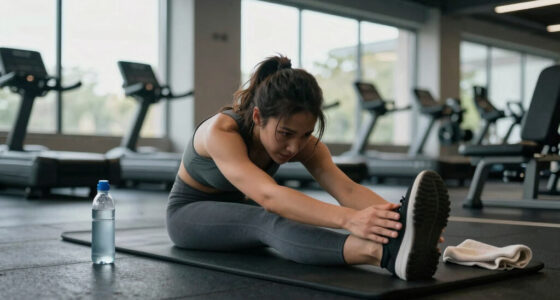
Her listed sessions include leg-focused strength training Monday morning and upper-body strength training Tuesday. Wednesday is set aside for postpartum core rehabilitation, followed by a walk for active recovery on Thursday. Friday includes running intervals in the morning and yoga later in the day; Saturday is a power-focused workout, and Sunday a zone two run.
Lim also offered five ideas for developing a consistent routine: use measures beyond scale weight, value the early gains of being a beginner, learn a new physical skill, start with walking and practice self-compassion. She said she tracks her own progress through the weights she lifts and her muscle mass. Her advice to beginners is to start with a five-minute walk if that feels manageable.
Progress Beyond Scale Weight
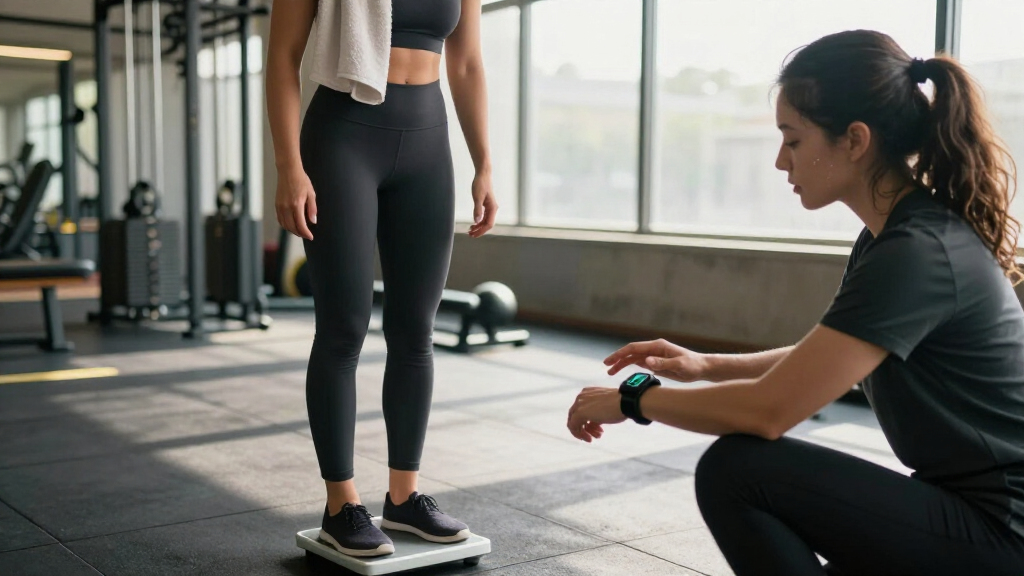
Lim’s comments offer readers a practical way to think about fitness progress without equating changes in body weight with changes in health. She says those measures do not always move together and suggests tracking performance, such as lifting progress, or muscle mass instead. These are her recommendations and personal tracking methods, not a clinical assessment or a guarantee that a particular measure reflects someone’s overall health.
The routine also shows how Lim combines different types of activity across the week, including recovery and rehabilitation work. For readers trying to exercise regularly, her emphasis on a small, achievable starting point may be more useful than adopting a demanding plan all at once. The report does not establish that her schedule is suitable for everyone; individual needs and abilities differ.
resistance bands for home workouts
As an affiliate, we earn on qualifying purchases.
As an affiliate, we earn on qualifying purchases.
A Routine Built Around Longevity
Lim is identified in the report as the CEO of liftCLINIC, a metabolic health center focused on longevity. She has three children, and her youngest is two and a half. Lim says she continues to include pelvic-floor, deep-core and postpartum rehabilitation in her training.
She described those exercises as relevant beyond the immediate period after childbirth, saying some experiences associated with postpartum can return during perimenopause. This is Lim’s explanation of her own approach; the report does not provide medical evidence or clinical guidance about postpartum recovery or perimenopause.
Lim also refers to six commonly discussed lifestyle-medicine pillars: nutrition, sleep, physical activity, stress management, social connection and reducing exposure to harmful substances. She argues for adding self-compassion as a seventh pillar, framing it as a way to keep going when someone falls short of personal goals.
““We have to separate the number on the scale—the weight of our bodies—from the assessment of our health, because those two things don’t typically track beautifully together.””
— Amanda Lim, trainer and liftCLINIC CEO
As an affiliate, we earn on qualifying purchases.
The report presents Lim’s personal example and advice, not a study testing the routine or comparing health measures. It does not specify how long each session lasts, the intensity or volume of most workouts, how Lim adjusts the schedule, or whether the routine has been medically assessed. No evidence is provided that the same mix of exercise is appropriate for all readers.
The report also does not give a publication date or make specific findings about how scale weight, muscle mass or fitness performance relate to an individual’s health. Readers with injuries, health conditions, pregnancy or postpartum concerns may need individualized guidance from a qualified health professional before changing their exercise routine.
postpartum core rehabilitation exercises
As an affiliate, we earn on qualifying purchases.
As an affiliate, we earn on qualifying purchases.
Adapting Advice to Individual Needs
Lim’s shared schedule is a snapshot of her current routine; the source does not announce a follow-up study or a formal program. Readers can use the report as a set of ideas—such as mixing strength work and walking or beginning with a brief walk—but should adapt activity to their own circumstances. Anyone unsure what is appropriate, particularly after childbirth or with a pre-existing condition, can seek advice from a qualified clinician or fitness professional.
As an affiliate, we earn on qualifying purchases.
Key Questions
Who is Amanda Lim?
Amanda Lim is a trainer with more than 20 years of experience and the CEO of liftCLINIC, which the report describes as a metabolic health center focused on longevity.
What does Lim’s weekly workout routine include?
Her example week includes two strength sessions, postpartum core rehabilitation, walking, running intervals, yoga, a power-focused workout and a zone two run. It is her personal schedule, not a universal training plan.
Why does Lim recommend tracking more than scale weight?
Lim says body weight and health do not always track together. She describes monitoring her lifting numbers and muscle mass as other ways to follow her own progress; the report does not present these as a complete measure of health.
What does Lim suggest for someone new to exercise?
She advises starting with walking and says a five-minute walk can be a manageable first step. People with health concerns or specific exercise needs should seek individualized professional guidance.
Source: rss
Halloween Picks
halloween
As an affiliate, we earn on qualifying purchases.