
TL;DR
Yoga mats for heated practice work best when their surface, cushioning, and care routine match how much you sweat and how you move. Compare damp grip, whether you need a towel, material sensitivities, stability, and cleaning instructions; no single material or thickness suits every practitioner.
Your hands can feel steady in the first sun salutation and start sliding by the time class reaches its first long down dog. That change is why yoga mats for heated practice need more than a soft landing: the surface has to suit your sweat, the mat needs to feel stable underfoot, and the cleanup should fit your routine.

Get workout gear delivered free with Prime
- Fast, free delivery on millions of items
- Prime Video, Amazon Music and more included
- Member-only deals all year
Hot yoga can mean different room temperatures, class styles, and humidity levels. A slow, warm flow may call for different traction from a fast class where sweat gathers quickly. This guide walks you through damp grip, absorbency, material, thickness, and care, so you can weigh the most important aspects before buying. You’ll also see when a towel can help and why product labels such as “non-slip” need a closer look.
Check how the mat handles damp hands, since sweat and surface condition can change traction.
Use a yoga towel when you want a washable layer for sweat or extra traction, and keep cleaning the mat beneath it.
Balance cushioning with a firm, steady feel for standing poses; test both kneeling and standing movement.
Read material and care details, especially if you have latex sensitivity or environmental priorities.
Follow the maker’s cleaning directions and let the mat dry fully before rolling it up.
Choose a mat that keeps your hands steady as you sweat
Yoga mats for heated practice should provide traction when moisture builds, because sweat can turn a familiar surface slick. Look for clear information about how the mat handles damp conditions and whether its maker recommends misting or breaking in the surface. “Non-slip” on a label does not tell you how the mat was tested.
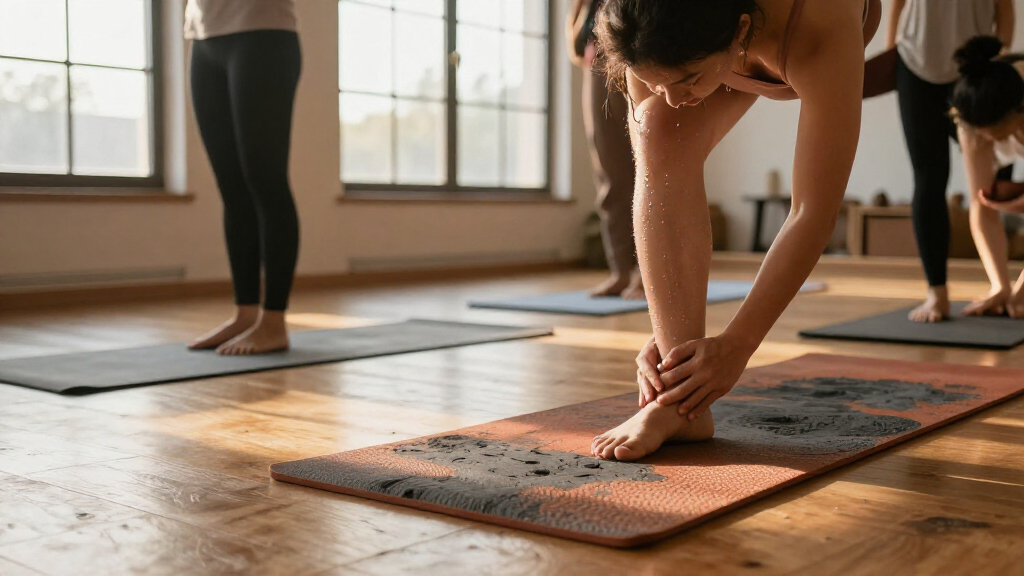
Think about your class, too. A humid room and a vigorous sequence can leave a lot more sweat on your palms than a gentle warm class. If your hands begin to creep forward in down dog, that is useful feedback: your mat may need a towel, a different surface, or a fresh cleaning rather than more force through your wrists.
Try this simple check at home: with clean hands, press your palms into the dry mat, then repeat with slightly damp hands. Notice whether your fingers stay planted when you lean forward. It is a rough personal check, not a standardized test, but it can help you compare surfaces before class instead of during your first sweaty flow.
A mat’s grip can change as it wears, gathers residue, or gets cleaned with an incompatible product. Follow the care directions and let the surface dry fully. In a studio, a folded towel may offer a more dependable landing for your palms while you work out whether the mat itself suits your practice.
Products Worth Considering

Philips Sonicare 7300 Rechargeable Electric Toothbrush with 3 Brush Heads, Black

Garmin Forerunner 265S Running Smartwatch, 42 mm, Whitestone/Neo Tropic

Oura Ring 4 Smart Ring, Silver, Size 8
As an affiliate, we earn on qualifying purchases.
Decide whether an absorbent mat or a towel suits your sweat
An absorbent top layer takes up moisture at the surface, while a nonabsorbent mat is often used with a separate yoga towel. The better arrangement depends on how much you sweat, how you like the texture under your hands, and how much laundry you want after class. A towel can add absorbency and traction, especially when your mat gets slick.
Imagine you take a heated class after work and your palms get damp during the warm-up. A towel spread over the mat can catch sweat through the rest of class and go straight into the wash afterward. If you choose an absorbent mat instead, you avoid shifting a separate layer, but you’ll need to clean and dry that mat carefully after each sweaty session.
Use this quick comparison as a starting point:
| Setup | What it can offer | What to plan for |
|---|---|---|
| Absorbent mat | Textile-like feel and moisture absorption | More thorough drying and cleaning |
| Mat plus towel | A washable layer to manage sweat | Extra laundry and a layer to position |
| Mat alone | Simple setup with no extra item | Surface needs to suit your damp grip |
Neither setup makes cleaning optional. A towel or mat cover helps manage sweat, but the mat beneath still collects salt, skin oils, and residue. Check both products’ care instructions before pairing them; finishes and cleaners vary, and the wrong combination can affect the surface.
Balance knee comfort with a steady standing base
Mat thickness is a tradeoff: more cushioning can feel kind to knees and wrists, while a very soft or thick base can feel less steady in standing poses. For heated classes with dynamic movement, look for a surface that cushions pressure without wobbling when you shift your weight. Your body and preferred style should guide the choice.
For example, if kneeling poses leave your knees sore against a thin mat, a thicker model may make class more comfortable. But if you practice balances or move quickly between lunges, too much give can make your footing feel less certain. Some practitioners keep a thin, firm mat for standing flow and add a folded towel under the knees during floor work.
When you shop, test the mat on a firm floor if you can. Try a standing lunge, a gentle balance, and a kneeling position rather than judging it by pressing one finger into the foam. Notice whether your feet feel planted and whether your knees meet enough cushioning. A few minutes of movement can tell you more than a thickness number alone.
Grip and stability work together. A grippy surface cannot make an overly soft base feel firm, and a stable base cannot solve a slippery finish. If you have an injury, a medical condition, or pain that affects movement, ask a qualified health professional for guidance about suitable practice and support.
Compare materials by feel, care, and personal needs
Yoga mats use materials such as natural or synthetic rubber, PVC, polyurethane-coated surfaces, textiles, and combinations of these. Each construction can affect grip, cushioning, weight, odor, durability, cleaning, and environmental impact. There is no universally best material; your preferences and sensitivities matter as much as the product description.
If you carry your mat across town, weight may matter more than extra padding. If you have latex sensitivity, check whether a mat contains natural rubber and speak with a healthcare professional if you’re unsure about a specific product. Even “natural” or “eco-friendly” labels do not tell you every detail about chemical treatments, so read the material and care information.
Picture two students leaving the same hot class: one rides a bike and wants a light mat that rolls compactly; the other drives and prefers a more substantial cushion under the knees. Their needs differ, even before sweat level enters the picture. Product documentation can help you compare what the maker actually states, while independent testing, where available, may help check broad performance claims.
Give odor time and attention, especially with a new mat. Some materials have a noticeable smell at first; ventilation and the maker’s care instructions may help. If a scent irritates you or you have a known sensitivity, stop using the product and seek appropriate professional advice. Don’t assume a higher price or a sustainability label guarantees better grip, durability, or chemical content.
Use this five-step routine to buy and care for your mat
To choose and maintain a heated-practice mat, match its damp grip and support to your class, then follow the maker’s cleaning and drying directions. These five steps give you a practical way to compare options and keep sweat from becoming a lingering smell or slick film.
- Describe your class. Note the room conditions, pace, and how sweaty you get. A calm warm flow and a humid, fast sequence can place different demands on traction.
- Check the surface guidance. Look for damp-grip details and instructions about misting, break-in, or pairing the mat with a towel.
- Try the support. Test a standing pose and a kneeling position. Choose a balance of cushioning and a steady base that feels right to you.
- Read material and care information. Check weight, ingredients, cleaning limits, and any sensitivity concerns before you buy.
- Clean and dry after class. Use a compatible cleaner and let the mat dry fully before rolling it up.
Say you finish an evening class with sweat along the edges of your mat. Rather than rolling it up while damp and putting it straight into a closet, wipe it according to the maker’s directions, then lay it out until it is fully dry. A towel can go into the laundry, but the mat still needs its own regular care.
Care note: Harsh cleaners, excessive heat, and prolonged sunlight can damage some mats. Follow the maker’s directions for your specific material.
Class frequency, surface wear, cleaning, and storage all affect how a mat feels over time. If the grip changes or the surface becomes damaged, reassess it before relying on it in a sweaty flow. There is no single lifespan that applies to every mat.
Read grip and sustainability claims with a closer eye
Product claims such as “non-slip,” “antimicrobial,” and “eco-friendly” can mean different things across brands, so check the details behind the wording. Look for a description of the surface, test conditions for grip claims, material composition, and clear care instructions. Specifics help you decide whether the product fits your practice.
For instance, a mat may advertise traction but only describe its performance when dry. That information may not answer the question you care about most: how it feels when your palms are damp. If the listing says the surface grips better after light misting, check whether the maker explains how much water to use and whether that method suits your class.
Environmental claims also call for specifics. Recycled content or natural rubber describes part of a product’s story, but it does not automatically explain manufacturing, treatments, durability, or disposal. Compare the documentation you can find and decide which points matter most to you, such as a stated material percentage, weight for transport, or a surface you can clean without harsh products.
One student might prioritize a lightweight mat for the train commute, while another might favor a long-lasting surface and a washable towel. Both can make sensible choices based on the information available. When a claim lacks detail, contact the maker for clarification or choose a product with clearer specifications; a confident label alone cannot tell you how the mat will perform in your class.
Frequently Asked Questions
Can I use a regular yoga mat for heated practice?
Yes, if its surface stays secure for you as you sweat and its care instructions suit regular cleanup. Try it with slightly damp hands before class, and add a yoga towel if the surface gets slick.
Should I use a yoga towel with my mat?
A towel can absorb sweat and add traction, especially on a mat that becomes slippery when damp. Wash the towel after use, and clean the mat itself regularly according to its maker’s instructions.
How thick should a heated-practice mat be?
Choose enough cushioning for your knees and wrists while keeping a stable feel in standing poses. Try a lunge and a balance if possible; the right thickness depends on your body, floor, and preferred style.
Are natural-rubber mats suitable if I have latex sensitivity?
Natural rubber may be unsuitable for some people with latex sensitivity. Check the exact material information and ask a healthcare professional if you are uncertain about a product.
How do I clean a mat after a sweaty class?
Follow the mat maker’s care directions and use a compatible cleaner. Let the mat dry fully before rolling it up, since damp storage can leave odor and residue behind.
Conclusion
Choose your mat around the class you actually take: how sweaty it gets, how much support your knees need, and how you’ll clean it afterward. Check damp grip, try the surface under your feet, and add a towel if that setup better suits your practice.
Then let the mat dry fully after class. A steady foothold and a clean, dry surface can make your next flow feel calmer from the first breath.